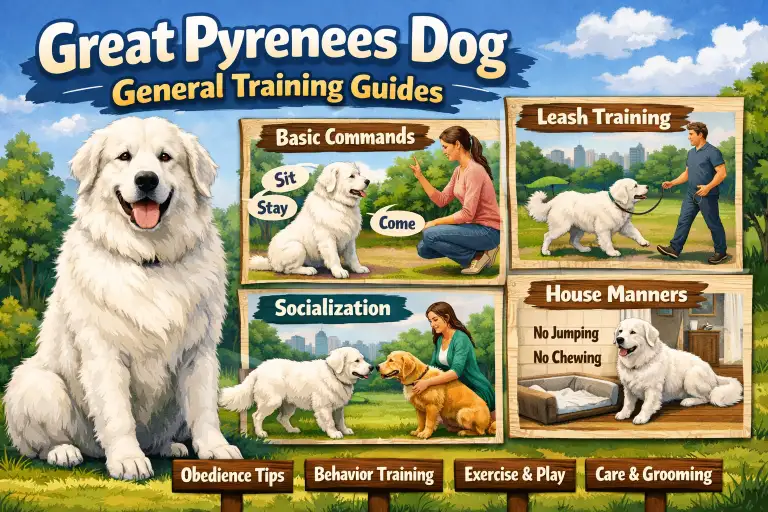
The Great Pyrenees is a majestic and independent breed, known for its loyalty, calm demeanor, and strong guarding instincts. While they are affectionate with their families, their natural independence and protective nature can make training a challenge for many owners. Unlike highly eager-to-please breeds, Great Pyrenees often think for themselves, which means training requires patience, consistency, and understanding of their unique temperament.
This guide is designed to help you train your Great Pyrenees to be confident, obedient, and well-socialized, whether you have a curious puppy or a strong-willed adult dog. Throughout the guide, you’ll find step-by-step instructions, real-world tips, and troubleshooting strategies tailored specifically to this breed.
Common training challenges you may encounter include:
- Stubbornness or selective listening
- Guarding or territorial behaviors
- Roaming tendencies if left unsupervised
- Sensitivity to sudden changes or loud noises
By following a structured, positive reinforcement-based training plan, you can foster a strong bond with your Great Pyrenees while shaping behavior that keeps them safe, happy, and balanced in your home.
Why Training Your Great Pyrenees Matters
Training your Great Pyrenees is important for both safety and happiness. This breed is strong, independent, and protective, so without proper training, they can develop unwanted behaviors. Training helps them listen, stay calm, and be confident around people, children, other dogs, and even strangers.
A trained Great Pyrenees is easier to live with and safer for your family and the community. It also makes walks, playtime, and visits to the vet much easier.
Here’s a quick look at the benefits of training compared to not training:
| Aspect | Well-Trained Great Pyrenees | Untrained Great Pyrenees |
|---|---|---|
| Safety | Obeys recall and boundaries | May roam or guard aggressively |
| Household | Calm and predictable | Stubborn and selective listening |
| Socialization | Comfortable with people and other dogs | Fearful or reactive |
| Owner Bond | Strong and cooperative | Frustration and inconsistent bond |
Training also helps prevent common problems like roaming, barking excessively, or guarding behavior. With patience and consistent training, your Great Pyrenees can become a calm, confident, and happy companion.
Understanding Great Pyrenees Behavior
The Great Pyrenees has some natural traits that make them unique. Knowing these traits helps you train them more effectively. They are independent, protective, and sometimes stubborn. They are also sensitive, so harsh training does not work well.
Socialization is very important. A Great Pyrenees needs to get used to new people, children, other dogs, and different environments. This helps prevent fear or guarding behavior later in life. They also need patience because they may take longer to follow commands than some other breeds.
Here’s a quick table to help you understand their key traits and how to train them:
| Trait | Description | Training Tip |
|---|---|---|
| Guarding Instinct | Naturally protective of home and family | Controlled socialization and recall training |
| Independence | Likes to make their own decisions | Use positive reinforcement and patience |
| Stubbornness | May ignore commands sometimes | Short, frequent sessions with high-value rewards |
| Anxiety or Fear | Sensitive to sudden noises or strangers | Gradual exposure and gentle desensitization |
By understanding these traits, you can train your Great Pyrenees in a way that works with their personality, not against it. Using positive reinforcement and consistency will help them learn faster and stay confident.
Step-by-Step Training Guide
Training your Great Pyrenees works best when you follow small, consistent steps. Keep sessions short, use rewards, and be patient. Training is easier when you understand what your dog needs at each stage of life, whether a puppy or an adult.
Here is a simple guide for core training areas:
| Training Focus | Session Length | Frequency | Key Tips |
|---|---|---|---|
| Puppy Basics | 5–15 min | 2–3 times per day | Keep sessions fun and positive, use high-value treats |
| Adult Obedience | 15–30 min | 1–2 times per day | Focus on consistency and patience |
| Recall | 5–10 min | Daily | Start in a quiet area, reward immediately for coming |
| Leash Walking | 5–15 min | Daily | Stop when your dog pulls, start again calmly |
| Socialization | 5–15 min | Daily/weekly | Gradually introduce new people, dogs, and places |
| Crate & Alone Time | 5–10 min | Daily | Make crate a safe and positive space |
Tips for success:
- Use positive reinforcement: treats, praise, and play.
- Keep sessions short and fun to hold your dog’s attention.
- Adjust training for high-energy, stubborn, or anxious dogs by increasing rewards or breaking tasks into smaller steps.
- Consistency is key: practice every day for the best results.
By following this plan, your Great Pyrenees will learn core commands, improve obedience, and develop confidence in new situations.
Common Problems, Troubleshooting, and When to Seek Help
Even with the best training plan, Great Pyrenees dogs can have common problems. Knowing how to handle these issues helps keep training successful and your dog happy.
Here is a do/don’t table for common mistakes:
| Mistake | Do | Don’t |
|---|---|---|
| Ignoring recall | Use high-value rewards, practice in quiet areas | Yell or punish |
| Roaming or guarding | Use boundaries and consistent recall | Let them roam freely |
| Stubbornness | Break tasks into small steps | Force obedience |
| Anxiety or fear | Gradual exposure and gentle encouragement | Ignore or scare the dog |
Sometimes, problems are serious and need a professional. Here are red flags to watch for and when to get help:
| Behavior | Recommended Action |
|---|---|
| Aggression toward people or dogs | Consult a certified dog trainer or veterinary behaviorist |
| Chronic fear or anxiety | Seek a veterinary behaviorist evaluation |
| Persistent disobedience | Professional training assessment |
| Separation distress | Structured desensitization plan with professional guidance |
By addressing problems early and knowing when to seek help, you can prevent unwanted behaviors from becoming habits. Most issues can be managed with patience, consistency, and proper guidance.
For more detailed insights on Great Pyrenees care and breed-specific tips, visit the Great Pyrenees Club of America.

Ata Ur Rehman is the founder of Pet Age in Human Years Calculator, an educational platform that provides age conversion charts and lifespan guides for dogs, cats, birds, and other companion animals. His work focuses on helping pet owners understand how animal ages translate into human years using commonly accepted age conversion formulas and published lifespan averages.
The website compiles breed and species lifespan data from kennel clubs, breed organizations, and general animal lifespan studies to present simple and easy-to-understand guides for pet owners worldwide.
This website was created to centralize animal age conversion charts into one easy reference platform for pet owners.