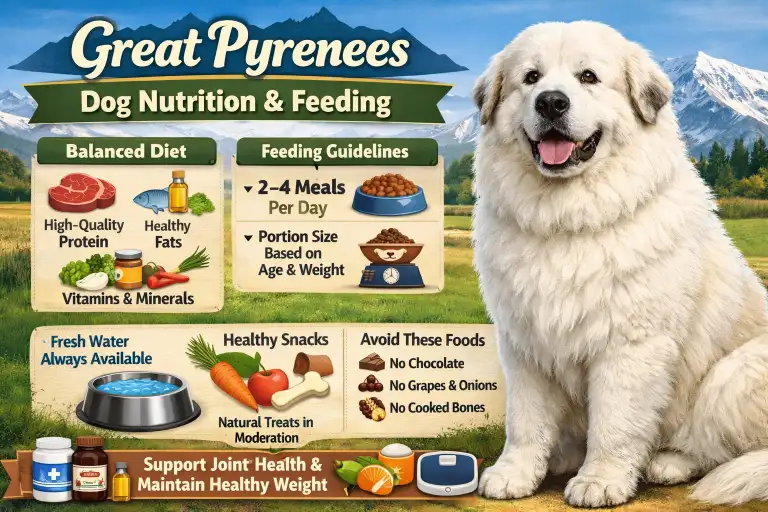
Feeding your Great Pyrenees the right diet is one of the most important steps you can take to ensure a long, healthy, and happy life. These gentle giants have unique nutritional needs due to their large size, rapid growth during puppyhood, and predisposition to joint and weight issues. Proper nutrition affects not just growth and physical health, but also energy levels, behavior, coat quality, and overall longevity.
This guide is designed to help you:
- Understand what nutrients your Great Pyrenees truly needs at every life stage
- Determine appropriate portion sizes and feeding schedules
- Choose the best type of food for your dog’s lifestyle and health
- Avoid common feeding mistakes that can lead to obesity, digestive problems, or joint issues
Unlike smaller breeds, Great Pyrenees require carefully balanced diets to support their bones and joints while preventing excessive weight gain. Overfeeding or providing inappropriate nutrients during puppyhood can lead to developmental problems, while underfeeding can affect energy levels and coat health.
By following a structured feeding plan and making informed food choices, you can ensure your Great Pyrenees grows strong, maintains a healthy weight, and enjoys a vibrant, active life.
Core Nutritional Needs for Great Pyrenees
Great Pyrenees dogs have special nutritional needs because they are large, strong, and grow quickly when they are puppies. Feeding the right nutrients helps their bones, joints, muscles, and overall health. Here’s what you need to know about their core nutrition.
Macronutrients: Protein, Fat, and Carbs
- Protein helps build muscles and keeps your dog strong. Large breeds need higher protein, especially when they are growing.
- Fat provides energy and helps keep their skin and coat healthy.
- Carbohydrates give energy for daily activities, but too many can lead to weight gain.
Micronutrients: Vitamins and Minerals
- Calcium and phosphorus are crucial for healthy bones and joints. Large-breed puppies need the right balance to avoid bone problems.
- Other vitamins and minerals help with immune function, metabolism, and overall health.
Life-Stage Nutrition
- Puppies need more protein, calcium, and calories to grow properly.
- Adults need balanced nutrients to maintain weight and energy.
- Seniors may need fewer calories but added nutrients for joints and coat.
Nutrient Requirements for Great Pyrenees by Life Stage
| Life Stage | Protein % | Fat % | Calcium:Phosphorus Ratio | Notes |
|---|---|---|---|---|
| Puppy (up to 18 months) | 22–28% | 8–12% | 1.2:1 | Supports rapid growth, joint health |
| Adult (18 months–7 years) | 18–25% | 5–10% | 1:1 | Maintains weight and muscle |
| Senior (7+ years) | 16–22% | 4–8% | 1:1 | Supports joints and lowers calorie intake |
Joint Health Supplements for Great Pyrenees
| Supplement | Purpose | Notes |
|---|---|---|
| Glucosamine | Supports cartilage and joints | Often included in large breed diets |
| Chondroitin | Helps reduce joint inflammation | Can be combined with glucosamine |
| Omega-3 (fish oil) | Supports joints and skin | Helps coat shine and reduces inflammation |
Giving your Great Pyrenees a diet that meets these macronutrient and micronutrient needs will keep them strong, energetic, and healthy throughout life. Puppies will grow properly, adults will stay fit, and seniors will enjoy better mobility and coat health.
How Much to Feed and Feeding Schedule
Feeding your Great Pyrenees the right amount of food is very important. Too much food can cause obesity and joint problems, and too little can slow growth or make them weak. Portion sizes depend on weight, age, and activity level.
Calorie Needs by Weight and Life Stage
- Puppies need more calories to grow.
- Adult dogs need fewer calories but enough to stay active.
- Seniors usually need less food because they move less.
Daily Calorie Needs by Weight and Life Stage
| Life Stage | Weight Range | Calories per Day |
|---|---|---|
| Puppy | 30–50 lbs | 1000–1400 kcal |
| Puppy | 50–100 lbs | 1400–2000 kcal |
| Adult | 70–100 lbs | 1200–1800 kcal |
| Adult | 100–130 lbs | 1800–2200 kcal |
| Senior | 70–100 lbs | 1000–1600 kcal |
| Senior | 100–130 lbs | 1500–2000 kcal |
Feeding Frequency
- Puppies: 3–4 small meals per day
- Adults: 2 meals per day
- Seniors: 2 meals per day, can adjust portion if less active
Feeding Frequency Quick Reference
| Life Stage | Meals per Day | Notes |
|---|---|---|
| Puppy | 3–4 | Small, frequent meals help digestion |
| Adult | 2 | Keeps weight steady and energy stable |
| Senior | 2 | Monitor weight, reduce portions if needed |
Using the body condition score is also important. You should see a waistline and feel ribs without pressing too hard. Adjust food if your dog is gaining too much weight or losing weight unexpectedly.
Types of Dog Food and Safe Feeding Choices
Choosing the right food for your Great Pyrenees is important. There are many types of dog food, and each has its own benefits and challenges. Knowing what is safe and what to avoid helps your dog stay healthy.
Dog Food Types
- Kibble (Dry Food): Convenient, good for teeth, long shelf life
- Canned Food: Tasty, high moisture, easier to chew
- Raw Diet: Includes raw meat and bones, may improve coat but needs careful handling
- Freeze-Dried/Fresh Food: Less processed, nutrient-rich, often more expensive
- Homemade Food: Can be healthy if balanced, but mistakes can lead to nutrient gaps
Dog Food Type Comparison
| Food Type | Pros | Cons |
|---|---|---|
| Kibble | Convenient, long shelf life, helps teeth | Less moisture, may contain fillers |
| Canned | Tasty, high moisture | Can be expensive, may spoil quickly |
| Raw | Can improve coat and digestion | Risk of bacteria, requires careful prep |
| Freeze-Dried/Fresh | Nutrient-rich, less processed | Expensive, may need refrigeration |
| Homemade | Full control of ingredients | Hard to balance nutrients, time-consuming |
Safe vs Toxic Foods
Some human foods are safe for Great Pyrenees, but others can be dangerous. Always check before giving anything new.
Safe vs Toxic Foods for Great Pyrenees
| Safe Foods | Foods to Avoid |
|---|---|
| Cooked chicken, turkey | Chocolate |
| Carrots, green beans | Grapes and raisins |
| Apples (no seeds) | Onions and garlic |
| Pumpkin, sweet potato | Macadamia nuts |
| Plain rice, oats | Xylitol (in gum, candy) |
Treat Guidelines
Treats can be used for training, but too many can lead to weight gain. Treats should not exceed 10% of daily calories.
Treat Guidelines for Great Pyrenees
| Treat Type | Frequency | Notes |
|---|---|---|
| Small training treats | Several times a day | Use for positive reinforcement |
| Healthy snacks (carrots, apple slices) | 1–2 times a day | Low calorie, good for digestion |
| Commercial dog treats | Occasionally | Check ingredients for fillers or sugar |
Feeding the right type of food and avoiding toxic items helps your Great Pyrenees grow strong, stay active, and enjoy a healthy life. Treats can reward good behavior but should always be used carefully.
Special Diets, Common Problems, and When to Consult a Vet
Sometimes, your Great Pyrenees may need special diets or extra attention to stay healthy. Large breeds can face issues like allergies, sensitive stomachs, weight problems, or joint concerns. Knowing how to manage these can keep your dog happy and strong.
Special Diets
- Allergies or sensitive stomachs: Some dogs react to certain proteins or grains. Limited-ingredient or hypoallergenic diets can help.
- Weight management: Overweight dogs need fewer calories and more exercise. Underweight dogs may need extra protein and fat.
- High-energy dogs: Working or active Great Pyrenees may need more calories and protein.
- Low-activity dogs: Dogs that are mostly indoor or older need fewer calories to prevent weight gain.
Special Diet Guidelines for Great Pyrenees
| Condition | Recommended Food Type | Notes |
|---|---|---|
| Sensitive stomach | Limited-ingredient, easily digestible | Avoid sudden food changes |
| Allergies | Hypoallergenic or single protein | Rotate proteins carefully |
| Overweight | Low-calorie, high-fiber | Monitor portions and exercise |
| Underweight | High-protein, high-fat | Feed small frequent meals |
| High-energy | Large breed puppy or active adult formulas | Supports muscles and joints |
| Low-activity | Adult maintenance formula | Avoid overfeeding |
Common Feeding Problems
- Picky eaters: Offer variety, mix flavors, or try food toppers
- Loose stool or diarrhea: Change food slowly, check for allergies, consult vet if persistent
- Overeating or weight gain: Measure portions, reduce treats, encourage exercise
- Food aggression: Feed in separate areas, use consistent routines
Common Feeding Problems and Solutions
| Problem | Solution |
|---|---|
| Picky eater | Try small portions of high-quality food, use toppers |
| Loose stool | Switch food gradually, avoid sudden diet changes |
| Overweight | Use measured portions, low-calorie diets, increase activity |
| Food aggression | Feed dogs separately, establish calm feeding routine |
When to Consult a Vet or Nutritionist
- Persistent digestive issues
- Rapid weight changes
- Suspected allergies or intolerances
- Special conditions like joint problems or chronic illness
Getting professional guidance ensures your Great Pyrenees gets the right nutrition for a long, healthy life.
For more detailed guidance on large-breed dog nutrition, you can visit the American Kennel Club’s dog care resources here.

Ata Ur Rehman is the founder of Pet Age in Human Years Calculator, an educational platform that provides age conversion charts and lifespan guides for dogs, cats, birds, and other companion animals. His work focuses on helping pet owners understand how animal ages translate into human years using commonly accepted age conversion formulas and published lifespan averages.
The website compiles breed and species lifespan data from kennel clubs, breed organizations, and general animal lifespan studies to present simple and easy-to-understand guides for pet owners worldwide.
This website was created to centralize animal age conversion charts into one easy reference platform for pet owners.