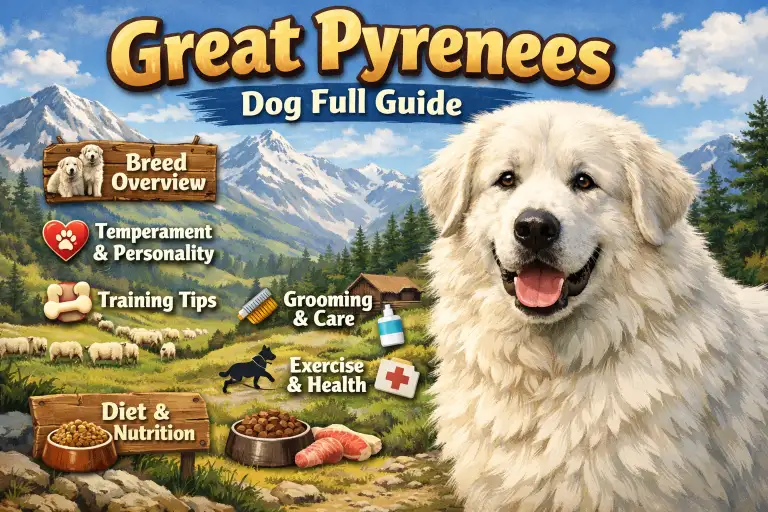
The Great Pyrenees dog is a majestic and loyal breed, known for its striking white coat, gentle demeanor, and natural guarding instincts. Originating from the French Alps, this breed was historically used as a livestock guardian, protecting flocks of sheep from predators like wolves and bears. Today, Great Pyrenees dogs serve as both dedicated family companions and vigilant guardian dogs, making them a versatile breed for the right home.
Great Pyrenees dogs are large, strong, and independent, with a calm and steady temperament. They are intelligent but can be stubborn, which makes early training and consistent socialization essential. While their independent nature can be a challenge for first-time dog owners, their loyalty and protective instincts make them a cherished addition to families, farms, and rural properties.
Here’s a quick snapshot of the breed for a glance:
| Trait | Info |
|---|---|
| Breed Name | Great Pyrenees |
| Origin | French Alps |
| Role | Livestock guardian, family companion |
| Size | Large |
| Lifespan | 10–12 years |
| Coat | Thick double coat, mostly white |
| Temperament | Loyal, protective, calm, independent |
With its impressive size, beautiful coat, and quiet confidence, the Great Pyrenees is often described as a “gentle giant.” They thrive in environments where they have space to roam and tasks to occupy their minds. This guide will cover everything you need to know about their appearance, temperament, care, exercise, health, costs, and how they compare to similar breeds, helping prospective owners decide if this breed is the right fit for their home and lifestyle.
Here’s a quick snapshot of the breed for a glance:
| Trait | Info |
|---|---|
| Breed Name | Great Pyrenees |
| Origin | French Alps |
| Role | Livestock guardian, family companion |
| Size | Large |
| Lifespan | 10–12 years |
| Coat | Thick double coat, mostly white |
| Temperament | Loyal, protective, calm, independent |
With its impressive size, beautiful coat, and quiet confidence, the Great Pyrenees is often described as a “gentle giant.” They thrive in environments where they have space to roam and tasks to occupy their minds. This guide will cover everything you need to know about their appearance, temperament, care, exercise, health, costs, and how they compare to similar breeds, helping prospective owners decide if this breed is the right fit for their home and lifestyle.
Appearance, Size & Temperament
The Great Pyrenees is a large, strong, and beautiful dog. Their thick white coat and calm expression make them look noble and gentle. They are built to protect livestock in cold mountain climates, which explains their strong bones, wide chest, and powerful legs.
Great Pyrenees dogs grow slowly and reach full size around 2 years of age. Males are usually bigger than females. They have a double coat that keeps them warm in winter but can shed heavily, especially in spring.
Here is an easy reference for their size:
| Gender | Height | Weight |
|---|---|---|
| Male | 27–32 inches | 100–160 lbs |
| Female | 25–29 inches | 85–115 lbs |
The coat of the Great Pyrenees is thick and mostly white. Some dogs may have light markings in gray, tan, or badger colors. The coat protects them from cold and rough weather.
| Coat Type | Color Patterns | Shedding |
|---|---|---|
| Double coat | White, white with markings | Moderate to heavy, especially in spring |
The temperament of the Great Pyrenees is calm, loyal, and independent. They are gentle with family but watchful of strangers. Because of their guarding instincts, they may seem aloof or stubborn at times.
Here’s a quick temperament table:
| Trait | With Family | With Children | With Strangers | With Other Pets |
|---|---|---|---|---|
| Loyalty | Very high | Gentle | Wary | Can be dominant with small pets |
| Guarding | High | Protective | Alert | Requires socialization |
| Independence | High | Calm | Aloof | Needs proper introduction |
Great Pyrenees dogs are known as “gentle giants” because they are loving and patient with family members but strong enough to be serious guardians. Early socialization helps them get along with children, other dogs, and pets.
Care, Grooming & Exercise Needs
Taking care of a Great Pyrenees is important to keep them healthy and happy. They need regular exercise, grooming, and mental stimulation. Because they are large and strong, having a routine helps prevent boredom and behavior problems.
Great Pyrenees dogs need daily exercise to stay fit. Walking them, letting them play in a yard, or giving them simple tasks keeps them active. They also need mental challenges, like puzzle toys or learning new commands, to stay sharp.
| Activity | Daily Requirement | Notes |
|---|---|---|
| Walks | 30–60 minutes | Can be split into two walks |
| Yard time | 60–90 minutes | Supervised; they enjoy space to roam |
| Mental stimulation | 20–30 minutes | Puzzle toys, obedience training, simple guarding tasks |
Grooming is very important because of their thick double coat. They shed a lot, especially in spring. Brushing a few times a week helps remove loose hair and keeps the coat healthy. Bathing should be done a few times a year to avoid drying out their skin.
| Task | Frequency | Notes |
|---|---|---|
| Brushing | 2–3 times per week | Daily during heavy shedding |
| Bathing | 2–3 times per year | Use dog-friendly shampoo |
| Nails | Every 4–6 weeks | Trim carefully to avoid pain |
| Ears | Weekly | Check for infections |
| Teeth | 2–3 times per week | Use dog-safe toothpaste |
Training and socialization are also part of care. Great Pyrenees are smart but can be stubborn. They learn best with gentle, consistent commands. Early socialization helps them get along with children, strangers, and other pets.
Health, Lifespan & Cost Considerations
Great Pyrenees are generally healthy, but like all large breeds, they can have some common health issues. Knowing about these problems and taking preventive care helps your dog live a long, happy life.
The average lifespan of a Great Pyrenees is about 10–12 years. Their size and genetics affect how long they live and how healthy they stay. Regular vet checkups, a good diet, and exercise can help prevent many problems.
| Condition | Prevalence | Recommended Screening |
|---|---|---|
| Hip dysplasia | Common | OFA hip evaluation |
| Elbow dysplasia | Moderate | OFA elbow evaluation |
| Bloat (gastric torsion) | Moderate | Vet guidance, avoid large meals |
| Eye disorders | Moderate | Ophthalmologist check |
| Osteochondritis | Low | Veterinary monitoring |
Owning a Great Pyrenees also comes with costs. Puppies can be expensive, and large dogs need regular grooming, vet care, and insurance. Planning for these costs ensures your dog gets the care they need without surprises.
| Cost Type | Typical Range |
|---|---|
| Puppy | $1,000–$2,500 |
| Grooming | $300–$600 per year |
| Vet / preventive care | $500–$1,000 per year |
| Insurance | $30–$80 per month |
By understanding these health risks and costs, you can give your Great Pyrenees the best life possible. Regular checkups, preventive care, and a safe home environment are key to keeping them healthy and happy.
Pros, Cons, Similar Breeds & FAQs
Like every breed, the Great Pyrenees has advantages and challenges. Knowing these helps you decide if this dog is right for your home and lifestyle.
| Pros | Cons |
|---|---|
| Loyal and protective | Independent and stubborn |
| Gentle with family | High grooming needs |
| Intelligent and alert | Can be wary of strangers |
| Long lifespan | Needs a large yard or space |
Great Pyrenees are similar to a few other large guardian breeds. Comparing them can help prospective owners choose the best fit.
| Breed | Size | Temperament | Grooming | Exercise Needs |
|---|---|---|---|---|
| Great Pyrenees | Large | Independent, protective | High | Moderate |
| Anatolian Shepherd | Large | Protective, territorial | Medium | High |
| Kuvasz | Large | Loyal, alert | Medium | Moderate |
| Bernese Mountain Dog | Large | Friendly, gentle | High | Moderate |
Here are some common questions people ask about Great Pyrenees:
- How big do Great Pyrenees get?
They are large dogs. Males can weigh up to 160 lbs and stand 32 inches tall. - Are Great Pyrenees good with children?
Yes, they are gentle and patient, but supervision is recommended with very small children. - How much exercise do they need?
Moderate exercise daily, including walks and yard time, plus mental activities. - Are they easy to train?
They are intelligent but independent. Gentle, consistent training works best. - Do they shed a lot?
Yes, especially during seasonal changes. Regular brushing helps manage shedding. - Can they live in apartments?
Not ideally. They do best in homes with large yards or space to roam. - What health problems do they have?
Common issues include hip dysplasia, bloat, and eye problems. Regular vet care is important. - How much does it cost to own a Great Pyrenees?
Costs include puppy purchase ($1,000–$2,500), grooming, vet care, and insurance. - Are Great Pyrenees good guard dogs?
Yes, they are natural guardians and alert owners to strangers.
For more detailed information about the Great Pyrenees breed standards, you can visit the official American Kennel Club page here.

Ata Ur Rehman is the founder of Pet Age in Human Years Calculator, an educational platform that provides age conversion charts and lifespan guides for dogs, cats, birds, and other companion animals. His work focuses on helping pet owners understand how animal ages translate into human years using commonly accepted age conversion formulas and published lifespan averages.
The website compiles breed and species lifespan data from kennel clubs, breed organizations, and general animal lifespan studies to present simple and easy-to-understand guides for pet owners worldwide.
This website was created to centralize animal age conversion charts into one easy reference platform for pet owners.