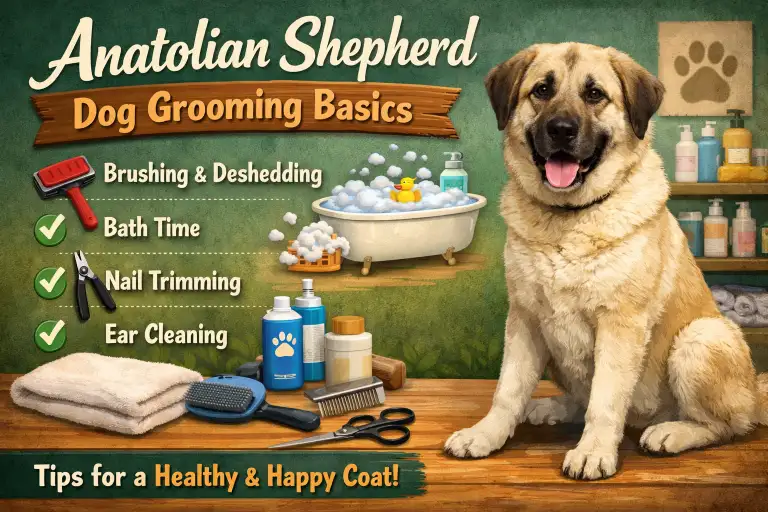
Anatolian Shepherd grooming is often misunderstood. Because this breed is hardy, outdoorsy, and relatively low-odor, many owners assume grooming is optional or only needed when the dog looks dirty. In reality, proper grooming is essential for maintaining the Anatolian Shepherd’s skin health, coat function, comfort, and long-term well-being—even though their needs are different from high-maintenance, salon-styled breeds.
The Anatolian Shepherd is a large, working livestock guardian dog with a dense double coat designed to protect against heat, cold, wind, and environmental hazards. Grooming is not about appearance for this breed; it is about supporting the natural purpose of the coat while preventing preventable problems such as excessive shedding buildup, skin irritation, parasites, and discomfort.
Regular grooming helps:
- Remove loose undercoat before it traps heat or moisture
- Support healthy skin circulation and natural oil distribution
- Reduce seasonal shedding inside the home
- Allow early detection of skin issues, injuries, or parasites
- Keep nails, ears, and skin in safe working condition for a heavy, active dog
One of the most common misconceptions is that Anatolian Shepherds are “wash-and-go” dogs. While they do not need frequent baths or haircuts, they absolutely require routine brushing, seasonal deshedding, and basic maintenance care. Another frequent myth is that shaving helps them stay cool in hot climates—this actually interferes with the coat’s natural insulation and can lead to overheating and skin damage.
Anatolian Shepherd Double Coat, Shedding, and Grooming Needs
To groom an Anatolian Shepherd correctly, you first need to understand how their coat works. This breed has a double coat, which means there are two layers of hair working together to protect the dog.
The top layer, called the guard coat, is made of longer, rougher hairs. These hairs protect the dog from sun, rain, dirt, and insects. The undercoat is soft and thick. It helps control body temperature by keeping the dog warm in cold weather and cool in hot weather.
Because of this coat design, Anatolian Shepherds shed a lot, especially during seasonal changes. Shedding is normal and healthy for them. It is not a sign of poor grooming or bad health in most cases.
How the Anatolian Shepherd Coat Behaves
- They shed lightly throughout the year
- They shed heavily in spring and fall
- They rarely form tight mats like long-haired breeds
- Dirt often falls off when the coat dries
- The coat protects against heat as well as cold
Many owners worry when they see large amounts of hair during shedding season. This is called a coat blow, and it happens when the undercoat releases all at once. Brushing is the correct solution—not shaving.
Shaving an Anatolian Shepherd removes the guard coat that protects the skin. This can lead to sunburn, skin irritation, uneven regrowth, and overheating. Once damaged, the coat may never grow back properly.
Anatolian Shepherd Coat and Grooming Overview
| Coat Feature | What It Means for Grooming |
|---|---|
| Double coat | Needs brushing, not haircuts |
| Heavy seasonal shedding | Extra brushing needed in spring and fall |
| Low matting risk | Focus on undercoat removal |
| Weather-resistant coat | Over-bathing can cause skin problems |
| Guard hairs | Must not be shaved |
Shedding Expectations by Season
| Season | What Happens | Grooming Focus |
|---|---|---|
| Winter | Thick undercoat stays in | Light weekly brushing |
| Spring | Heavy coat blow | Frequent deshedding |
| Summer | Thinner undercoat | Regular brushing, few baths |
| Fall | Second coat blow | Increase brushing again |
Understanding these patterns helps owners stay calm and prepared. Shedding is not something to stop—it is something to manage correctly.
Good grooming works with the coat, not against it. When brushing is done at the right time and in the right way, the coat stays healthy, the skin stays comfortable, and the dog feels better overall.
Brushing, Deshedding, and Bathing an Anatolian Shepherd at Home
Most Anatolian Shepherd grooming happens at home, and it does not need to be complicated. The goal is to remove loose undercoat, keep the skin clean, and avoid damaging the guard coat. You do not need haircuts or fancy tools—just the right routine.
Brushing is the most important grooming task for this breed. Bathing is needed much less often.
How Often to Brush an Anatolian Shepherd
Brushing needs change depending on the season. During shedding seasons, brushing becomes more important.
| Time of Year | Brushing Frequency | What to Expect |
|---|---|---|
| Normal weeks | 1–2 times per week | Light hair loss |
| Spring shedding | 3–5 times per week | Heavy undercoat coming out |
| Fall shedding | 3–5 times per week | Second coat blow |
| After rain or mud | As needed | Dirt removal, coat check |
Short, regular brushing sessions work better than long sessions done rarely.
Best Grooming Tools for Anatolian Shepherds
Using the right tools protects the coat and makes grooming easier.
| Tool Type | What It Is Used For | When to Use It |
|---|---|---|
| Slicker brush | Removes loose hair on top | Weekly brushing |
| Undercoat rake | Pulls out thick undercoat | Shedding season |
| Wide-tooth comb | Checks missed areas | After brushing |
| Rubber brush | Light dirt removal | Short sessions |
| Grooming dryer (optional) | Blows out loose coat | Heavy shedding |
Tools to avoid: human hair brushes, fine-tooth combs, and shaving clippers. These can damage the coat or skin.
How to Brush the Coat Safely
- Brush in the direction the hair grows
- Start at the neck and move back slowly
- Pay attention to chest, behind ears, and thighs
- Stop if the dog becomes stressed or tired
Never pull hard. If hair does not come out easily, change tools instead of forcing it.
Bathing an Anatolian Shepherd
Anatolian Shepherds do not need frequent baths. Too many baths remove natural oils and can cause dry skin.
| Bathing Situation | How Often |
|---|---|
| Normal lifestyle | Every 8–12 weeks |
| Very dirty or muddy | As needed |
| Skin issues | Vet-guided only |
Use a dog shampoo made for sensitive skin. Always rinse very well. Leftover soap can cause itching. After the bath, dry the coat fully, especially the thick areas near the skin.
Brushing before and after bathing helps remove more loose hair and prevents wet undercoat from staying trapped.
This simple routine keeps the coat clean, reduces shedding in the house, and keeps the dog comfortable without harming the natural coat.
Nail Trimming, Ear Cleaning, Dental Care, and Skin Health
Grooming an Anatolian Shepherd is not only about the coat. Basic care of the nails, ears, teeth, and skin keeps this large dog comfortable and helps prevent health problems. These tasks do not take much time, but skipping them can cause pain or infections.
Nail Care for Large Dogs
Anatolian Shepherds are heavy dogs. Long nails can affect how they walk and can cause joint stress.
- Nails should not touch the ground when the dog stands
- Long nails can split or break
- Overgrown nails can change posture and cause pain
Trim nails slowly and carefully. If the nails are dark and you cannot see the quick, cut small amounts at a time. If you are unsure, a groomer or vet can help.
Ear Cleaning Basics
Anatolian Shepherds have drop ears, which means air does not flow freely inside the ear. Dirt and moisture can build up, especially in outdoor dogs.
- Clean ears only when they look dirty
- Do not clean healthy ears too often
- Never push anything deep into the ear
Signs of ear problems include bad smell, redness, head shaking, or scratching.
Dental Care Expectations
Large working breeds often do not get daily tooth brushing, and that is okay. The goal is to reduce plaque and check the mouth often.
- Use dog-safe toothpaste only
- Dental chews can help between brushings
- Check for bad breath, red gums, or broken teeth
Dental problems can affect the heart and overall health, so regular checks matter.
Skin and Coat Health Checks
Grooming time is the best time to look for skin problems.
Watch for:
- Red or wet spots
- Bald patches
- Thick scabs or sores
- Fleas, ticks, or excessive scratching
Early skin problems are easier to treat than advanced ones.
Routine Care Frequency Overview
| Care Task | How Often | Important Note |
|---|---|---|
| Nail trimming | Every 3–4 weeks | Short nails protect joints |
| Ear cleaning | As needed | Over-cleaning causes irritation |
| Teeth care | Weekly if possible | Check mouth often |
| Skin check | Weekly | Catch issues early |
Regular small checks prevent big problems later. Most issues can be avoided with simple attention during normal grooming.
Grooming Schedule, Common Mistakes, and Professional Grooming
A simple grooming schedule helps keep an Anatolian Shepherd healthy without overdoing it. This breed does best with regular light care and extra attention during shedding seasons. Grooming should fit into normal life, not feel like a hard job.
Simple Anatolian Shepherd Grooming Schedule
| Time Frame | What to Do |
|---|---|
| Weekly | Brush coat, check skin, look at ears |
| Every 3–4 weeks | Trim nails, quick ear check |
| Every 8–12 weeks | Bathe if needed |
| Spring & Fall | Increase brushing and deshedding |
| As needed | Remove mud, burrs, or debris |
This routine keeps the coat working properly and helps catch problems early.
Common Grooming Mistakes Owners Make
Many grooming problems happen because owners try to do too much or use the wrong tools.
Common mistakes include:
- Shaving the coat to reduce shedding or heat
- Bathing too often
- Using human shampoo
- Ignoring nails until they are too long
- Skipping brushing during shedding season
Shaving and over-bathing can damage the coat and cause skin trouble. Brushing is always safer than cutting.
Home Grooming vs Professional Grooming
Most Anatolian Shepherd grooming can be done at home. However, professional groomers are helpful in some cases.
Home grooming works well for:
- Regular brushing
- Light baths
- Nail trims if you are confident
Professional grooming is useful for:
- Heavy shedding seasons
- Dogs who dislike grooming
- Nail trimming if you are unsure
- Health checks by experienced hands
A good groomer understands double coats and will not shave this breed unless a vet says it is needed.
When to See a Veterinarian
Grooming is not a replacement for medical care. Contact a vet if you see:
- Ongoing skin redness or sores
- Strong ear odor or discharge
- Hair loss not linked to shedding
- Sudden behavior changes during grooming
These signs may point to allergies, infections, or other health problems.
Final Grooming Reminder
Anatolian Shepherd grooming is about care, not style. With the right brushing, basic maintenance, and seasonal adjustments, this breed stays clean, comfortable, and protected by its natural coat.
For more detailed information on double-coated dog care and why shaving is harmful, you can also review this guidance from the American Kennel Club:
https://www.akc.org/expert-advice/health/double-coated-dogs/

Ata Ur Rehman is the founder of Pet Age in Human Years Calculator, an educational platform that provides age conversion charts and lifespan guides for dogs, cats, birds, and other companion animals. His work focuses on helping pet owners understand how animal ages translate into human years using commonly accepted age conversion formulas and published lifespan averages.
The website compiles breed and species lifespan data from kennel clubs, breed organizations, and general animal lifespan studies to present simple and easy-to-understand guides for pet owners worldwide.
This website was created to centralize animal age conversion charts into one easy reference platform for pet owners.