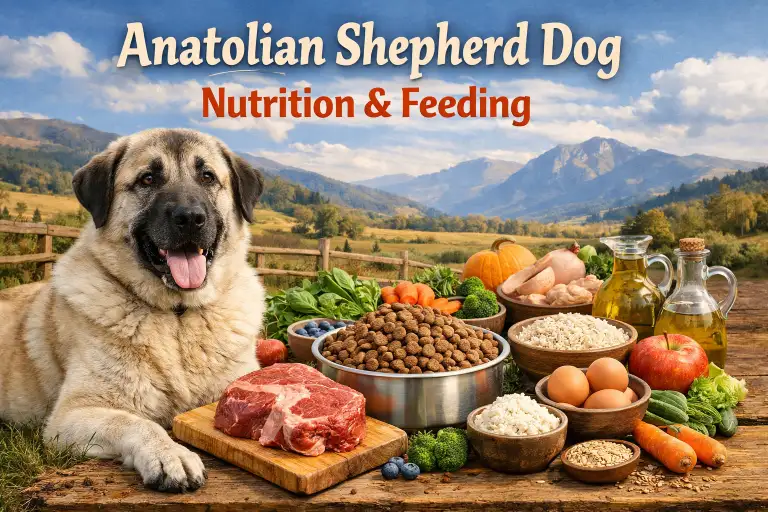
Anatolian Shepherds are not just “large dogs.” They are giant, slow-maturing livestock guardian dogs with a metabolism, growth pattern, and energy use that differs significantly from most companion breeds. Feeding them like a generic large dog often leads to problems such as joint stress, excess weight, poor muscle conditioning, or long-term orthopedic issues.
Why Anatolian Shepherds Have Unique Nutritional Needs
Anatolian Shepherds were developed to work independently for long hours, often covering large territories while guarding livestock. As a result:
- They mature slowly, often not fully developed until 2.5–3 years of age
- Their joints and bones are under significant load due to size and frame
- Their activity level varies widely (working guardian vs home companion)
- They tend to conserve energy rather than burn it constantly like herding or sporting breeds
This means overfeeding is far more dangerous than mild underfeeding, especially during puppyhood.
Unlike high-drive breeds that need constant calorie input, Anatolian Shepherds do best on a controlled, balanced diet that supports lean muscle, joint integrity, and steady energy rather than rapid growth or excess fat.
Size, Growth Rate, and Metabolism Matter
One of the biggest nutrition mistakes with Anatolian Shepherds is pushing growth too fast. Rapid growth increases stress on:
- Hips and elbows
- Growth plates
- Developing connective tissue
Puppies that are fed overly calorie-dense or calcium-heavy diets often look impressive early on but are at higher risk of orthopedic disease later in life.
Adult Anatolian Shepherds, on the other hand, usually require fewer calories per pound than many owners expect. A calm, watchful guardian dog may burn fewer calories than a much smaller but hyperactive breed.
Nutrition-Relevant Traits of the Anatolian Shepherd
| Trait | What It Means for Nutrition |
|---|---|
| Giant body size | Requires careful calorie control to avoid joint overload |
| Slow physical maturity | Needs growth-supportive but not growth-forcing diets |
| Guardian-style activity | Moderate calorie needs, not endurance-athlete feeding |
| Strong skeletal frame | Requires balanced calcium and phosphorus, not excess |
| Independent temperament | Overfeeding treats can quickly lead to weight gain |
Common Owner Misconceptions
Many first-time Anatolian Shepherd owners assume:
- “Big dog = needs a lot of food”
- “Working breed = very high protein and calories”
In reality, this breed thrives on measured feeding, moderate energy density, and nutrient balance, not oversized portions.
Nutrition for an Anatolian Shepherd is less about feeding more and more about feeding correctly—supporting strength, stamina, and longevity without stressing the body.
Best Diet for Anatolian Shepherd Dogs (Protein, Fat, Carbs & Micronutrients)
Feeding an Anatolian Shepherd is not about choosing the most expensive food or the one with the highest protein number. It is about balance. This breed does best on a diet that supports strong muscles, healthy joints, and steady energy without pushing the body too hard.
A good diet keeps your dog lean, strong, and active, not bulky or overweight.
Protein: building muscle without overdoing it
Protein helps build and repair muscles, skin, and organs. Anatolian Shepherds need good-quality animal protein, but not extreme levels.
- Puppies need enough protein to grow, but not so much that growth becomes too fast
- Adult dogs need protein to maintain muscle and strength
- Seniors still need protein, but with easier digestion
Too much protein does not automatically mean a healthier dog. What matters more is digestibility and quality.
Fat: energy, skin, and coat health
Fat is the main energy source for dogs. It also supports brain function and keeps the coat healthy.
- Working or outdoor dogs may need slightly more fat
- Low-activity or house dogs usually need less
- Too much fat can quickly lead to weight gain in this breed
Fat should give energy, not excess weight.
Carbohydrates and fiber: digestion and gut health
Dogs do not need carbs to survive, but healthy carbohydrates and fiber help digestion.
- Fiber supports firm stools
- Some carbs provide steady energy
- Poor-quality fillers can cause gas or loose stool
Simple,юFood choices with moderate, easy-to-digest carbs work best.
Vitamins and minerals: bone and joint protection
Micronutrients are where many problems begin, especially in puppies.
- Calcium and phosphorus must be balanced
- Too much calcium can damage growing joints
- Minerals support immunity, nerves, and muscles
Large-breed dogs are especially sensitive to mineral imbalance. This is why foods that follow standards from groups like AAFCO are important.
Supplements: helpful or harmful?
Many owners rush to add supplements, but this can backfire.
- Joint supplements may help adults or seniors
- Extra calcium for puppies is dangerous
- Vitamins are rarely needed with complete foods
Never add supplements unless there is a clear reason.
Recommended nutrient ranges for Anatolian Shepherds
| Nutrient | Puppies | Adults | Seniors | Why it matters |
|---|---|---|---|---|
| Protein | 22–26% | 20–24% | 18–22% | Muscle growth and maintenance |
| Fat | 10–14% | 10–13% | 8–12% | Energy and coat health |
| Carbohydrates | Moderate | Moderate | Moderate | Digestion and steady energy |
| Calcium | Controlled | Balanced | Balanced | Bone and joint safety |
| Phosphorus | Balanced | Balanced | Balanced | Works with calcium for bones |
These are general ranges, not exact rules. The right amount depends on age, size, and activity level.
Grain-free and other diet myths
Grain-free does not mean better. Some grain-free foods have been linked to heart problems when not properly balanced.
Most Anatolian Shepherds digest grains like rice or oats just fine. The focus should always be on overall nutrition, not trends.
How Much to Feed an Anatolian Shepherd (By Age, Weight & Activity Level)
Knowing how much to feed an Anatolian Shepherd is one of the most important parts of keeping this breed healthy. Feeding too little can lead to weakness and poor muscle. Feeding too much can cause weight gain, joint stress, and long-term health problems.
This breed does not need huge portions just because it is big. Most Anatolian Shepherds actually need careful portion control.
Daily calorie needs by weight and activity
Calorie needs change based on body weight and how active your dog is. A calm farm guardian or house dog needs fewer calories than a working or roaming dog.
| Adult Weight | Low Activity | Moderate Activity | High / Working Activity |
|---|---|---|---|
| 90 lbs (41 kg) | 1,600–1,800 kcal | 1,900–2,100 kcal | 2,300–2,600 kcal |
| 110 lbs (50 kg) | 1,800–2,000 kcal | 2,100–2,400 kcal | 2,600–3,000 kcal |
| 130 lbs (59 kg) | 2,000–2,300 kcal | 2,400–2,700 kcal | 3,000–3,400 kcal |
| 150 lbs (68 kg) | 2,200–2,500 kcal | 2,700–3,000 kcal | 3,400–3,800 kcal |
These numbers are starting points, not strict rules. Always adjust based on your dog’s body shape and energy level.
Puppies, adults, and seniors all need different feeding styles.
| Life Stage | Meals Per Day | Portion Guidance | Common Mistakes |
|---|---|---|---|
| Puppy | 3–4 | Smaller, measured meals | Overfeeding to speed growth |
| Adult | 2 | Steady, controlled portions | Free-feeding all day |
| Senior | 2 (smaller) | Lower calories, high protein | Feeding like a young adult |
Anatolian Shepherd puppies should never be pushed to grow fast. Slow, steady growth protects their joints.
How often should you feed?
Most adult Anatolian Shepherds do best with two meals per day. This helps:
- Control hunger
- Reduce the risk of bloat
- Keep energy levels stable
Puppies need more meals because their stomachs are small and they burn energy faster.
Using body shape to adjust food
Instead of focusing only on the bowl, look at your dog’s body.
Your dog should:
- Have a visible waist when viewed from above
- Have ribs that can be felt but not clearly seen
- Move easily without heavy breathing
If ribs disappear under fat, reduce food slightly. If ribs are sharp and visible, increase food a little.
Signs you may be feeding too much or too little
Signs of overfeeding:
- Weight gain
- Slow movement
- Heavy breathing after short walks
Signs of underfeeding:
- Low energy
- Visible bones
- Poor coat quality
Small changes in food amount over time work better than big changes all at once.
What to Feed an Anatolian Shepherd: Food Types, Safe Foods & Treats
Choosing the right food for an Anatolian Shepherd can feel confusing. There are many food types, opinions, and trends. The goal is simple: feed a diet that is safe, balanced, and easy to digest, while matching your dog’s age and activity level.
There is no single “perfect” food for every Anatolian Shepherd. What matters most is quality, balance, and consistency.
Different food types work for different owners and dogs. The table below helps you quickly compare them.
| Food Type | Benefits | Possible Risks | Best For |
|---|---|---|---|
| Dry kibble | Easy to store, balanced, affordable | Can be high in calories if overfed | Most Anatolian Shepherds |
| Canned food | High moisture, tasty | Expensive, easy to overfeed | Picky eaters, seniors |
| Fresh cooked food | Good taste, clear ingredients | Must be balanced correctly | Owners who can measure carefully |
| Raw food | High protein, fewer fillers | Bacteria risk, mineral imbalance | Only with expert guidance |
| Freeze-dried | Convenient raw-style option | Costly, needs rehydration | Travel or rotation feeding |
| Homemade food | Full control of ingredients | High risk of imbalance | Only with vet nutrition help |
For most owners, a high-quality large-breed kibble is the safest and easiest option.
Large-breed puppy food vs adult food
Anatolian Shepherd puppies should eat large-breed puppy food, not regular puppy food.
Large-breed puppy formulas:
- Control calcium and calories
- Support slow, steady growth
- Reduce joint and bone problems
Switch to adult food only when your dog is close to full size, usually after 18–24 months.
Safe and unsafe human foods
Some human foods are safe in small amounts. Others are dangerous.
| Food | Safe or Unsafe | Notes |
|---|---|---|
| Cooked chicken | Safe | No bones or seasoning |
| Plain rice | Safe | Good for upset stomach |
| Carrots | Safe | Low-calorie snack |
| Apples | Safe | Remove seeds |
| Chocolate | Unsafe | Toxic to dogs |
| Grapes / raisins | Unsafe | Can cause kidney failure |
| Onions / garlic | Unsafe | Damages red blood cells |
| Xylitol | Unsafe | Extremely toxic |
When in doubt, do not feed it.
Treats and snacks: how much is too much?
Treats should be rewards, not meals.
- Treats should make up less than 10% of daily calories
- Use small pieces instead of large treats
- Avoid fatty table scraps
Healthy treat ideas include small bits of cooked meat, vegetables, or low-calorie dog treats.
Feeding habits that help prevent problems
Good feeding habits are just as important as food choice.
- Feed at the same times every day
- Avoid heavy exercise right after meals
- Use slow feeders if your dog eats too fast
- Always provide clean, fresh water
These habits can help reduce stomach issues and lower the risk of bloat.
Common Feeding Problems, Special Diets & When to See a Vet
Even with good food and correct portions, feeding problems can still happen. Anatolian Shepherds are independent dogs, and their size makes small nutrition mistakes more serious over time. The key is spotting problems early and fixing them slowly and safely.
Many owners face similar issues. This table shows the most common problems and simple steps to take.
| Problem | Possible Cause | What You Can Do | When to See a Vet |
|---|---|---|---|
| Dog not eating | Stress, food boredom, schedule change | Keep meal times fixed, avoid topping food | If refusal lasts over 2 days |
| Always hungry | Underfeeding, low fiber, boredom | Check portions, add fiber, reduce treats | If weight keeps dropping |
| Weight gain | Too many calories, low activity | Reduce food by 10%, increase walks | If weight does not change |
| Loose stool | Sudden food change, poor digestion | Slow food switch, simpler diet | If stool stays loose over 3 days |
| Gas or bloating | Eating too fast, poor ingredients | Use slow feeder, better-quality food | If stomach looks swollen or painful |
Small changes work better than big ones. Never switch foods suddenly.
Special diet needs in Anatolian Shepherds
Some dogs need special diets at different times in life.
- Puppies need controlled calories and minerals to protect joints
- Seniors often need fewer calories but good-quality protein
- Overweight dogs need smaller portions, not starvation
- Working dogs may need more calories, not more food volume
- Dogs with allergies may need limited-ingredient diets
Do not guess with special diets. Changes should be slow and measured.
Feeding picky eaters
Some Anatolian Shepherds skip meals on purpose. This breed will often eat when hungry.
Helpful tips:
- Do not leave food down all day
- Pick up the bowl after 20 minutes
- Avoid adding new toppers every time
- Stay calm and consistent
Healthy dogs rarely starve themselves.
Safe food switching rules
Always switch food slowly to protect digestion.
- Days 1–3: 75% old food, 25% new food
- Days 4–6: 50% old food, 50% new food
- Days 7–9: 25% old food, 75% new food
- Day 10: 100% new food
If stool becomes loose, slow the process.
When to see a veterinarian
You should talk to a vet if:
- Your dog loses or gains weight quickly
- Appetite changes suddenly
- Vomiting or diarrhea lasts more than a few days
- You want to feed homemade or raw food
- Your dog has joint pain or low energy
Professional advice helps prevent long-term problems.
For official standards on complete and balanced dog food, you can review the nutrient profiles published by the Association of American Feed Control Officials (AAFCO), which guide how commercial dog foods are formulated for different life stages.

Ata Ur Rehman is the founder of Pet Age in Human Years Calculator, an educational platform that provides age conversion charts and lifespan guides for dogs, cats, birds, and other companion animals. His work focuses on helping pet owners understand how animal ages translate into human years using commonly accepted age conversion formulas and published lifespan averages.
The website compiles breed and species lifespan data from kennel clubs, breed organizations, and general animal lifespan studies to present simple and easy-to-understand guides for pet owners worldwide.
This website was created to centralize animal age conversion charts into one easy reference platform for pet owners.