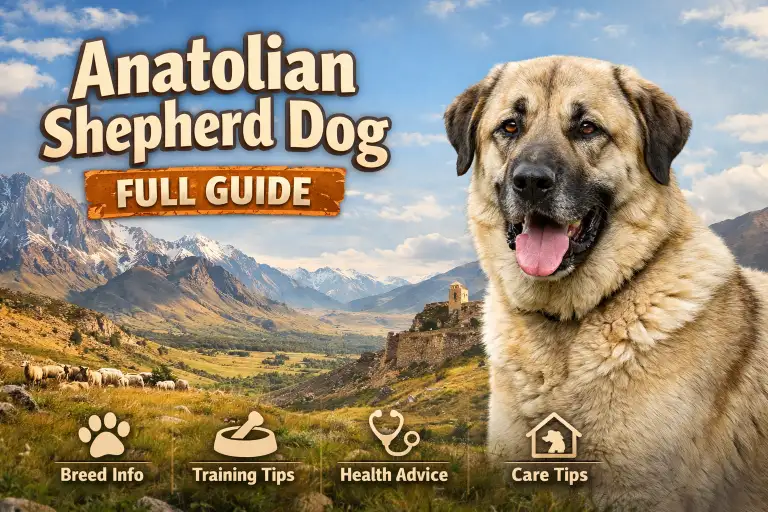
The Anatolian Shepherd Dog is an ancient livestock guardian breed developed in the harsh, open landscapes of Anatolia (modern-day Turkey). Unlike herding or companion breeds shaped to work closely with humans, the Anatolian Shepherd was bred to operate independently—making decisions, assessing threats, and protecting livestock without constant direction. This single purpose defines everything about the breed: its temperament, behavior, training challenges, and suitability for modern homes.
For thousands of years, Anatolian Shepherds lived alongside sheep and goats, not inside houses. Their job was not to chase predators but to deter them through presence, vigilance, and territorial authority. This explains why the breed is calm rather than excitable, observant rather than playful, and naturally suspicious rather than friendly with strangers. What many first-time owners misinterpret as aloofness or stubbornness is actually intentional self-reliance, carefully preserved through generations of functional breeding.
It’s also important to understand that the Anatolian Shepherd is closer to a landrace working dog than a tightly standardized show breed. Size, coat length, and appearance can vary significantly, especially between working-line dogs bred for livestock protection and show-line dogs bred for conformation. In rural settings, performance and stability matter far more than looks.
Another common misconception is that Anatolian Shepherds are aggressive. In reality, a well-bred, well-managed Anatolian is measured, controlled, and discerning. The breed is not reactive by default, but it will escalate decisively when it perceives a genuine threat. This makes them exceptional guardians—and a poor match for owners expecting a social, people-oriented pet.
To quickly orient readers, the table below summarizes what defines the Anatolian Shepherd Dog at its core:
| Trait | Summary |
|---|---|
| Breed Type | Livestock Guardian Dog |
| Origin | Anatolia (Turkey) |
| Primary Purpose | Independent livestock protection |
| Temperament | Calm, territorial, highly independent |
| Energy Level | Low to moderate |
| Trainability Style | Intelligent but self-directed |
| Best Environment | Rural or large fenced property |
Understanding the Anatolian Shepherd’s original purpose is essential. Nearly every ownership challenge—from recall issues to nighttime barking—can be traced back to instincts that once made the breed indispensable. When evaluated through that lens, the Anatolian Shepherd Dog stops looking “difficult” and starts looking exactly as it was designed to be.
Anatolian Shepherd Dog Size, Appearance, and Physical Characteristics
The Anatolian Shepherd Dog is a large, powerful, and strongly built breed, but its body is designed for endurance, not speed or looks. Everything about this dog’s appearance serves a working purpose. This is not a fancy show dog—it is a serious guardian built to survive long days and nights outdoors.
Most Anatolian Shepherds are very large dogs, but their size can vary more than many other breeds. This happens because the breed developed as a working landrace, not as a tightly controlled show breed. Dogs bred for real livestock work are often bigger, heavier, and more rugged than show-line dogs.
Males are usually much larger and heavier than females. Some working males can weigh well over what many people expect, which is important for owners to understand before choosing this breed.
The body is long and muscular with strong bones. The chest is deep to support lung strength and stamina. Legs are long and straight, built for walking long distances rather than running fast. The movement is smooth and steady, allowing the dog to patrol large areas without tiring quickly.
The Anatolian Shepherd has a double coat, which helps protect it from both hot and cold weather. The outer coat can be short to medium in length, while the undercoat becomes thicker in colder seasons. Shedding happens all year, but heavy shedding usually occurs once or twice a year during seasonal coat changes.
Coat colors vary widely. Common colors include fawn, cream, white, brindle, and pinto. Many Anatolians have a dark mask on the face, which is very common in working lines.
Below is a simple table to help readers quickly understand the breed’s physical traits:
| Feature | Typical Details |
|---|---|
| Height | 27–29 inches (males), 25–27 inches (females) |
| Weight | 80–150+ pounds |
| Body Type | Large, muscular, endurance-built |
| Coat Type | Double coat, short to medium length |
| Shedding | Moderate year-round, heavy seasonal shedding |
| Common Colors | Fawn, cream, white, brindle, pinto |
| Climate Tolerance | Handles heat and cold well |
Because of their size and strength, Anatolian Shepherds need space to move and strong fencing to stay secure. Their appearance alone is often enough to stop threats, which is one reason they have been trusted for centuries as guardians.
Anatolian Shepherd Temperament, Personality, and Real-Life Behavior
The Anatolian Shepherd Dog has a very different personality compared to most pet dogs. This breed was not made to please people or follow commands all day. It was made to think on its own and protect what belongs to it. Because of this, many people misunderstand its behavior.
Anatolian Shepherds are usually calm and quiet when nothing is wrong. They like to watch, listen, and stay aware of their surroundings. They do not need constant attention and are not overly playful. Instead of following their owner everywhere, they prefer to keep a distance where they can see everything.
With family members, this breed is loyal and protective. The bond is strong, but it may not look like affection in the usual way. Many Anatolian Shepherds show love by staying nearby, watching over the home, and stepping in when they feel something is wrong.
With strangers, the breed is naturally reserved and suspicious. This does not mean aggressive. A stable Anatolian usually watches quietly and places itself between the stranger and its territory. Friendly behavior toward visitors should not be expected, and forcing social interaction can cause stress.
Around children, Anatolian Shepherds are often tolerant but not playful. They usually do well with calm, respectful kids in their own family. However, they are not nanny dogs and should always be supervised due to their large size and protective instincts.
When it comes to other animals, behavior depends heavily on early exposure. With livestock, Anatolian Shepherds often show excellent guarding instincts and form strong bonds. With other dogs, especially of the same sex, they can be dominant or selective. Small pets may trigger chasing behavior if not raised together.
One well-known trait of this breed is barking, especially at night. Barking is part of their guarding job. They use their voice to warn threats and protect their territory. This can be a serious problem in quiet neighborhoods or apartments.
The table below shows what owners can realistically expect in everyday situations:
| Situation | Typical Behavior |
|---|---|
| With Family | Loyal, calm, protective |
| With Strangers | Reserved, watchful, distant |
| With Children | Tolerant, needs supervision |
| With Other Dogs | Selective, can be dominant |
| With Livestock | Strong bonding and guarding |
| Barking | Common, especially at night |
| Independence Level | Very high |
This breed does best with owners who understand that control comes from respect, not obedience. The Anatolian Shepherd will not blindly follow orders, but it will stay loyal to people who provide clear rules, space, and purpose.
Training, Exercise, and Daily Care Needs of an Anatolian Shepherd
Training an Anatolian Shepherd Dog is very different from training most pet dogs. This breed is smart, but it does not enjoy repeating commands just to please people. It thinks first and decides if something makes sense. Because of this, many owners believe the dog is stubborn, but in reality, it is independent by nature.
Anatolian Shepherds learn rules quickly, but they may choose when to follow them. Recall (coming when called) is often unreliable, especially if the dog feels it has a job to do. This is why off-leash freedom is risky unless the area is fully secure. Harsh training methods do not work and can damage trust. Calm leadership, clear boundaries, and consistency work best.
Exercise needs are lower than most people expect for such a large dog. This breed does not need long runs or intense play. Instead, it needs space to move, walk, patrol, and observe. Too much forced exercise can actually cause stress or joint problems.
Mental activity is more important than physical activity. Anatolian Shepherds stay mentally busy by watching their environment, guarding territory, and deciding what is safe or unsafe. Boredom usually comes from lack of purpose, not lack of walks.
Grooming is simple but not optional. The double coat sheds all year, with heavy shedding during seasonal coat changes. Weekly brushing helps control hair and keeps the skin healthy. Bathing is needed only when the dog is truly dirty.
The table below explains daily care in a simple way:
| Care Area | What to Expect |
|---|---|
| Trainability | Smart but chooses when to listen |
| Recall | Often unreliable |
| Exercise Needs | Low to moderate |
| Mental Needs | Watching, guarding, space |
| Grooming | Weekly brushing |
| Shedding | Heavy during seasonal changes |
| Dog Park Suitability | Poor choice |
This breed does best with routine, space, and calm handling. Owners who expect fast obedience or playful energy often struggle, while owners who respect the dog’s instincts usually succeed.
Is an Anatolian Shepherd Right for You? Cost, Health, Pros & Cons
The Anatolian Shepherd Dog is not the right breed for everyone. This dog does best with people who understand working dogs and respect independence. Before choosing this breed, it is very important to look at lifestyle, space, cost, and long-term responsibility.
This breed is best suited for rural homes, farms, or large fenced properties. Apartment living is usually a poor match because of size, barking, and guarding instincts. First-time dog owners often struggle with this breed due to training challenges and strong will.
Families can do well with an Anatolian Shepherd if children are calm and respectful. This dog is protective but not playful. Seniors may find the breed too large and strong to manage safely.
Health-wise, Anatolian Shepherds are generally tough and long-living for a large breed. Most live 11 to 13 years. However, like many big dogs, they can develop hip dysplasia, elbow issues, eye problems, and bloat. Responsible breeders test for these conditions, and owners must be ready for large-dog medical costs.
Owning an Anatolian Shepherd is not cheap. The puppy price may seem reasonable, but food, vet care, fencing, and insurance add up quickly. Because of their size and guarding nature, some insurance companies charge higher rates or place restrictions.
The tables below help readers quickly review the good and difficult parts of owning this breed.
| Pros | Cons |
|---|---|
| Extremely loyal and protective | Not obedient or eager to please |
| Excellent livestock guardian | Poor choice for apartments |
| Calm and steady temperament | Barks at night |
| Low grooming needs | Needs strong fencing |
| Independent thinker | Not beginner-friendly |
| Expense | Estimated Cost |
|---|---|
| Puppy Price | $800–$2,500 |
| Annual Vet Care | $500–$1,200 |
| Grooming | Low |
| Food | High due to size |
| Insurance | Often higher |
The Anatolian Shepherd Dog is ideal for owners who want a serious guardian, not a pet-like companion. It thrives when given space, purpose, and respect. However, people looking for a friendly, playful, or easy-to-train dog will likely be disappointed.
For official breed standards and background information, you can also review the American Kennel Club’s Anatolian Shepherd Dog breed profile, which explains the breed’s history and working purpose in detail:
https://www.akc.org/dog-breeds/anatolian-shepherd-dog/

Ata Ur Rehman is the founder of Pet Age in Human Years Calculator, an educational platform that provides age conversion charts and lifespan guides for dogs, cats, birds, and other companion animals. His work focuses on helping pet owners understand how animal ages translate into human years using commonly accepted age conversion formulas and published lifespan averages.
The website compiles breed and species lifespan data from kennel clubs, breed organizations, and general animal lifespan studies to present simple and easy-to-understand guides for pet owners worldwide.
This website was created to centralize animal age conversion charts into one easy reference platform for pet owners.