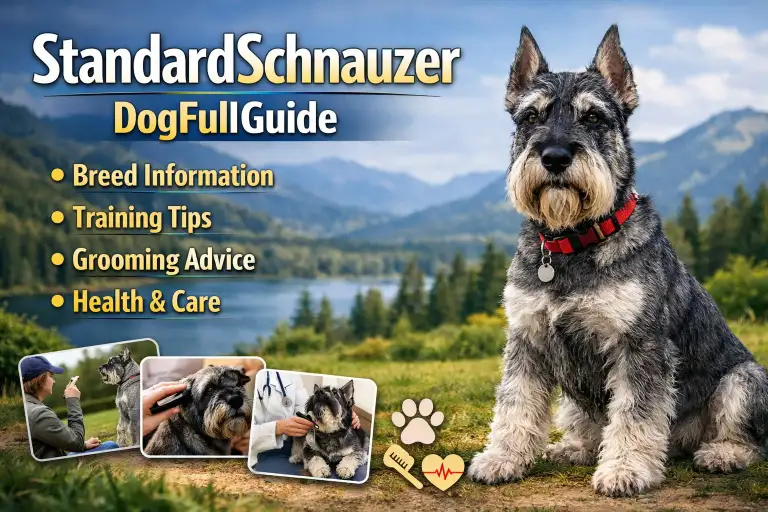
The Standard Schnauzer is the original Schnauzer breed and the blueprint from which the Miniature and Giant Schnauzers were later developed. Originating in Germany, this medium-sized working dog was bred to be versatile above all else—equally capable of guarding property, controlling vermin, and accompanying farmers on long days of physical work. That utilitarian background still defines the breed today, shaping its intelligence, stamina, and confident temperament.
Historically known as the Wire-Haired Pinscher, the Standard Schnauzer emerged in southern Germany during the late Middle Ages. These dogs worked in stables and farms, where alertness, independence, and resilience were essential survival traits. Unlike breeds created primarily for companionship or show, the Standard Schnauzer was expected to think for itself and react quickly to changing situations. Modern breed standards recognized by organizations such as the AKC and FCI still reflect this working heritage, emphasizing balance, strength, and alert expression rather than exaggeration.
In appearance, the Standard Schnauzer is immediately recognizable. The breed has a square, athletic build that conveys both power and agility without heaviness. Males and females differ slightly in size but share the same robust proportions and confident posture. Their movement is efficient and ground-covering, designed for endurance rather than speed, which becomes obvious when watching a well-conditioned Schnauzer trot.
The coat is one of the breed’s defining features. It consists of a harsh, wiry outer coat paired with a softer undercoat, offering protection from weather and rough working conditions. Accepted coat colors are salt and pepper and solid black. The famous beard and bushy eyebrows are not merely decorative—they protect the face while also giving the breed its expressive, almost human-like look that many owners describe as one of its most endearing traits.
the table below summarizes the key physical characteristics of the Standard Schnauzer.
| Feature | Standard Schnauzer Details |
|---|---|
| Height | 17.5–19.5 inches (male & female) |
| Weight | 30–50 pounds |
| Build | Square, muscular, athletic |
| Coat Type | Wiry double coat |
| Coat Colors | Salt & pepper, black |
| Origin | Germany |
| Breed Group | Working / Utility |
| Life Expectancy | 13–15 years |
Compared to the Miniature Schnauzer, the Standard is more physically demanding and mentally intense, while remaining more manageable for most households than the much larger Giant Schnauzer. This middle-ground positioning is a major reason the Standard Schnauzer appeals to owners who want a true working-dog mindset without the extreme size or strength of giant breeds.
Standard Schnauzer Temperament, Personality & Behavior
The Standard Schnauzer is known for being smart, alert, and deeply loyal to its family. This is not a laid-back dog that simply follows along. It is a thinking breed that likes to stay aware of everything happening around it. Many owners describe the Standard Schnauzer as confident and bold, but not reckless or aggressive when raised correctly.
With family members, this breed forms strong bonds. Standard Schnauzers often stay close to their people and prefer being involved in daily activities. They are protective by nature and take their role as a home watchdog seriously. This does not mean constant aggression, but it does mean they are quick to notice unfamiliar sounds, visitors, or changes in routine. Because of this, early social exposure is very important.
Around strangers, Standard Schnauzers tend to be reserved rather than overly friendly. They usually observe first before deciding how to react. This cautious behavior comes from their history as farm and guard dogs. When properly socialized, they remain calm and controlled, but they are rarely the type to greet everyone with excitement.
With children, Standard Schnauzers can be playful, patient, and protective. They often do best with respectful children who understand how to treat a dog. Rough handling or loud behavior may cause the dog to walk away rather than react. Supervision is always recommended, especially with younger children, as this breed values personal space.
When it comes to other pets, behavior can vary. Standard Schnauzers usually do well with other dogs if introduced properly. However, they have a natural prey drive, which means small animals like rodents or birds may trigger chasing instincts. Living with cats is possible, but early introductions and consistent boundaries matter a lot.
Barking is another common topic with this breed. Standard Schnauzers are alert barkers. They bark to warn, not to entertain themselves. Without proper training and mental activity, barking can increase. With clear rules and enough daily engagement, most owners find their barking manageable.
The table below gives a quick, easy-to-scan view of typical temperament traits
| Temperament Trait | Level | What This Means in Daily Life |
|---|---|---|
| Intelligence | High | Learns fast but gets bored easily |
| Loyalty | High | Strong attachment to family |
| Alertness | High | Notices sounds and movement quickly |
| Independence | Medium to High | Thinks for itself at times |
| Prey Drive | Medium | May chase small animals |
| Barking | Medium | Barks mainly to alert |
Many behavior issues in Standard Schnauzers come from misunderstanding the breed. Owners who expect an easygoing, low-effort dog often struggle. Owners who provide structure, training, and mental challenges usually see a calm, reliable companion.
Exercise, Training & Mental Stimulation Needs
The Standard Schnauzer is an active and smart dog. This breed needs both body exercise and brain work every day. A short walk is not enough. When their needs are met, they are calm and well behaved. When they are bored, problems like barking, digging, or chewing often appear.
Most adult Standard Schnauzers need at least one long walk each day, along with extra play time. They enjoy brisk walks, hiking, and games that let them move with purpose. This breed was made to work, so it feels happiest when it has a daily routine. Skipping exercise for many days in a row often leads to restless behavior inside the home.
Mental stimulation is just as important as physical activity. Standard Schnauzers like solving problems and learning new tasks. Simple training sessions, puzzle toys, and scent games help keep their mind busy. Without mental work, even a well-exercised Schnauzer can become stubborn or loud.
Training this breed is very rewarding, but it requires patience. Standard Schnauzers are highly intelligent, which means they learn quickly—but they also think for themselves. They may test rules or ignore commands they feel are pointless. Harsh training methods usually fail and can damage trust. Calm, firm, and consistent training works best.
Short, regular training sessions give the best results. These dogs respond well to praise, clear rules, and rewards. Once they understand what is expected, they usually perform very well. Early training is especially important, as young Standard Schnauzers can be strong-willed during adolescence.
Apartment living is possible with this breed, but only if daily exercise and mental work are taken seriously. Without enough activity, small living spaces can feel stressful for both dog and owner.
The table below shows how much daily activity a Standard Schnauzer usually needs.
| Activity Type | Minimum Daily Time | Ideal Daily Time | Notes |
|---|---|---|---|
| Walks | 30–45 minutes | 60 minutes | Brisk pace preferred |
| Active play | 20 minutes | 30–40 minutes | Fetch, tug, free play |
| Training | 10 minutes | 15–20 minutes | Short, focused sessions |
| Mental games | 10 minutes | 15–20 minutes | Puzzle toys, scent work |
Owners who commit to these needs often describe the Standard Schnauzer as balanced and enjoyable to live with. Those who underestimate the breed’s energy usually struggle.
Grooming, Health & Lifespan of a Standard Schnauzer
The Standard Schnauzer is often called a low-shedding dog, but that does not mean low effort. Their wiry coat needs regular care to stay healthy and comfortable. Owners who understand this early are usually much happier with the breed.
The coat has two layers. The outer layer is rough and protective, while the undercoat is softer. Loose hair does not fall out easily on its own, which is why brushing is important. Most Standard Schnauzers need brushing several times a week to prevent tangles, especially around the beard and legs.
Professional grooming is usually needed. Some owners choose hand-stripping, which keeps the coat’s natural texture and color. Others choose clipping, which is easier and cheaper but can soften the coat over time. Both methods can work if done correctly. The beard also needs regular cleaning, as it can hold food and water.
Ears, nails, and teeth should not be ignored. Nails grow quickly and can cause pain if left too long. Ears should be checked often for dirt or redness. Teeth brushing helps prevent gum disease, which is common in many dog breeds.
Climate matters for this breed. Standard Schnauzers handle cold weather well, but hot weather can be hard on them. During warm months, exercise should happen early in the morning or late in the evening.
The table below shows typical grooming tasks and how often they are needed.
| Grooming Task | Frequency | Owner Effort |
|---|---|---|
| Brushing | 2–3 times per week | Medium |
| Bathing | Every 4–6 weeks | Low |
| Professional grooming | Every 6–8 weeks | High |
| Nail trimming | Every 3–4 weeks | Medium |
| Ear cleaning | Weekly | Low |
| Teeth brushing | Several times per week | Medium |
In terms of health, the Standard Schnauzer is generally a strong and long-lived breed. Most live between 13 and 15 years. Good breeding, regular vet care, and proper weight management all play a role in long life.
Some health issues are seen more often in this breed. Hip problems can affect movement later in life. Eye conditions may appear as the dog ages. Skin issues can also occur, especially if grooming is poor or allergies are present. Responsible breeders test for common problems and share health records with buyers.
The table below highlights common health concerns and basic screening needs.
| Health Issue | Common Age | Recommended Screening | Notes |
|---|---|---|---|
| Hip problems | Adult to senior | OFA hip evaluation | Weight control helps |
| Eye conditions | Middle age | Eye exams | Early detection matters |
| Skin issues | Any age | Vet exams | Often linked to allergies |
With proper care, most Standard Schnauzers stay active and healthy well into their senior years.
Cost, Pros & Cons, Similar Breeds & Final Advice
Owning a Standard Schnauzer comes with both rewards and responsibilities. Before choosing this breed, it is important to understand the costs, the good points, and the challenges. This helps avoid surprises later.
The price of a Standard Schnauzer puppy usually depends on the breeder, location, and bloodline. Puppies from responsible breeders often cost more because of health testing and proper care. Ongoing costs are also higher than average due to grooming and activity needs. Food, routine vet visits, and grooming should all be planned for in advance. Many owners also choose pet insurance to help manage unexpected medical bills.
The table below gives a simple overview of common costs owners should expect.
| Expense Type | Typical Cost Range | Notes |
|---|---|---|
| Puppy price | Medium to high | Depends on breeder quality |
| Food | Medium | Active dogs eat more |
| Grooming | High | Professional grooming needed |
| Routine vet care | Medium | Yearly checkups and vaccines |
| Insurance | Optional but helpful | Can reduce surprise costs |
Like all breeds, the Standard Schnauzer has clear strengths and weaknesses. Knowing both sides helps people decide if this dog truly fits their lifestyle.
| Pros | Cons |
|---|---|
| Very intelligent | Can be stubborn |
| Loyal and protective | Needs daily exercise |
| Low shedding | High grooming needs |
| Good watchdog | Can bark if bored |
| Long lifespan | Not ideal for very busy owners |
Many people also compare the Standard Schnauzer with similar breeds before making a final choice. The table below helps show how the Standard Schnauzer compares to close alternatives.
| Breed | Size | Energy Level | Grooming Effort | Best For |
|---|---|---|---|---|
| Standard Schnauzer | Medium | High | High | Active owners wanting a watchdog |
| Miniature Schnauzer | Small | Medium | Medium | Smaller homes, families |
| Giant Schnauzer | Large | Very high | High | Experienced owners |
| Airedale Terrier | Medium to large | High | Medium | Confident, active owners |
The Standard Schnauzer is a great choice for people who want an alert, smart, and loyal dog and who enjoy being involved in daily training and activity. This breed does best with owners who like structure, routines, and mental challenges.
This breed may not be the best fit for people who want a low-effort dog, dislike grooming, or cannot commit to daily exercise and interaction. When chosen for the right reasons, the Standard Schnauzer becomes a devoted companion that stays active and engaged for many years.
For more detailed breed standards and health information, you can visit the official American Kennel Club page on Standard Schnauzers here.

Ata Ur Rehman is the founder of Pet Age in Human Years Calculator, an educational platform that provides age conversion charts and lifespan guides for dogs, cats, birds, and other companion animals. His work focuses on helping pet owners understand how animal ages translate into human years using commonly accepted age conversion formulas and published lifespan averages.
The website compiles breed and species lifespan data from kennel clubs, breed organizations, and general animal lifespan studies to present simple and easy-to-understand guides for pet owners worldwide.
This website was created to centralize animal age conversion charts into one easy reference platform for pet owners.