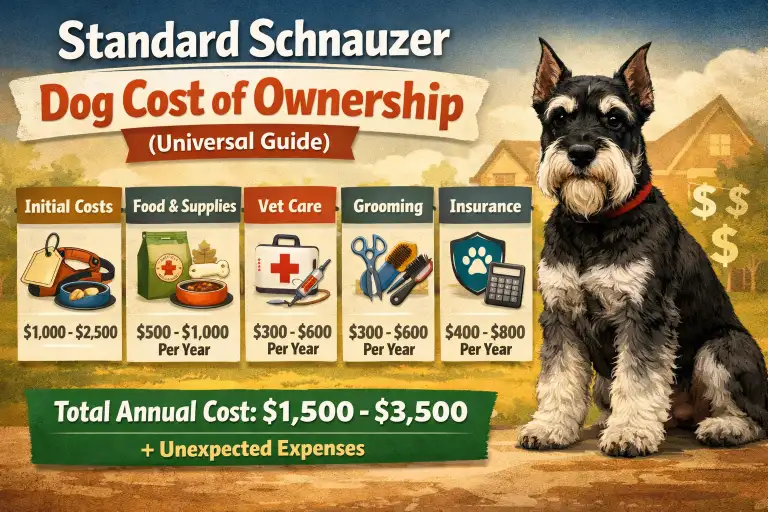
Owning a Standard Schnauzer is a long-term financial commitment, not a one-time purchase. While this breed sits in the medium-size category, its costs often surprise first-time owners due to professional grooming needs, higher-than-average intelligence and activity levels, and consistent veterinary and training requirements.
Standard Schnauzers are not the cheapest dogs to own, but they are also far from luxury-only breeds. Most owners fall into the middle-to-upper range of dog ownership costs, especially if they prioritize quality food, proper grooming, and preventive veterinary care.
What drives Standard Schnauzer costs overall
- Medium body size (typically 35–50 lbs) → moderate food and medication costs
- Wire coat maintenance → higher grooming costs than smooth-coated breeds
- High intelligence and working background → training and enrichment expenses
- Generally healthy breed, but still requires routine and emergency vet budgeting
- Long lifespan (often 13–15 years) → lifetime costs add up significantly
Quick Cost Snapshot (Average Owner Ranges)
| Cost Category | Estimated Cost Range |
|---|---|
| Average Monthly Cost | $150 – $300 |
| Average Annual Cost | $1,800 – $3,600 |
| First-Year Cost (Puppy) | $2,800 – $5,000 |
| First-Year Cost (Adult Dog) | $2,000 – $4,000 |
| Estimated Lifetime Cost | $25,000 – $45,000 |
How to read this table:
- Lower ranges assume healthy dogs, basic grooming, and minimal training
- Higher ranges reflect professional grooming, training classes, insurance, and urban pricing
- Emergency vet care, chronic conditions, or premium services can push totals higher
A realistic expectation for new owners
Most Standard Schnauzer owners spend more in the first year than they expect, mainly due to veterinary setup costs, grooming tools or services, and training. After the first year, expenses stabilize into predictable monthly and annual patterns—but only if you plan for them.
This guide is designed to help you:
- Understand where the money actually goes
- Avoid common under-budgeting mistakes
- Decide whether a Standard Schnauzer fits your financial lifestyle, not just your home
Standard Schnauzer First-Year Costs (Puppy vs Adult Dog)
The first year of owning a Standard Schnauzer is almost always the most expensive. This is when you pay for adoption or breeder fees, first vet visits, and all the basic supplies your dog needs to settle in. Many owners are surprised by how fast these costs add up, especially with puppies.
One-Time Setup and Initial Costs
| Expense | Typical Cost Range |
|---|---|
| Adoption fee (rescue) | $150 – $500 |
| Breeder purchase price | $1,500 – $3,000 |
| Initial vet exams & vaccines | $200 – $400 |
| Spay or neuter surgery | $200 – $600 |
| Microchipping | $40 – $75 |
| Crate, bed, bowls, leash | $150 – $300 |
| Grooming tools or first groom | $100 – $250 |
These costs explain why the first year feels expensive, even before monthly spending begins.
Puppy First-Year Costs vs Adult Dog First-Year Costs
| Cost Type | Puppy (First Year) | Adult Dog (First Year) |
|---|---|---|
| Adoption or purchase | Higher | Lower |
| Vet visits & vaccines | Higher | Moderate |
| Training needs | High | Moderate |
| Setup supplies | High | Moderate |
| Total first-year cost | $2,800 – $5,000 | $2,000 – $4,000 |
Why the First Year Costs More
Most of the extra spending comes from:
- Vet care in the first few months
- Training classes to prevent behavior problems
- Buying supplies you don’t already own
- Grooming setup for a wire-coated dog
Once these are handled, costs become more predictable.
Smart budgeting tip for year one
Many owners save money by:
- Adopting instead of buying from a breeder
- Buying quality supplies once instead of cheap replacements
- Budgeting an extra $500–$1,000 buffer for surprise vet visits
Planning ahead makes the first year far less stressful.
Monthly and Annual Costs of Owning a Standard Schnauzer
After the first year, costs become more steady and predictable. Most owners spend money every month on food, grooming, and health care, plus a few larger costs spread across the year.
Standard Schnauzers are active, smart dogs. They eat more than small dogs and usually need regular grooming and training, which raises their monthly cost compared to many other medium breeds.
Average Monthly Costs
| Monthly Expense | Average Cost Range |
|---|---|
| Food (35–50 lb active dog) | $40 – $80 |
| Flea, tick, and heartworm prevention | $25 – $45 |
| Grooming (averaged monthly) | $50 – $120 |
| Training, toys, enrichment | $20 – $50 |
| Pet insurance (optional) | $30 – $70 |
| Total Monthly Cost | $150 – $300 |
Lower costs usually mean basic grooming and no insurance. Higher costs reflect professional grooming, training classes, and insurance coverage.
Annual Costs You Should Expect
Some expenses are not monthly but still need to be planned for every year.
| Annual Expense | Typical Cost Range |
|---|---|
| Routine vet exam & vaccines | $150 – $300 |
| Dental care (cleaning averaged yearly) | $100 – $400 |
| License & registration | $10 – $30 |
| Replacement toys, beds, supplies | $100 – $300 |
| Total Annual Extras | $360 – $1,030 |
Even healthy dogs need yearly vet visits. Skipping these often leads to much higher emergency bills later.
Grooming Costs Matter More for This Breed
Standard Schnauzers have a wire coat, which costs more to maintain than short hair.
| Grooming Method | Average Cost |
|---|---|
| Clipping every 6–8 weeks | $60 – $100 per visit |
| Hand-stripping | $80 – $150 per visit |
Hand-stripping keeps the coat healthy but costs more. Many owners choose clipping to lower expenses, even though it changes coat texture.
What Most Owners Spend in a Typical Year
When you combine monthly and annual costs, most owners spend:
- $1,800 – $3,600 per year
- More if grooming, training, or insurance is added
- Less only if grooming is done at home and vet costs stay low
These numbers do not include emergencies.
Major Cost Factors That Change Standard Schnauzer Expenses
Not every Standard Schnauzer costs the same to own. Two dogs of the same breed can have very different yearly costs based on lifestyle, health, and care choices.
Lifestyle and Living Situation Costs
| Situation | How It Affects Cost |
|---|---|
| Apartment living | Higher training, daycare, or walker costs |
| House with yard | Lower exercise costs, fewer services needed |
| City living | Higher vet, grooming, and boarding prices |
| Rural living | Lower service costs, longer travel for vet care |
| One dog household | Lower total cost |
| Multiple dogs | Shared supplies, but higher vet and food costs |
Dogs in apartments often need more paid exercise and training, which raises monthly spending.
Health and Veterinary Cost Differences
| Type of Care | Typical Cost Range |
|---|---|
| Routine yearly vet care | $150 – $300 |
| Emergency vet visit | $800 – $3,000 |
| Ongoing allergy or skin care | $300 – $800 per year |
| Senior dog care (aging years) | $500 – $1,500 per year |
Emergency care is the biggest cost risk for any dog. One accident or illness can cost more than several normal years combined.
Grooming Choices Change Long-Term Costs
| Grooming Choice | Cost Impact |
|---|---|
| Professional grooming | Higher yearly cost |
| Home grooming | Lower cost, more time needed |
| Hand-stripping | Best coat quality, highest cost |
| Clipping | Lower cost, easier upkeep |
Owners who learn basic home grooming often save hundreds of dollars each year.
Pet Insurance and Cost Control
| Insurance Factor | What to Expect |
|---|---|
| Monthly premium | $30 – $70 |
| Deductible | $250 – $500 |
| Emergency coverage | Helps with large vet bills |
| Routine care | Usually not included |
Insurance is most helpful for owners who want budget safety and fewer financial surprises.
Simple rule to remember
- Healthy dog + basic grooming = lower costs
- Health problems + professional services = higher costs
Planning for the higher side keeps you safe.
Lifetime Cost, Hidden Expenses, and Budget Planning
Owning a Standard Schnauzer is a long-term money commitment. These dogs often live 13 to 15 years, so even small yearly costs add up over time. Many owners plan for monthly costs but forget about hidden and long-term expenses.
Estimated Lifetime Cost of a Standard Schnauzer
| Life Stage | Estimated Cost |
|---|---|
| First year | $2,800 – $5,000 |
| Adult years (per year) | $1,800 – $3,600 |
| Senior years (per year) | $2,000 – $4,000 |
| Estimated lifetime total | $25,000 – $45,000 |
Senior years often cost more because of extra vet care and medications.
Hidden Costs Many Owners Forget
| Hidden Expense | Typical Cost |
|---|---|
| Emergency vet care | $800 – $3,000 |
| Dental cleanings | $300 – $800 |
| Boarding or pet sitting | $30 – $75 per day |
| Home damage and replacements | $200 – $1,000 |
| Travel or relocation costs | $200 – $1,000 |
Skipping dental care or vet visits may seem cheaper, but it often leads to much bigger bills later.
Simple Budget Planning for Owners
A safe and realistic budget includes:
- Monthly spending plan
- Yearly vet and grooming money
- An emergency fund of $1,000–$3,000
- Extra savings for senior years
Many owners use a separate savings account just for dog expenses.
Common Money Mistakes to Avoid
- Not saving for emergencies
- Underestimating grooming costs
- Skipping training and fixing problems later
- Assuming insurance covers everything
Planning ahead is always cheaper than reacting later.
Final reality check
A Standard Schnauzer is not the cheapest dog, but it is also not out of reach for most families. If you can handle steady monthly costs and surprise vet bills, this breed can be a great long-term companion.
For more detailed cost insights and national averages on pet care, visit the ASPCA’s official guide: https://www.aspca.org/pet-care/dog-care

Ata Ur Rehman is the founder of Pet Age in Human Years Calculator, an educational platform that provides age conversion charts and lifespan guides for dogs, cats, birds, and other companion animals. His work focuses on helping pet owners understand how animal ages translate into human years using commonly accepted age conversion formulas and published lifespan averages.
The website compiles breed and species lifespan data from kennel clubs, breed organizations, and general animal lifespan studies to present simple and easy-to-understand guides for pet owners worldwide.
This website was created to centralize animal age conversion charts into one easy reference platform for pet owners.