If you’re wondering how old your Standard Schnauzer is in human years, you’re not alone—and the answer is not as simple as multiplying by seven. Dogs age on a different biological timeline than humans, and medium-sized breeds like the Standard Schnauzer follow a more even, breed-specific aging curve.
A Standard Schnauzer age calculator converts your dog’s actual age into an estimated human-equivalent age by accounting for:
- Faster aging during the first years of life
- Slower, steadier aging through adulthood
- Gradual changes as dogs enter their senior years
- The fact that medium breeds age differently than small or giant dogs
Using a breed- and size-appropriate model gives a far more realistic picture of your dog’s maturity, health stage, and aging process.
For example, a 5-year-old Standard Schnauzer is biologically closer to a mid-30s human, not a 35-year-old only because of a fixed formula, but because dogs mature rapidly early on and then age more gradually through adulthood.
This calculator is designed specifically for Standard Schnauzers, using modern canine aging science rather than outdated rules of thumb. Below, you’ll find a clear age chart showing how Standard Schnauzer dog years translate into human years across different life stages.
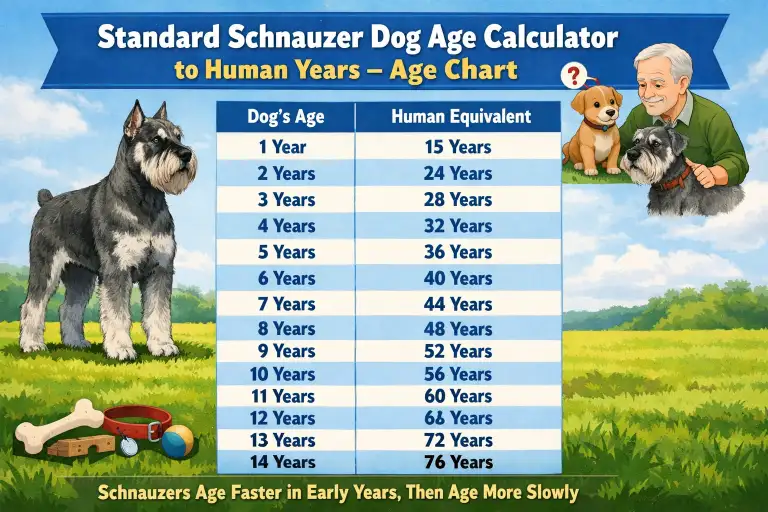
Standard Schnauzer Age Chart: Dog Years to Human Years
Many people prefer a quick chart instead of a calculator. An age chart lets you scan, compare, and understand your Standard Schnauzer’s age in seconds. This chart is based on medium-breed aging patterns, not the outdated 7-year rule.
The goal is simple: help you see how old your dog really is in human years and which life stage they are in.
Standard Schnauzer Dog Age to Human Age Chart
| Standard Schnauzer Age (Years) | Human Age Equivalent | Life Stage |
|---|---|---|
| 0.5 (6 months) | ~10 years | Puppy |
| 1 | ~15 years | Puppy |
| 2 | ~24 years | Young Adult |
| 3 | ~28 years | Adult |
| 4 | ~32 years | Adult |
| 5 | ~36 years | Adult |
| 6 | ~40 years | Adult |
| 7 | ~44 years | Mature Adult |
| 8 | ~48 years | Mature Adult |
| 9 | ~52 years | Senior |
| 10 | ~56 years | Senior |
| 11 | ~60 years | Senior |
| 12 | ~64 years | Senior |
| 13 | ~68 years | Senior |
| 14 | ~72 years | Senior |
This chart shows why the “1 dog year equals 7 human years” rule does not work. A Standard Schnauzer grows very fast in the first two years, then ages more slowly and evenly through adulthood.
For example:
- A 2-year-old Standard Schnauzer is already similar to a young adult human
- A 10-year-old Standard Schnauzer is closer to a mid-50s human, not 70
This kind of chart is useful for:
- Understanding behavior changes
- Planning vet checkups
- Adjusting food and exercise
- Knowing when your dog is becoming a senior
How Standard Schnauzers Age Compared to Humans
Standard Schnauzers do not age at the same speed as humans. They grow up very fast in the first years, then age more slowly as adults. This is why simple math does not work for dog ages.
The old idea that 1 dog year equals 7 human years is not correct. Dogs age in stages, not in a straight line. Puppies grow quickly, adult dogs stay stable for many years, and senior dogs age more slowly than people think.
Standard Schnauzers are a medium-sized breed, which matters a lot. Medium dogs usually:
- Live longer than large and giant dogs
- Age more evenly than very small dogs
- Stay active well into middle age
This means a Standard Schnauzer at 8 or 9 years old is often still playful and alert, even though they are entering their senior stage.
Why the 7-Year Rule Doesn’t Work
| Common Belief | What Really Happens |
|---|---|
| 1 dog year = 7 human years | Dogs age faster early, slower later |
| All dogs age the same | Size and breed change aging speed |
| Older dogs are always weak | Many seniors stay active for years |
Modern dog aging research shows that dogs age more like humans in curves, not straight lines. Early years matter more, and later years stretch out longer than most people expect.
This is why a 10-year-old Standard Schnauzer is closer to a middle-aged human, not an elderly one. Understanding this helps owners:
- Set realistic activity levels
- Avoid overfeeding older dogs
- Spot real aging problems sooner
Standard Schnauzer Life Stages and Signs of Aging
Standard Schnauzers go through clear life stages as they grow. Each stage comes with normal changes in energy, behavior, and health. Knowing what is normal for your dog’s age helps you care for them better and notice problems early.
Dogs do not change overnight. Aging happens slowly, and many owners miss early signs because their dog still “acts young.”
Standard Schnauzer Life Stages by Age
| Age Range | Life Stage | What’s Normal at This Stage | Common Changes Owners Notice |
|---|---|---|---|
| 0–1 year | Puppy | Fast growth, learning, high energy | Chewing, short attention span |
| 1–3 years | Young Adult | Strong body, high activity | Testing limits, high play drive |
| 3–6 years | Adult | Peak health and stamina | Calm focus, steady routine |
| 7–9 years | Mature Adult | Slight slowdown | Longer rest times, mild stiffness |
| 10+ years | Senior | Lower energy, more rest | Gray hair, joint stiffness, slower movement |
Many Standard Schnauzers stay playful even as seniors. This is normal for the breed. Aging does not mean your dog is sick—it means their needs are changing.
Common signs of aging may include:
- Sleeping more than before
- Slower movement after rest
- Less interest in rough play
- Small changes in hearing or vision
- Gray hair around the face
These signs are expected as dogs grow older. Sudden or fast changes, however, should always be checked by a vet.
Understanding life stages helps you:
- Adjust food and portion size
- Change exercise to protect joints
- Plan vet visits at the right time
- Support comfort as your dog ages
Helping a Standard Schnauzer Age Healthier and Longer
A Standard Schnauzer can live a long, happy life with the right care. Aging is natural, but good daily habits can slow problems and improve comfort, especially as your dog gets older.
Small changes over time matter more than big changes later.
Age-Based Care Guide for Standard Schnauzers
| Dog Age | Food Focus | Exercise Needs | Vet Care | At-Home Tips |
|---|---|---|---|---|
| Puppy (0–1) | Growth food, correct portions | Short play sessions | Vaccines, growth checks | Training, safe chewing |
| Adult (1–6) | Balanced adult food | Regular walks, play | Yearly checkups | Weight control |
| Mature (7–9) | Joint support, lean protein | Moderate exercise | Bloodwork, dental care | Softer bedding |
| Senior (10+) | Senior food, easy digestion | Gentle walks | Twice-yearly exams | Ramps, warmth, comfort |
As dogs age, their bodies change. You may need to:
- Reduce food slightly to avoid weight gain
- Add joint support if your vet recommends it
- Shorten walks but keep them regular
- Add mental games to keep the brain active
Vet visits become more important with age. Regular checkups can catch issues early, before they cause pain or slow your dog down.
Simple home care also helps a lot:
- Keep nails trimmed to protect joints
- Use soft beds to reduce pressure
- Keep floors slip-free
- Stick to a calm daily routine
Aging does not mean the end of fun. Many senior Standard Schnauzers still enjoy walks, play, and time with family—they just need a little more care and patience.
For more expert guidance on dog health and lifespan, visit the American Kennel Club’s Standard Schnauzer page AKC Standard Schnauzer.

Ata Ur Rehman is the founder of Pet Age in Human Years Calculator, an educational platform that provides age conversion charts and lifespan guides for dogs, cats, birds, and other companion animals. His work focuses on helping pet owners understand how animal ages translate into human years using commonly accepted age conversion formulas and published lifespan averages.
The website compiles breed and species lifespan data from kennel clubs, breed organizations, and general animal lifespan studies to present simple and easy-to-understand guides for pet owners worldwide.
This website was created to centralize animal age conversion charts into one easy reference platform for pet owners.