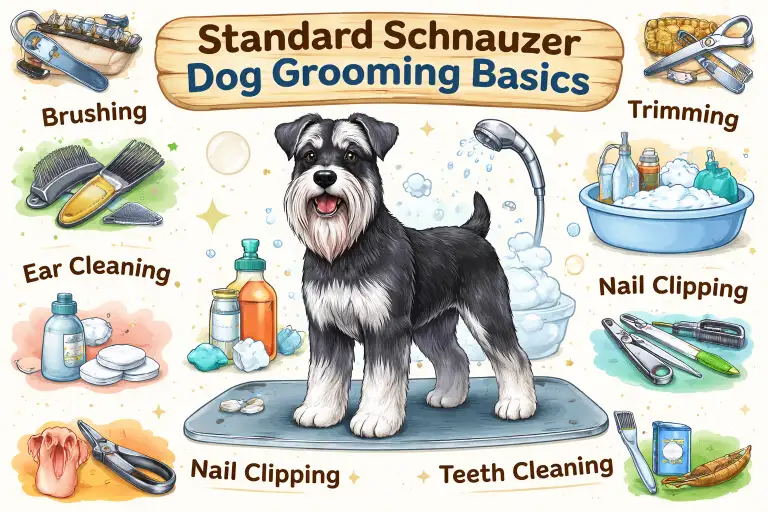
Standard Schnauzer grooming isn’t about looks alone—it’s essential care for a breed with a very specific coat structure and set of hygiene needs. Unlike dogs that shed freely, the Standard Schnauzer has a harsh wire outer coat with a dense undercoat and prominent furnishings (beard, eyebrows, legs). Without regular, correct grooming, that coat can quickly become uncomfortable, unhealthy, and difficult to manage.
Proper grooming helps maintain the natural texture of the wire coat, prevents painful matting in high-risk areas (behind the ears, under the arms, along the legs, and in the beard), and supports overall skin health. When grooming is skipped or done incorrectly, owners often see secondary problems such as persistent odor, itchy or flaky skin, trapped debris in the furnishings, and coats that gradually turn soft, dull, or patchy.
From a comfort and behavior standpoint, grooming also matters more than many owners expect. Dogs that are brushed, bathed, and handled regularly tend to tolerate grooming better over time. In contrast, neglected coats often lead to painful tangles, sensitive skin, and stressful grooming sessions—whether at home or with a professional.
This guide focuses on practical, realistic Standard Schnauzer grooming. It explains what you actually need to do at home, what you should avoid, and when professional grooming becomes important. The goal is not to turn every owner into a show groomer, but to help you keep your Standard Schnauzer clean, comfortable, and healthy while preserving the integrity of their wire coat.
Understanding the Standard Schnauzer Coat Type
The Standard Schnauzer has a very unique coat, and understanding it makes grooming much easier. This breed does not have a soft, fluffy coat like many family dogs. Instead, it has a harsh, wiry outer coat with a softer undercoat underneath. This is why Standard Schnauzer grooming is different and why the wrong methods can damage the coat over time.
The outer wire coat is meant to protect the dog from dirt, weather, and moisture. The undercoat helps with insulation. On top of this, Standard Schnauzers have long facial hair (the beard and eyebrows) and longer hair on the legs and belly, often called furnishings. These areas look great when cared for, but they also trap food, water, and dirt very easily.
Many owners ask if Standard Schnauzers shed. The answer is yes, but not in the same way as heavy-shedding breeds. Loose hair tends to stay trapped in the coat instead of falling out on the floor. If that dead hair is not brushed or removed, it leads to matting, skin irritation, and a dull-looking coat.
Matting usually starts in problem areas. These include behind the ears, under the collar, under the front legs, around the legs, and inside the beard. Even dogs that look fine on the surface can have tight mats close to the skin if regular grooming is skipped.
One of the biggest things owners need to understand is the difference between clipping and hand stripping. Clipping cuts the hair off but leaves the dead hair in the coat. Over time, this can make the coat soft, lighter in color, and more prone to tangles. Hand stripping removes dead wire hair from the root and helps keep the coat harsh and healthy. Many pet owners choose clipping for convenience, but it is important to know how this choice affects the coat long-term.
Below is a quick table to help you understand the Standard Schnauzer coat at a glance.
| Coat feature | What it means | Grooming impact |
|---|---|---|
| Wire outer coat | Harsh, protective hair | Needs regular brushing and proper coat care |
| Soft undercoat | Holds loose hair | Can cause matting if not maintained |
| Beard and leg furnishings | Long hair that traps dirt | Requires frequent cleaning and combing |
| Low-shedding pattern | Hair stays in coat | Dead hair must be removed manually |
| Clipping vs hand stripping | Different grooming methods | Clipping softens coat over time |
Understanding this coat type is the foundation of good grooming. Once you know how the coat behaves, it becomes much easier to build the right routine and avoid common mistakes.
Standard Schnauzer Grooming Routine at Home
A simple and steady grooming routine at home keeps a Standard Schnauzer comfortable and prevents most coat problems. You do not need to groom every day, but you do need to be consistent. Skipping grooming for weeks often leads to mats, skin irritation, and stressful grooming sessions later.
Brushing is the most important part of home grooming. Most Standard Schnauzers need brushing and combing at least two to three times a week. Focus on the legs, beard, behind the ears, under the collar, and under the front legs. Always brush gently and slowly. If you feel resistance, stop and work the area carefully instead of pulling.
Bathing does not need to be frequent. For most Standard Schnauzers, a bath every four to six weeks is enough. Bathing too often can dry out the skin and soften the wire coat. Use a dog shampoo made for wire-haired breeds or sensitive skin. Always rinse well, especially in the beard and leg hair, where soap can get trapped.
Beard care is a daily habit for many owners. Food, water, and dirt collect in the beard very easily. Rinsing the beard with clean water and drying it after meals helps reduce smell and skin problems around the mouth.
Drying matters more than many people realize. Leaving the coat damp can cause odor, itching, and skin infections. Towel-dry first, then use a dryer on a cool or low-warm setting if needed. Never use hot air.
The table below shows how often common grooming tasks should be done.
| Grooming task | How often | Why it matters |
|---|---|---|
| Brushing and combing | 2–3 times per week | Prevents mats and removes loose hair |
| Bathing | Every 4–6 weeks | Keeps skin clean without drying it |
| Beard cleaning | Daily or after meals | Reduces odor and bacteria |
| Ear check | Weekly | Catches early signs of infection |
| Nail trimming | Every 3–4 weeks | Prevents pain and posture problems |
A weekly checklist makes grooming easier to remember and less overwhelming.
| Task | Tools needed | Time needed |
|---|---|---|
| Brush and comb body | Slicker brush, metal comb | 10–15 minutes |
| Clean beard | Water, towel | 2–3 minutes |
| Check ears | Cotton pads, ear cleaner | 3–5 minutes |
| Check nails | Nail clippers or grinder | 5 minutes |
Sticking to this routine helps prevent most grooming problems and keeps grooming sessions calm and short.
Essential Grooming Tools and Common Grooming Mistakes
Having the right tools makes Standard Schnauzer grooming much easier and safer. You do not need a large grooming kit, but the tools you use should be made for wire-coated dogs. Using the wrong tools can damage the coat or hurt the skin.
A slicker brush and a metal comb are the most important items. The slicker helps loosen dirt and dead hair, while the metal comb helps you find small mats close to the skin. Many owners skip the comb, but this is often why mats are missed until they become painful. A gentle dog shampoo made for wire coats or sensitive skin is also important. Human shampoo should never be used because it can irritate a dog’s skin.
Below is a simple table showing the most useful grooming tools for Standard Schnauzers.
| Tool | What it is used for | How often to use |
|---|---|---|
| Slicker brush | Removes loose hair and light tangles | 2–3 times per week |
| Metal comb | Finds hidden mats near the skin | Every brushing session |
| Dog shampoo | Cleans skin and coat safely | Every 4–6 weeks |
| Towel | Dries coat and beard | After baths and beard rinsing |
| Nail clippers or grinder | Keeps nails short and safe | Every 3–4 weeks |
Just as important as good tools is avoiding common grooming mistakes. Many problems groomers see could be prevented with better habits at home. One of the biggest mistakes is shaving the coat. Shaving does not reduce shedding or keep the dog cooler. It often makes the coat soft, uneven, and harder to manage later.
Another common mistake is over-bathing. Bathing too often strips natural oils from the skin and can cause dryness, itching, and dull hair. Ignoring small mats is also risky. Small tangles can turn into tight mats very quickly, especially in the legs and beard.
The table below shows common grooming mistakes and what to do instead.
| Common mistake | Why it’s a problem | Better choice |
|---|---|---|
| Shaving the wire coat | Damages coat texture | Brush regularly and trim only when needed |
| Bathing too often | Dries skin and softens coat | Bathe every 4–6 weeks |
| Skipping combing | Mats stay hidden | Always finish with a metal comb |
| Pulling on mats | Causes pain and fear | Work slowly or get professional help |
Using the right tools and avoiding these mistakes will keep grooming easier and much less stressful for both you and your dog.
Professional Grooming, Grooming Frequency, and FAQs
Even with good home care, most Standard Schnauzers still need professional grooming. A groomer helps keep the coat neat, healthy, and comfortable, especially in areas that are hard to manage at home. Professional grooming also prevents small problems from turning into big ones.
Most Standard Schnauzers benefit from professional grooming every six to eight weeks. Dogs that are hand stripped may follow a different schedule, depending on coat growth and owner goals. Dogs that are clipped usually need more frequent visits because the coat grows back faster and can lose its shape.
The table below makes this easy to understand.
| Grooming task | Safe at home | Best done by a professional |
|---|---|---|
| Brushing and combing | Yes | No |
| Bathing | Yes | Optional |
| Nail trimming | Sometimes | Yes if unsure |
| Full body haircut | No | Yes |
| Hand stripping | No | Yes |
Many owners also have common questions about Standard Schnauzer grooming. One frequent question is whether hand stripping hurts. When done correctly by a professional, it should not be painful. Another common question is about shaving. Shaving is not recommended because it can damage the wire coat and cause long-term texture changes. Owners also ask how to control beard smell. Regular rinsing, drying, and brushing of the beard usually solves this problem.
You should contact a professional groomer or veterinarian if your dog has severe matting, red or irritated skin, strong odor that does not go away, or signs of pain during grooming. These issues often need expert care and should not be handled at home.
For more detailed guidance on hand stripping and professional grooming techniques, visit the American Kennel Club’s grooming page here.

Ata Ur Rehman is the founder of Pet Age in Human Years Calculator, an educational platform that provides age conversion charts and lifespan guides for dogs, cats, birds, and other companion animals. His work focuses on helping pet owners understand how animal ages translate into human years using commonly accepted age conversion formulas and published lifespan averages.
The website compiles breed and species lifespan data from kennel clubs, breed organizations, and general animal lifespan studies to present simple and easy-to-understand guides for pet owners worldwide.
This website was created to centralize animal age conversion charts into one easy reference platform for pet owners.