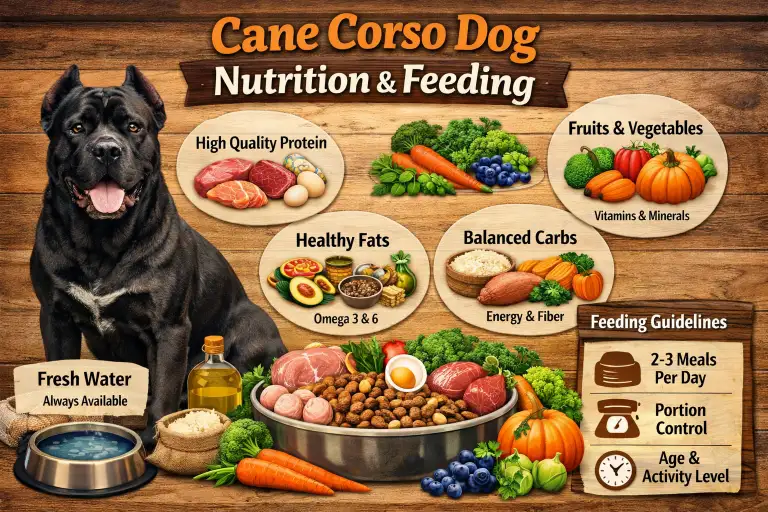
Feeding a Cane Corso isn’t the same as feeding an average dog. This is a large, powerful mastiff breed with a heavy bone structure, dense muscle mass, and a growth pattern that places significant stress on joints, ligaments, and the cardiovascular system. Nutrition plays a central role in whether a Cane Corso grows into a sound, athletic adult—or develops preventable issues linked to poor feeding decisions early in life.
This guide is designed to help you make informed, practical feeding choices, whether you’re raising a Cane Corso puppy, maintaining an active adult, or supporting an aging senior. Instead of focusing on trends or brand hype, it explains how diet affects your dog’s health in real-world terms: growth rate, body condition, energy levels, digestion, skin and coat quality, and long-term mobility.
One of the most common mistakes Cane Corso owners make is assuming that a bigger dog simply needs more food, more protein, or more supplements. In reality, overfeeding—especially during puppyhood—can be more damaging than underfeeding. Rapid growth, excess calories, and unbalanced calcium levels increase the risk of orthopedic problems, including joint instability and early wear on hips and elbows. Proper nutrition is about balance and control, not excess.
Diet also influences behavior and daily functioning. Cane Corsos fed inappropriate portions or poorly balanced diets may appear constantly hungry, lethargic, or overly excitable. In many cases, these issues are not training problems but feeding problems—too many calories, too few nutrients, or inconsistent meal routines.
When nutrition is done correctly, the benefits are visible. A well-fed Cane Corso maintains a lean, muscular build, steady energy throughout the day, firm stools, healthy skin, and a calm, focused temperament. Over time, proper feeding supports joint health, reduces strain on internal organs, and contributes to a longer, healthier life.
What to Feed a Cane Corso: Nutritional Needs and Best Food Choices
A Cane Corso needs a balanced diet that supports strong muscles, healthy joints, and steady energy without causing fast or unhealthy weight gain. The goal is not to feed the most food, but to feed the right nutrients in the right amounts.
At a basic level, every Cane Corso diet should provide protein for muscle, fat for energy, carbohydrates for digestion and fuel, and key vitamins and minerals for bones, joints, skin, and organs. Because this breed grows large and heavy, balance matters more than extremes.
Cane Corso Nutritional Targets (Daily Averages)
| Nutrient | General Target Range | Why It Matters |
|---|---|---|
| Protein | 22–28% (dry matter) | Builds and maintains muscle |
| Fat | 12–18% | Energy and coat health |
| Fiber | 3–6% | Digestive health and stool quality |
| Calcium | Controlled, not high | Supports bones without joint damage |
| Omega-3 fats | Present (EPA/DHA) | Joint, skin, and inflammation support |
More protein is not always better. For Cane Corso puppies especially, too many calories and too much calcium can push the body to grow too fast, which increases stress on joints.
Best Types of Dog Food for Cane Corsos
There is no single “perfect” food for every Cane Corso. The best choice depends on your dog’s age, activity level, health, and your ability to feed consistently and safely.
Dog Food Types: Pros and Cons for Cane Corsos
| Food Type | Pros | Cons |
|---|---|---|
| Dry kibble | Easy, affordable, balanced | Quality varies by brand |
| Fresh food | Highly digestible, tasty | Higher cost, storage needs |
| Canned food | Good hydration, palatable | Can be high in calories |
| Freeze-dried | Convenient, nutrient-dense | Expensive |
| Raw diet | High meat content | Safety and balance risks |
| Homemade | Full control over ingredients | Requires expert formulation |
For most owners, a high-quality large-breed or giant-breed formula is the safest and easiest option. These foods are designed to control calorie density and mineral levels, which is important for Cane Corso growth and joint health.
How to Read a Dog Food Label for Cane Corsos
Dog food labels can be confusing, but a few simple checks make a big difference.
Dog Food Label Quick Guide (Large-Breed Focus)
| Label Area | What to Look For |
|---|---|
| First ingredients | Named animal proteins |
| AAFCO statement | “Complete and balanced” |
| Life stage | Puppy, adult, or all life stages |
| Calcium level | Not excessive, especially for puppies |
| Marketing terms | Ignore buzzwords, check numbers |
Avoid choosing food based only on words like “premium,” “ancestral,” or “high-protein.” Numbers and balance matter more than marketing.
Grain-Free vs Grain-Inclusive Diets
Grain-free diets are not automatically healthier for Cane Corsos. Most dogs digest grains well, and grains can provide energy and fiber. Grain-free diets should only be used when a true grain allergy is diagnosed by a veterinarian, which is uncommon.
Key Takeaway for Owners
The best Cane Corso diet is balanced, consistent, and matched to the dog’s size, age, and lifestyle. Extreme diets, sudden food changes, or overfeeding usually cause more harm than good.
How Much to Feed a Cane Corso and How Often
Knowing how much to feed a Cane Corso is one of the biggest challenges for owners. This breed grows large and strong, but eating more food does not always mean better health. The right amount of food keeps your dog lean, active, and protects the joints.
Calories matter more than bowl size. Two dogs of the same weight may need very different amounts of food depending on age, activity level, and metabolism. Always start with a guideline, then adjust based on your dog’s body shape and energy.
Cane Corso Daily Calorie Needs by Weight and Activity
| Adult Weight | Low Activity | Moderate Activity | High Activity |
|---|---|---|---|
| 80 lb (36 kg) | 1,800–2,000 kcal | 2,100–2,300 kcal | 2,400–2,600 kcal |
| 100 lb (45 kg) | 2,000–2,200 kcal | 2,300–2,600 kcal | 2,700–3,000 kcal |
| 120 lb (54 kg) | 2,200–2,500 kcal | 2,600–2,900 kcal | 3,000–3,300 kcal |
These are average ranges. Your Cane Corso may need more or less depending on daily exercise and body condition.
Feeding Amounts by Life Stage
| Life Stage | Feeding Focus | General Guidance |
|---|---|---|
| Puppy | Slow, steady growth | Large-breed puppy food only |
| Adult | Muscle and weight balance | Adjust portions to stay lean |
| Senior | Joint support, lower calories | Slightly reduced portions |
Cane Corso puppies should never be free-fed. Controlled meals help prevent rapid growth that can damage joints.
How Often to Feed a Cane Corso
| Age | Meals per Day | Why It Matters |
|---|---|---|
| Puppy (up to 6 months) | 3 meals | Supports digestion and growth |
| Adult | 2 meals | Reduces bloat risk |
| Senior | 2 smaller meals | Easier on digestion |
Feeding two meals per day is safer for large, deep-chested dogs like the Cane Corso. It lowers the risk of stomach twisting and keeps energy levels steady.
Using Body Condition to Adjust Portions
You should be able to feel your Cane Corso’s ribs under a thin layer of fat, but not see them clearly. From the side, the belly should tuck up slightly behind the ribs. If your dog looks round or feels soft, reduce food slightly. If ribs are sharp and visible, increase food slowly.
Many Cane Corsos act hungry even when they are eating enough. This is normal for the breed and does not always mean they need more food.
Key Takeaway for Owners
Feed your Cane Corso based on body condition, not just numbers on a bag. Slow changes and regular checks help prevent weight and joint problems.
Cane Corso Feeding by Life Stage, Size, and Lifestyle
A Cane Corso’s feeding needs change over time. Age, body size, and daily activity all affect how much food your dog needs and what type of food works best. Feeding the same way for every stage can lead to weight gain, low energy, or joint stress.
Puppies, adults, and seniors all use food differently. Active working dogs also burn more calories than calm home dogs, even if they weigh the same.
Cane Corso Puppy Feeding Guidelines (Growth-Safe)
| Puppy Age | What to Focus On | Feeding Tips |
|---|---|---|
| 8–16 weeks | Controlled growth | Large-breed puppy food only |
| 4–6 months | Steady weight gain | No free-feeding |
| 6–12 months | Joint protection | Avoid extra calcium or supplements |
Cane Corso puppies should grow slowly and evenly. Feeding too much food or adding supplements can cause bones to grow too fast, which increases joint problems later in life.
Adult vs Senior Cane Corso Feeding Needs
| Life Stage | Calories | Key Nutrition Focus |
|---|---|---|
| Adult | Moderate to high | Muscle maintenance |
| Senior | Slightly lower | Joint and weight support |
Adult Cane Corsos need enough food to stay strong and lean. Seniors usually need fewer calories because their activity level drops, even if their appetite stays high.
Feeding by Activity Level
| Lifestyle | Feeding Adjustment | Notes |
|---|---|---|
| Working or guarding | Slightly higher calories | Watch weight closely |
| Active family dog | Standard portions | Regular exercise |
| Low-activity dog | Reduced portions | Prevent weight gain |
Many Cane Corsos are strong but calm dogs. If your dog spends most of the day resting, feeding high-calorie food can lead to fast weight gain.
Water and Hydration Needs
Large dogs need plenty of fresh water every day. A Cane Corso should always have clean water available, especially after exercise or in warm weather. Dry food-fed dogs often drink more water than dogs eating fresh or canned food.
Key Takeaway for Owners
Feed your Cane Corso for the dog in front of you, not just their age or weight. Activity level and body condition matter more than strict numbers.
Common Feeding Problems, Special Diets, and Owner FAQs
Even when feeding carefully, Cane Corso owners encounter problems. Understanding common issues, safe foods, and when to consult a professional will help keep your dog healthy.
Safe vs Toxic Foods for Cane Corsos
| Food Category | Examples |
|---|---|
| Safe Human Foods | Cooked chicken, pumpkin, carrots, green beans |
| Foods to Avoid | Chocolate, grapes, raisins, onions, garlic, alcohol |
| Toxic Foods | Xylitol, macadamia nuts, caffeine, raw dough |
Giving safe human foods as treats can help train and bond with your dog. Never give toxic foods—they can cause serious illness.
Common Feeding Problems & Fixes
| Problem | Likely Cause | Fix |
|---|---|---|
| Loose stool | Sudden food change or rich diet | Gradually switch foods, add fiber |
| Refusal to eat | Picky behavior or illness | Try small changes, check health |
| Weight gain | Overfeeding or low activity | Adjust portions, increase exercise |
| Gas/bloating | Diet or swallowing air | Feed smaller meals, slow down eating |
Treats, Chews, and Supplements
Treats should make up no more than 10% of daily calories. Supplements are rarely needed if your dog eats a complete, balanced diet. Some joint or skin supplements can help, but only under guidance.
Switching Foods Safely
Change foods slowly over 7–10 days. Start with 25% new food and 75% old food, gradually increasing the new food each day. This reduces digestive upset.
When to See a Veterinarian or Nutritionist
| Situation | Recommendation |
|---|---|
| Persistent diarrhea or vomiting | Consult vet immediately |
| Rapid weight gain or loss | Vet evaluation |
| Food allergies or sensitive skin | Consider veterinary nutritionist guidance |
For official, science-based standards behind commercial dog food formulation, see the Association of American Feed Control Officials (AAFCO) canine nutrient profiles: https://www.aafco.org

Ata Ur Rehman is the founder of Pet Age in Human Years Calculator, an educational platform that provides age conversion charts and lifespan guides for dogs, cats, birds, and other companion animals. His work focuses on helping pet owners understand how animal ages translate into human years using commonly accepted age conversion formulas and published lifespan averages.
The website compiles breed and species lifespan data from kennel clubs, breed organizations, and general animal lifespan studies to present simple and easy-to-understand guides for pet owners worldwide.
This website was created to centralize animal age conversion charts into one easy reference platform for pet owners.