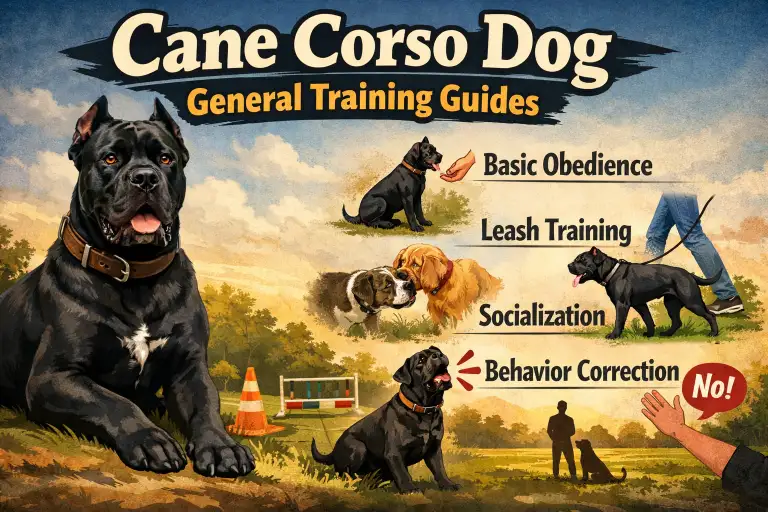
Cane Corso training is not about turning a powerful guardian breed into a robot—it’s about shaping calm, controllable, confident behavior that allows this dog to live safely and successfully in a human world. This guide is designed for owners who want clear, practical training guidance rooted in real behavior science, not myths, intimidation, or outdated “dominance” ideas.
The Cane Corso is an intelligent, sensitive, and highly observant working breed. They learn quickly, but they also notice inconsistency, emotional tension, and unclear leadership faster than many dogs. That combination means good training produces an exceptional companion, while poor or delayed training can lead to frustration, fear-based reactions, or serious control issues as the dog matures.
This article covers Cane Corso training from the ground up—whether you are raising a puppy, working with an adolescent Corso testing boundaries, or helping an adult or rescue dog learn structure and obedience. You’ll learn why training matters so much for this breed, how Cane Corsos think and learn, how to train step by step, and how to handle common problems before they escalate.
The goal is simple: help you raise a Cane Corso that is trustworthy at home, controllable in public, confident around people and dogs, and safe to live with long term.
Why Proper Cane Corso Training Is Essential
Proper Cane Corso training is not optional—it is a safety requirement. This breed grows large, strong, and confident, often before the owner realizes how powerful the dog has become. Without training, even normal behaviors like pulling, barking, or guarding can turn into serious problems.
Cane Corsos were bred to protect property and people. This means they naturally watch their surroundings, notice strangers, and react quickly to changes. Training teaches them how to stay calm, how to look to their owner for guidance, and how to tell the difference between a real threat and a normal everyday situation.
Good training also protects the dog. A well-trained Cane Corso is less likely to be labeled “aggressive,” restricted by housing rules, or surrendered because the owner feels overwhelmed. Training gives the dog clear rules, which reduces stress, fear, and confusion.
Most behavior problems in Cane Corsos do not come from the dog being “bad.” They come from unclear rules, late training, or inconsistent handling. Starting early and staying consistent makes life easier for both the dog and the owner.
Untrained vs Properly Trained Cane Corso
| Area of Life | Untrained Cane Corso | Properly Trained Cane Corso |
|---|---|---|
| Leash walking | Pulls hard, hard to control | Walks calmly with guidance |
| Visitors | Overreacts or guards too strongly | Stays neutral and controlled |
| Public spaces | Stressful and unpredictable | Calm and manageable |
| Obedience | Ignores commands | Responds reliably |
| Owner stress | High and frustrating | Lower and more confident |
| Dog’s stress | Confused or anxious | Calm and secure |
This table shows why training changes everything. The same dog can feel unsafe and overwhelming without training—or calm and reliable with the right guidance.
Understanding Cane Corso Behavior and Learning Style
To train a Cane Corso well, you must first understand how this breed thinks and reacts. Cane Corsos are not stubborn or aggressive by nature. They are alert, serious dogs that were bred to guard and make decisions when needed.
This breed is very aware of its environment. A Cane Corso notices new people, sounds, and changes faster than many dogs. If training is missing, this awareness can turn into overreacting. With training, it becomes calm confidence.
Cane Corsos are also sensitive to their owner’s behavior. They read body language, tone of voice, and emotions very clearly. Yelling, anger, or nervous handling can confuse them or make them unsure. Calm, clear, and consistent training works best.
Puppies are usually curious and eager to learn. Teenagers may test rules and push limits. Adult or rescue Cane Corsos may come with habits or fears that need patience. Training works at any age, but the approach must match the dog’s stage and past experience.
Cane Corso Traits and Training Meaning
| Cane Corso Trait | What It Means | How Training Should Adjust |
|---|---|---|
| Protective nature | Watches people and space closely | Teach calm responses and clear rules |
| High intelligence | Learns fast, remembers mistakes | Use clear commands and consistency |
| Strong body | Can overpower owners easily | Train leash and impulse control early |
| Sensitivity | Feels stress and tension | Use calm voice and reward-based training |
| Independence | Thinks before obeying | Build trust and motivation, not force |
Understanding these traits helps owners train smarter, not harder. When training matches the dog’s nature, progress is faster and behavior stays stable long term.
Step-by-Step Cane Corso Training Method
Training a Cane Corso works best when it follows a clear order. Skipping steps or rushing often leads to confusion and behavior problems later. The goal is to build control, trust, and calm behavior step by step.
Start training as early as possible, but remember that adult and rescue Cane Corsos can still learn very well. Short, daily sessions work better than long, stressful ones. Most sessions should last 5 to 15 minutes, done once or twice a day.
Training should always be calm and fair. Reward good behavior quickly. Ignore or calmly redirect mistakes. Physical punishment or shouting often creates fear, not respect.
Cane Corso Training Timeline
| Age or Stage | Main Training Focus | What to Expect |
|---|---|---|
| 8–16 weeks | Name, focus, house rules, gentle leash | Fast learning, short attention span |
| 4–6 months | Basic commands, leash manners | Testing limits, more confidence |
| 6–12 months | Impulse control, calm greetings | Strong body, teenage behavior |
| Adult | Reliability, real-life practice | Steady progress with consistency |
| Rescue dog | Trust, routine, basics first | Slower start, strong long-term results |
This timeline helps owners set realistic expectations. Training is not finished in a few weeks—it grows with the dog.
Daily Cane Corso Training Routine Example
| Time | Activity | Purpose |
|---|---|---|
| Morning | Short walk + loose leash practice | Start the day calm |
| Midday | Basic commands (sit, stay, down) | Build obedience |
| Evening | Mental games or training session | Reduce boredom |
| Daily life | Calm greetings, rules indoors | Build real-life manners |
Consistency matters more than perfection. A calm daily routine helps the dog understand what is expected.
Core Training Priorities
| Skill Area | Why It Matters |
|---|---|
| Name response | Gets attention fast |
| Sit and down | Basic control |
| Stay | Safety and patience |
| Leash walking | Prevents accidents |
| Calm greetings | Controls guarding instincts |
| Mental work | Prevents boredom problems |
Training should always balance physical exercise with mental work. Too much running without training often makes behavior worse, not better.
Common Cane Corso Training Problems and When to Get Help
Even with good training, Cane Corsos can show problems at different stages of life. This does not mean you failed. It means the dog needs clearer guidance, more structure, or extra support.
Many owners struggle with leash pulling, overprotective behavior, or ignoring commands during the teenage phase. These issues are common in strong guardian breeds and can usually be improved with consistent training and calm handling.
Some problems need faster attention. Growling, snapping, fear reactions, or strong guarding should never be ignored. Early help prevents these behaviors from becoming dangerous.
Training Problems and What to Do
| Problem | Common Cause | What You Can Try | When to Get Help |
|---|---|---|---|
| Pulling on leash | Lack of control training | Slow walks, reward calm steps | If pulling becomes unsafe |
| Ignoring commands | Inconsistent training | Short daily sessions | If no progress in weeks |
| Overprotective behavior | Fear or unclear rules | Teach calm greetings | If growling or snapping starts |
| Reactivity to dogs | Poor social exposure | Controlled distance practice | If reactions increase |
| Fear or anxiety | Past stress or trauma | Build routine and trust | If fear worsens |
| Guarding people or space | Insecurity | Clear rules and structure | Immediate professional help |
Professional help is not a failure. A trainer with guardian-breed experience can guide you safely. Early support protects both the dog and the people around it.
For evidence-based guidance on humane, effective training methods, you can also review the American Veterinary Society of Animal Behavior’s position on reward-based training, which explains why modern behavior science rejects punishment-based approaches for dogs:
https://avsab.org/resources/position-statements/

Ata Ur Rehman is the founder of Pet Age in Human Years Calculator, an educational platform that provides age conversion charts and lifespan guides for dogs, cats, birds, and other companion animals. His work focuses on helping pet owners understand how animal ages translate into human years using commonly accepted age conversion formulas and published lifespan averages.
The website compiles breed and species lifespan data from kennel clubs, breed organizations, and general animal lifespan studies to present simple and easy-to-understand guides for pet owners worldwide.
This website was created to centralize animal age conversion charts into one easy reference platform for pet owners.