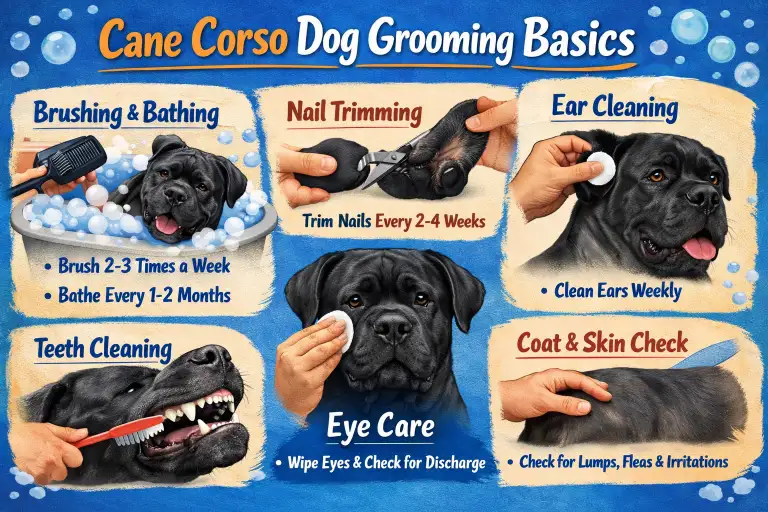
Cane Corso grooming is often described as “easy” because of the breed’s short coat, but that description can be misleading for new owners. While Cane Corsos don’t need haircuts or complex styling, they do require consistent, correct grooming to stay comfortable, clean, and healthy. Skipping routine care is one of the most common reasons owners struggle with excessive shedding, persistent odor, skin irritation, and handling problems later on.
This guide is designed to show you what Cane Corso grooming really involves in practical, real-world terms. It focuses on what owners can do at home, how often grooming should happen, and why even a low-maintenance coat still needs regular attention.
Proper grooming plays a direct role in a Cane Corso’s overall health. Regular brushing helps remove loose undercoat hair, spreads natural skin oils, and reduces the amount of shedding that ends up on furniture and clothing. Bathing at appropriate intervals keeps the skin barrier healthy without stripping essential oils, which is especially important for a breed prone to skin sensitivity and allergies. Nail, ear, and dental care also prevent common problems that can become painful or expensive if ignored.
Grooming is not only about appearance—it’s also about behavior and safety. Cane Corsos are large, powerful dogs, and early, routine grooming helps them become comfortable with handling. Dogs that are accustomed to being brushed, bathed, and having their paws and ears touched are far easier to manage as adults. From a groomer’s perspective, many handling issues seen in adult Cane Corsos stem from a lack of early grooming exposure rather than temperament problems.
Another important point is expectation-setting. Short-coated does not mean no shedding, no smell, or no upkeep. Cane Corsos shed year-round and often experience heavier shedding during seasonal coat changes. Without regular grooming, dead hair and oils build up quickly, leading to stronger odor and dull-looking coats.When done correctly, grooming becomes a simple routine rather than a chore. It improves comfort, reduces shedding,
Cane Corso Coat Type, Shedding, and Grooming Frequency
The Cane Corso has a short but dense double coat. At first glance, it looks very easy to manage, but this coat sheds more than many owners expect. There is a top layer of short guard hairs and a softer undercoat underneath. When loose undercoat hair is not removed regularly, it ends up on furniture, clothes, and floors.
Cane Corsos shed lightly all year and more heavily during seasonal changes, usually in spring and fall. This heavier shedding phase is often called a “coat blow.” During this time, grooming becomes more important, not less. Regular brushing helps remove dead hair before it spreads around your home and helps the skin stay healthy by spreading natural oils.
Because the coat is short, some owners think brushing is optional. In reality, skipping brushing is one of the main reasons Cane Corsos develop strong odor, dull coats, and itchy skin. Short coats still trap dead hair, dirt, and oil close to the skin.
Below is a simple table that shows how often common grooming tasks should be done for a Cane Corso. This makes it easy to follow a routine without guessing.
| Grooming Task | How Often | Notes for Cane Corsos |
|---|---|---|
| Brushing | 1–2 times per week | Increase to 3–4 times per week during heavy shedding seasons |
| Bathing | Every 6–8 weeks | Bathe sooner only if dirty or smelly |
| Nail trimming | Every 2–4 weeks | Large dogs wear nails unevenly |
| Ear cleaning | Every 2–4 weeks | Check weekly for redness or smell |
| Teeth cleaning | Several times per week | Daily is ideal if the dog allows it |
Grooming frequency can change based on lifestyle. A Cane Corso that spends time outdoors, rolls in dirt, or swims often may need more frequent brushing or bathing. Dogs with allergies or sensitive skin may also need adjusted routines recommended by a veterinarian.
The key point to remember is this: short hair does not mean low effort. A steady, simple grooming schedule keeps shedding under control and prevents skin problems before they start.
How to Groom a Cane Corso at Home (Step-by-Step Routine)
Grooming a Cane Corso at home is simple when you follow the same steps each time. Because this breed is large and strong, calm handling and a steady routine matter more than fancy tools. Start grooming when your dog is relaxed, and keep sessions short and positive.
Brushing should come first. Use a rubber grooming brush or a soft bristle brush. These brushes remove loose hair and help spread natural oils over the skin. Brush in slow, firm strokes, following the direction of hair growth. Pay extra attention to areas where shedding is heavier, such as the neck, shoulders, chest, and back legs. During shedding season, brushing more often will reduce hair around your home.
Bathing comes next, but it should not be done too often. Over-bathing dries out the skin and can cause itching. Use a dog shampoo made for short coats or sensitive skin. Wet the coat fully, massage the shampoo gently into the skin, and rinse very well. Leftover shampoo can cause irritation. Always dry your Cane Corso completely with towels or a low-heat dryer. Damp skin can lead to odor, hot spots, and skin infections.
Using the right tools makes grooming easier and safer.
| Grooming Tool | What It Is Used For | Why It Works Well |
|---|---|---|
| Rubber brush | Removing loose hair | Gentle and effective for short coats |
| Bristle brush | Smoothing the coat | Helps spread natural oils |
| Dog shampoo | Cleaning skin and coat | Made for dog skin balance |
| Towels | Drying after baths | Prevents skin staying damp |
| Nail clippers or grinder | Trimming nails | Safe control for large dogs |
Grooming time is also a chance to check your dog’s body. Look for red skin, bumps, dry patches, or signs of itching. Catching problems early makes them easier to fix.
When grooming is done often, it becomes routine instead of stressful. Your Cane Corso learns to stand calmly, and you learn what is normal for your dog’s skin and coat.
Nail Care, Ear Cleaning, Dental Care, and Skin Health
Coat grooming is only one part of Cane Corso care. Nails, ears, teeth, and skin also need regular attention. These tasks are often skipped, but they matter just as much as brushing and bathing.
Nail care is very important for large, heavy dogs like Cane Corsos. Long nails change how a dog stands and walks. Over time, this can lead to joint pain and posture problems. Most Cane Corsos need their nails trimmed every few weeks. If you hear nails clicking on the floor, they are too long. Dark nails are common in this breed, so trimming slowly is safer to avoid cutting the quick.
Ear cleaning helps prevent infections. Cane Corsos have drop ears, which limit airflow and can trap moisture. Check the ears weekly. Clean them when you see dirt or smell a mild odor. Use a dog ear cleaner only. Never push anything deep into the ear canal. Redness, strong smell, or thick discharge are signs that a vet visit is needed.
Dental care is often overlooked, but it affects overall health. Large breeds can build up plaque quickly. Brushing the teeth several times a week helps prevent gum disease and bad breath. Dog-safe toothpaste should always be used. Chews and toys help, but they do not replace brushing.
Skin health should be checked during every grooming session. Cane Corsos can be prone to allergies, rashes, and hot spots. Early signs include redness, flaky skin, frequent scratching, or hair thinning. Grooming helps you spot these changes early before they become serious.
The table below shows how often these extra grooming tasks should be done and what warning signs to watch for.
| Area | Basic Care Frequency | Warning Signs |
|---|---|---|
| Nails | Every 2–4 weeks | Limping, clicking sounds, split nails |
| Ears | Check weekly, clean as needed | Redness, bad smell, discharge |
| Teeth | Several times per week | Bad breath, red gums, tartar |
| Skin | Check during every grooming | Itching, bumps, hair loss |
Keeping up with these small tasks prevents pain and costly problems later. Most issues start quietly and are easier to manage when caught early.
Common Cane Corso Grooming Mistakes, FAQs, and Professional Help
Many grooming problems happen because of simple mistakes. One common mistake is bathing too often. Frequent baths strip natural oils from the skin and can cause dryness and itching. Another mistake is using human shampoo. Human products are too harsh for dog skin and often lead to irritation.
Some owners believe shaving a Cane Corso will help with heat or shedding. This is not true. Shaving a double coat can damage how the coat grows back and may make temperature control worse. Regular brushing is the correct way to manage shedding, not shaving.
Skipping nail care is another common issue. Long nails can cause pain and affect how a Cane Corso walks. Ear cleaning and dental care are also often ignored until there is a problem. These tasks are easier and safer when done regularly.
The table below shows common grooming mistakes and what to do instead.
| Common Mistake | Why It Is a Problem | What to Do Instead |
|---|---|---|
| Bathing too often | Dries skin and causes itching | Bathe every 6–8 weeks |
| Using human shampoo | Irritates dog skin | Use dog-specific shampoo |
| Shaving the coat | Damages coat and skin | Brush regularly |
| Ignoring nails | Causes pain and joint stress | Trim every few weeks |
| Skipping ear checks | Leads to infections | Check ears weekly |
Owners often ask a few common questions about Cane Corso grooming. Cane Corsos do shed, even though their coat is short. They do not need haircuts. Bathing too often is not helpful and can cause skin problems. Strong odor usually means grooming is not frequent enough or the skin is irritated.
Home grooming works well for most Cane Corsos when the dog is calm and trained to accept handling. Professional groomers are helpful for nail trimming, heavy shedding seasons, or dogs that resist grooming. A veterinarian should be seen if there are signs of infection, ongoing itching, or skin changes that do not improve with proper grooming.
For additional guidance on dog skin, coat health, and safe grooming practices, you can refer to the American Veterinary Medical Association’s resources on pet care and preventive health.

Ata Ur Rehman is the founder of Pet Age in Human Years Calculator, an educational platform that provides age conversion charts and lifespan guides for dogs, cats, birds, and other companion animals. His work focuses on helping pet owners understand how animal ages translate into human years using commonly accepted age conversion formulas and published lifespan averages.
The website compiles breed and species lifespan data from kennel clubs, breed organizations, and general animal lifespan studies to present simple and easy-to-understand guides for pet owners worldwide.
This website was created to centralize animal age conversion charts into one easy reference platform for pet owners.