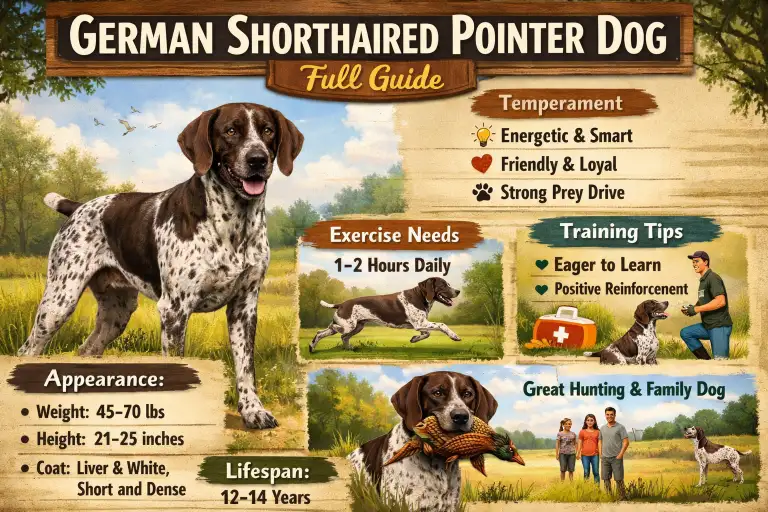
The German Shorthaired Pointer, often called a GSP, is a smart, fast, and very active dog breed. This breed was created to work all day in the field, helping hunters track, point, and retrieve game. Because of this background, GSPs are built for stamina, focus, and teamwork with people.
Today, German Shorthaired Pointers are popular as both working dogs and family companions. They are known for their strong bond with owners, high energy, and love for outdoor activity. This is not a relaxed or lazy breed. A GSP needs daily movement, mental challenges, and time with its people to stay happy.
German Shorthaired Pointers do best with owners who enjoy an active lifestyle and want a dog that feels like a true partner.
| Feature | German Shorthaired Pointer |
|---|---|
| Breed group | Sporting / Gun dog |
| Energy level | Very high |
| Intelligence | High |
| Shedding | Moderate |
| Average lifespan | 10–14 years |
| Best for | Active owners, outdoorsy families |
German Shorthaired Pointer Size, Appearance & Coat
The German Shorthaired Pointer has a strong, athletic body built for speed and endurance. Everything about this dog shows movement and power without being heavy or bulky.
Adult males are usually larger than females. Both have a balanced body that allows them to run for long periods without tiring easily.
The coat is short, dense, and smooth. It lies close to the body and helps protect the dog during outdoor work. GSPs shed year-round, but grooming is simple compared to long-coated breeds.
Common coat colors include solid liver, liver and white, ticked, or roan patterns. Their ears are long and floppy, and their eyes have an alert, intelligent look.
| Trait | Details |
|---|---|
| Height | 21–25 inches |
| Weight | 45–70 pounds |
| Body type | Lean, muscular, athletic |
| Coat length | Short and smooth |
| Common colors | Liver, liver & white, roan |
| Climate tolerance | Handles cold fairly well, sensitive to extreme heat |
German Shorthaired Pointer Temperament & Personality
German Shorthaired Pointers are friendly, energetic, and deeply attached to their families. They are often called “velcro dogs” because they like to stay close to their owners at all times.
This breed is confident and curious. GSPs enjoy meeting people and usually greet strangers with interest rather than fear. They are not strong guard dogs, but they may bark to alert you.
With children, GSPs are playful and gentle, but their high energy means supervision is important. They may accidentally knock over small kids during excited play.
Because they were bred to hunt, they often have a strong prey drive. Small pets like rabbits or cats can trigger chasing behavior if the dog is not raised and trained carefully.
| Situation | Typical Behavior |
|---|---|
| With family | Loyal, loving, very attached |
| With children | Playful but needs supervision |
| With strangers | Friendly and curious |
| With other dogs | Usually social |
| With small pets | Strong chase instinct |
| Alone time | Can struggle if bored or ignored |
Exercise, Training & Daily Care Needs
Exercise is the most important part of owning a German Shorthaired Pointer. This breed needs a lot of daily activity to stay healthy and calm. A short walk is not enough.
Most GSPs need at least one to two hours of hard exercise every day. This can include running, hiking, fetch, scent games, or dog sports. Mental exercise is just as important as physical movement.
German Shorthaired Pointers are smart and learn quickly, but they can be stubborn if bored. Training works best when it is fun, consistent, and rewarding. Harsh methods do not work well with this sensitive breed.
Grooming is simple. Weekly brushing helps control shedding. Ears need regular checks to prevent infections, especially after swimming or outdoor activity.
| Daily Need | Requirement |
|---|---|
| Physical exercise | Very high |
| Mental stimulation | Very high |
| Training difficulty | Moderate |
| Grooming effort | Low |
| Apartment living | Not ideal |
| Alone time tolerance | Low to moderate |
Health, Cost, Pros & Cons, and Similar Breeds
German Shorthaired Pointers are generally healthy dogs, but like all breeds, they have some known health risks. Responsible breeders test for common issues and focus on strong bloodlines.
The average lifespan of a GSP is around 10 to 14 years. Regular vet care, good nutrition, and proper exercise help them live longer, healthier lives.
Because of their size and activity level, owning a GSP can be more expensive than owning a low-energy breed. Costs often come from food, training, vet care, and possible injuries due to high activity.
| Aspect | Details |
|---|---|
| Common health issues | Hip dysplasia, bloat, eye issues |
| Vet screenings | Hips, eyes |
| Puppy price | Medium to high |
| Ongoing costs | Moderate to high |
| Insurance | Often recommended |
Pros and cons help show the full picture of this breed.
| Pros | Cons |
|---|---|
| Very loyal and loving | Needs lots of exercise |
| Smart and trainable | Can be destructive if bored |
| Great outdoor partner | Not ideal for busy owners |
| Low grooming needs | Strong prey drive |
Some breeds similar to the German Shorthaired Pointer include the Vizsla, Weimaraner, Brittany, and English Pointer. These breeds also share high energy and strong working instincts, but each has its own personality and care needs.
| Breed | Key Difference |
|---|---|
| Vizsla | More sensitive and clingy |
| Weimaraner | Larger and more stubborn |
| Brittany | Smaller and slightly calmer |
| English Pointer | More independent |
For official breed standards, health testing guidelines, and detailed background information, you can also review the German Shorthaired Pointer breed profile from the American Kennel Club (AKC) to compare standards and breeder recommendations.

Ata Ur Rehman is the founder of Pet Age in Human Years Calculator, an educational platform that provides age conversion charts and lifespan guides for dogs, cats, birds, and other companion animals. His work focuses on helping pet owners understand how animal ages translate into human years using commonly accepted age conversion formulas and published lifespan averages.
The website compiles breed and species lifespan data from kennel clubs, breed organizations, and general animal lifespan studies to present simple and easy-to-understand guides for pet owners worldwide.
This website was created to centralize animal age conversion charts into one easy reference platform for pet owners.