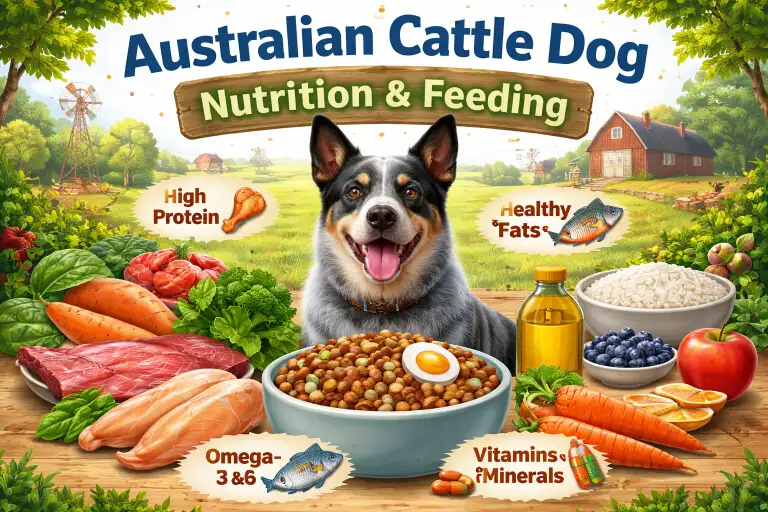
Australian Cattle Dogs are not average companion dogs, and feeding them like one can quietly undermine their health over time. Bred for long days of herding cattle across harsh terrain, this breed has a naturally high metabolism, dense muscle mass, and intense mental drive. Their nutrition needs reflect that working-dog background, even when they live as family pets.
Proper nutrition directly affects an Australian Cattle Dog’s energy levels, joint health, weight control, and behavior. Many heelers look lean and athletic even when they are slightly over- or under-fed, which makes feeding mistakes easy to miss. Others gain weight surprisingly fast once activity levels drop, especially after neutering or with age. A diet that’s too low in quality protein can lead to muscle loss and fatigue, while excess calories and treats can quietly strain joints and shorten lifespan.
This guide is designed to help Australian Cattle Dog owners make informed, practical feeding decisions based on how this breed actually lives. Whether you have a working dog, a sport competitor, or an active family companion, the right diet supports sustained energy without unnecessary weight gain, protects joints under daily stress, and keeps the digestive system stable.
Instead of focusing on trends or one-size-fits-all feeding rules, this article explains what matters most for Australian Cattle Dogs: balanced nutrition, correct portions, appropriate food types, and realistic adjustments as your dog’s activity, age, and lifestyle change.
Core Nutritional Needs of an Australian Cattle Dog
Australian Cattle Dogs need food that supports strong muscles, steady energy, and long-term joint health. Because this breed is naturally active and alert, poor nutrition shows up fast as low stamina, weight gain, digestive issues, or behavior changes.
At the most basic level, a good diet for an Australian Cattle Dog must provide the right balance of protein, fat, carbohydrates, vitamins, and minerals. Too little of any one area can affect health, while too much can cause problems over time.
Protein is especially important for this breed. It helps maintain lean muscle and supports recovery after activity. Fat provides energy, but it must be controlled so the dog does not gain unnecessary weight. Carbohydrates and fiber help with digestion and keep stools healthy, but they should not replace quality animal-based ingredients.
Vitamins and minerals support joints, bones, teeth, the immune system, and coat health. Active breeds like heelers also benefit from nutrients that reduce inflammation and support long-term mobility.
The table below shows general nutritional targets for Australian Cattle Dogs. These are not exact prescriptions, but practical ranges that align with veterinary nutrition standards and real-world feeding experience.
Core Nutrient Needs for Australian Cattle Dogs
| Nutrient | Recommended Range | Why It Matters |
|---|---|---|
| Protein | 22–30% (dry matter) | Supports muscle strength, endurance, and recovery |
| Fat | 12–18% (dry matter) | Provides energy without excessive weight gain |
| Carbohydrates | Moderate, digestible sources | Supplies steady energy and supports gut health |
| Fiber | 3–6% | Helps digestion and stool quality |
| Omega-3 fatty acids | Included in diet | Supports joints, skin, and brain health |
| Calcium & Phosphorus | Balanced ratio | Maintains strong bones and teeth |
| Vitamins & trace minerals | AAFCO-aligned levels | Supports immunity and overall health |
When choosing dog food, owners should look past marketing terms and focus on ingredient quality and balance. Meat-based proteins should appear early in the ingredient list, and the food should meet established nutritional standards such as AAFCO or FEDIAF. No single ingredient makes a food “perfect,” but overall balance matters far more than trends.
Australian Cattle Dogs do best on diets that fuel their bodies without overstimulating weight gain or digestive stress. As activity level, age, and lifestyle change, these needs will shift slightly, which is why feeding amounts and food choices should be adjusted over time.
How Much to Feed an Australian Cattle Dog (Calories, Portions, and Feeding Schedule)
Australian Cattle Dogs need the right amount of food, not just the right type. Feeding too little can cause low energy and muscle loss. Feeding too much can lead to weight gain, joint stress, and long-term health problems. Because this breed often looks fit even when overweight, portion control is very important.
How much your dog needs depends on body weight, daily activity, age, and metabolism. A working heeler or sport dog burns far more calories than a calm house pet. Puppies and young adults also need more energy than seniors.
The table below shows daily calorie ranges for healthy Australian Cattle Dogs. These are general starting points. Some dogs may need more or less based on activity and body condition.
Daily Calorie Needs by Weight and Activity Level
| Dog Weight | Low Activity (Pet) | Moderate Activity | High Activity / Working |
|---|---|---|---|
| 30 lb (14 kg) | 700–850 kcal | 850–1,000 kcal | 1,100–1,300 kcal |
| 35 lb (16 kg) | 800–950 kcal | 950–1,100 kcal | 1,200–1,400 kcal |
| 40 lb (18 kg) | 900–1,050 kcal | 1,050–1,250 kcal | 1,300–1,600 kcal |
| 45 lb (20 kg) | 1,000–1,150 kcal | 1,150–1,350 kcal | 1,500–1,800 kcal |
| 50 lb (23 kg) | 1,100–1,250 kcal | 1,250–1,500 kcal | 1,700–2,000 kcal |
Feeding schedule also matters. Most adult Australian Cattle Dogs do best with two meals per day, one in the morning and one in the evening. This helps control hunger and keeps energy steady. Feeding once a day can make some dogs too hungry or restless.
Puppies need food more often to support growth. Seniors may need smaller meals but careful calorie control to prevent weight gain.
Feeding Frequency by Life Stage
| Life Stage | Meals Per Day | Notes |
|---|---|---|
| Puppy (up to 6 months) | 3–4 meals | Supports growth and stable energy |
| Young adult (6–18 months) | 2–3 meals | Adjust portions as growth slows |
| Adult | 2 meals | Best for weight and digestion |
| Senior | 2 smaller meals | Helps manage weight and digestion |
Owners should also watch their dog’s body condition, not just the bowl. You should be able to feel ribs under a thin layer of fat and see a clear waist when looking from above. If your dog gains weight, reduce portions slightly. If ribs are too visible, increase food slowly.
Always measure food instead of guessing. Treats count as calories and should make up no more than 10% of daily intake.
Best Food Options for Australian Cattle Dogs (What to Put in the Bowl)
Australian Cattle Dogs can do well on different types of dog food, as long as the food is balanced and matches their energy needs. There is no single “perfect” diet for every heeler. The best choice depends on activity level, budget, health, and how well your dog digests the food.
Some foods are easier and safer for most owners, while others need more care and planning. The table below compares the most common dog food types and how they work for Australian Cattle Dogs.
Dog Food Types Compared for Australian Cattle Dogs
| Food Type | Pros | Cons | Best For |
|---|---|---|---|
| Dry kibble | Easy to store, affordable, balanced | Quality varies, less moisture | Most pet Australian Cattle Dogs |
| Fresh food | High moisture, tasty, easy to digest | Higher cost, short shelf life | Picky eaters, sensitive stomachs |
| Raw food | High protein, very appealing | Risk of bacteria, hard to balance | Experienced owners only |
| Freeze-dried | Lightweight, long shelf life | Expensive, needs rehydration | Travel or training use |
| Canned food | High moisture, soft texture | Costly, can cause weight gain | Seniors or dogs with dental issues |
| Homemade | Full control of ingredients | Easy to unbalance, time-consuming | Only with vet guidance |
No matter which food type you choose, it should meet recognized nutrition standards such as AAFCO or FEDIAF. This helps ensure your dog gets all essential nutrients.
Owners often ask about sharing human food. Some foods are safe in small amounts, while others are dangerous and should never be given. The table below shows common examples.
Safe vs Unsafe Human Foods for Australian Cattle Dogs
| Safe Foods (Small Amounts) | Unsafe or Toxic Foods |
|---|---|
| Cooked chicken (plain) | Chocolate |
| Carrots | Grapes and raisins |
| Blueberries | Onions and garlic |
| Plain rice | Xylitol (found in gum) |
| Pumpkin (plain) | Alcohol |
| Apples (no seeds) | Cooked bones |
Treats are important for training, but Australian Cattle Dogs learn fast and can easily be overfed. Choose small treats and count them as part of daily calories. For high-drive heelers, tiny soft treats or pieces of kibble work well during training.
Avoid feeding table scraps often. They add extra calories and can upset digestion over time.
Special Diets, Common Feeding Problems, and Real-Life Heeler Scenarios
Australian Cattle Dogs are tough and active, but many still struggle with feeding problems at some point in their lives. These issues are often linked to diet choices, portion size, or fast changes in food.
Some heelers need special diets. Dogs with food allergies or sensitive stomachs may react to certain proteins or ingredients. Others gain weight easily once their activity drops, even though they still act energetic. Working or sport dogs may need more calories and protein to keep up with hard training days. Senior Australian Cattle Dogs often need fewer calories but better joint support.
Many feeding problems are common and fixable. The table below shows typical issues owners face and simple solutions that work in real life.
Common Australian Cattle Dog Feeding Problems and Solutions
| Problem | What’s Often Happening | What Helps |
|---|---|---|
| Always hungry | Too many carbs, not enough protein | Increase protein, measure portions |
| Weight gain | Overfeeding or too many treats | Reduce portions, limit treats |
| Picky eating | Too many food changes or snacks | Set meal times, remove leftovers |
| Loose stool | Food switch too fast | Transition food slowly over 7–10 days |
| Eats too fast | Food competition or excitement | Use slow feeders or puzzle bowls |
| Low energy | Not enough calories for activity | Adjust calories based on workload |
Switching dog food should always be done slowly. Mixing small amounts of the new food with the old food over one to two weeks helps prevent stomach upset. Sudden changes are a common cause of diarrhea and refusal to eat.
If your Australian Cattle Dog skips meals, eats only at night, or guards food, the issue may be routine-related rather than food quality. Calm feeding spaces, fixed meal times, and fewer snacks usually help.
When problems do not improve, or if your dog shows signs like constant weight loss, vomiting, itching, or long-term diarrhea, it is important to speak with a veterinarian. A vet or veterinary nutritionist can help rule out medical issues and create a safe feeding plan.
For trusted nutrition standards behind many commercial dog foods, see the Association of American Feed Control Officials (AAFCO): https://www.aafco.org/

Ata Ur Rehman is the founder of Pet Age in Human Years Calculator, an educational platform that provides age conversion charts and lifespan guides for dogs, cats, birds, and other companion animals. His work focuses on helping pet owners understand how animal ages translate into human years using commonly accepted age conversion formulas and published lifespan averages.
The website compiles breed and species lifespan data from kennel clubs, breed organizations, and general animal lifespan studies to present simple and easy-to-understand guides for pet owners worldwide.
This website was created to centralize animal age conversion charts into one easy reference platform for pet owners.