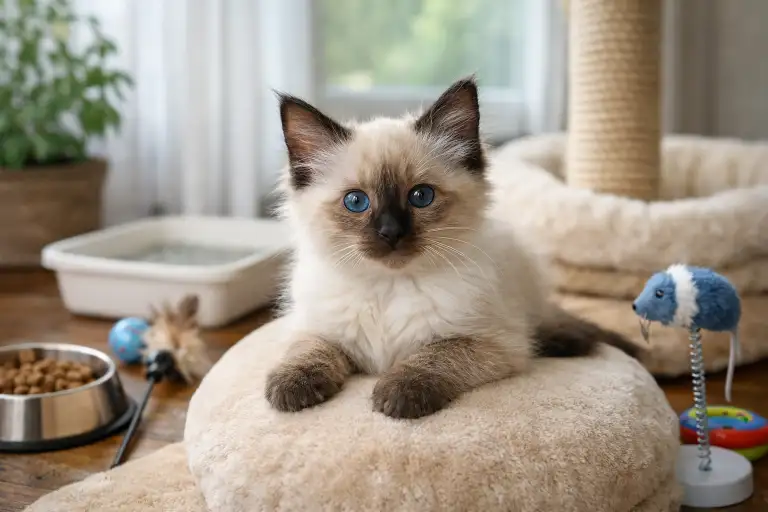
Balinese Kitten Care Guide: Everything New Owners Need to Know
Balinese Kitten Personality, Behavior & What to Expect
Balinese kittens are known for being deeply people-oriented, emotionally aware, and more interactive than many first-time owners expect. If your kitten follows you from room to room, wants to be involved in everything you do, or “talks” back when you speak, this is normal Balinese behavior — not neediness or bad habits.
Recommended Dog Care Products
Based on your dog’s age, these products may help with comfort, health, grooming, and daily care.

Purina Pro Plan Veterinary Supplements
Daily probiotics for dogs to support digestive and gut health.
View on Amazon ↗
Earth Rated Poop Bags for Dogs
Leak-proof, extra thick waste bag refill rolls with lavender scent.
View on Amazon ↗
Greenies Pill Pockets for Dogs
Large dog treats for capsule medication, peanut butter flavor.
View on Amazon ↗
HONEY CARE All-Absorb Dog Wrap
Small male dog wraps, 50 count, useful for daily care support.
View on Amazon ↗
Seresto Flea & Tick Collar
Flea and tick treatment and prevention for dogs over 18 lbs.
View on Amazon ↗
Milk-Bone MaroSnacks
Small dog treats with real bone marrow in a 40 oz canister.
View on Amazon ↗
Vital Essentials Dog Treats
Freeze dried beef liver dog treats, grain free and single ingredient.
View on Amazon ↗
Stain & Odor Eliminator
Enzyme cleaner for pet stains, carpet messes, and strong odors.
View on Amazon ↗
Pur Luv Chicken Jerky Treats
Dog treats made with real chicken breast, high protein and chew-friendly.
View on Amazon ↗
Milk-Bone Flavor Snacks
Mini crunchy dog biscuits in a 36 oz canister for small rewards.
View on Amazon ↗As an Amazon Associate, we may earn from qualifying purchases.
These kittens form strong bonds quickly. Many Balinese kittens choose a favorite person early and will seek closeness through sitting nearby, gentle paw taps, or soft vocal sounds. This attachment is a sign of trust and security, especially in the first weeks after coming home.
Energy levels tend to come in waves. Balinese kittens often have intense play bursts followed by long, deep naps. Their intelligence means they enjoy interaction more than solitary play, and they can become bored if stimulation is too limited. This does not mean they need constant attention, but they do benefit from regular engagement throughout the day.
Vocalization is another common trait. Balinese kittens often communicate more than average kittens, using a range of soft sounds rather than loud or distressed cries. This is typically how they express curiosity, greeting, or a desire for interaction. As long as your kitten is eating, playing, and resting normally, vocal behavior is usually part of their personality.
It’s also normal for Balinese kittens to be sensitive to tone and routine changes. Sudden loud noises, unfamiliar visitors, or inconsistent schedules can temporarily increase clinginess or quiet behavior. With time, gentle handling, and predictable daily rhythms, most kittens settle confidently.
For first-time owners, the most important thing to understand is that Balinese kittens thrive on connection, not perfection. You don’t need to entertain them constantly or respond to every sound. Calm consistency, patience, and shared routines are usually all it takes for their affectionate, playful nature to shine.
Bringing Home a Balinese Kitten & Preparing Your Space
Bringing a Balinese kitten home is exciting, but the first few days should be calm and simple. Kittens feel safest when their world is small at first. You do not need to show them the whole house right away. One quiet room with food, water, a litter box, and a soft sleeping spot is enough to start.
Balinese kittens are curious and smart. They like to explore, climb, and watch what you are doing. Before your kitten arrives, look around your home from a kitten’s point of view. Loose wires, open windows, small objects, and unstable shelves can all become problems. Making small safety changes early helps prevent accidents later.
Set up your kitten’s main areas before arrival. Keep food and water in a quiet place, away from the litter box. Place the litter box where it is easy to reach and not too noisy. Give your kitten at least one cozy place to rest, such as a bed, blanket, or box. Many kittens also like being near their people, so don’t be surprised if your kitten chooses to sleep close to you instead.
The first night can be emotional for some kittens. Your Balinese kitten may cry, follow you closely, or seem unsure. This does not mean something is wrong. They are adjusting to a new place without their mother and littermates. Speak softly, keep lights low, and let your kitten settle at their own pace.
Recommended Dog Care Products
Based on your dog’s age, these products may help with comfort, health, grooming, and daily care.
Purina Pro Plan Veterinary Supplements
Daily probiotics for dogs to support digestive and gut health.
View on Amazon ↗
Earth Rated Poop Bags for Dogs
Leak-proof, extra thick waste bag refill rolls with lavender scent.
View on Amazon ↗
Greenies Pill Pockets for Dogs
Large dog treats for capsule medication, peanut butter flavor.
View on Amazon ↗
HONEY CARE All-Absorb Dog Wrap
Small male dog wraps, 50 count, useful for daily care support.
View on Amazon ↗
Seresto Flea & Tick Collar
Flea and tick treatment and prevention for dogs over 18 lbs.
View on Amazon ↗
Milk-Bone MaroSnacks
Small dog treats with real bone marrow in a 40 oz canister.
View on Amazon ↗
Vital Essentials Dog Treats
Freeze dried beef liver dog treats, grain free and single ingredient.
View on Amazon ↗
Stain & Odor Eliminator
Enzyme cleaner for pet stains, carpet messes, and strong odors.
View on Amazon ↗
Pur Luv Chicken Jerky Treats
Dog treats made with real chicken breast, high protein and chew-friendly.
View on Amazon ↗
Milk-Bone Flavor Snacks
Mini crunchy dog biscuits in a 36 oz canister for small rewards.
View on Amazon ↗As an Amazon Associate, we may earn from qualifying purchases.
During the first week, try to keep a simple routine. Feed meals at similar times each day, clean the litter box often, and offer gentle play sessions. Avoid loud gatherings or too many new visitors at first. A calm start helps Balinese kittens feel safe and confident.
Daily Balinese Kitten Care: Feeding, Litter & Routine
Daily care for a Balinese kitten does not need to be hard. Most kittens do best when their day feels simple and predictable. This helps them feel safe and relaxed.
Feeding should happen several times a day. Young kittens need small meals more often than adult cats. Your kitten may eat a lot one day and a little less the next. This is normal, especially during growth periods. Always make sure fresh water is available.
Litter training is usually easy with Balinese kittens. Most kittens know how to use a litter box before coming home. Place the litter box in a quiet area and keep it clean. Scoop it daily if possible. If your kitten misses the box once or twice, stay calm. This is often part of adjusting to a new home.
Sleep is a big part of kitten life. Balinese kittens sleep many hours a day, often after play or meals. Short bursts of energy followed by long naps are normal. Let your kitten rest when they choose. Waking a sleeping kitten too often can make them cranky.
Play is also important, but it should be gentle and regular. Short play sessions spread through the day work best. This helps your kitten use energy and keeps them from getting bored. Always use toys, not hands, so your kitten learns safe play habits.
A simple daily rhythm helps everything feel easier. Feeding, play, rest, and quiet time should repeat in a similar pattern each day. You do not need a strict schedule, just steady habits.
Play, Socialization & Bonding With a Balinese Kitten
Balinese kittens love to interact with people. Playtime is not just about fun. It helps your kitten learn, build confidence, and feel close to you.
Short play sessions work best. A few minutes of active play several times a day is better than one long session. Toys that move, such as wand toys or small balls, are great choices. Always let your kitten chase toys, not your hands or feet. This helps prevent biting as they grow.
Social time is also important. Talk to your kitten in a calm voice. Sit near them while they play or rest. Many Balinese kittens enjoy being close, but they still need breaks. If your kitten walks away or lies down, that is a sign they need rest.
Recommended Dog Care Products
Based on your dog’s age, these products may help with comfort, health, grooming, and daily care.
Purina Pro Plan Veterinary Supplements
Daily probiotics for dogs to support digestive and gut health.
View on Amazon ↗
Earth Rated Poop Bags for Dogs
Leak-proof, extra thick waste bag refill rolls with lavender scent.
View on Amazon ↗
Greenies Pill Pockets for Dogs
Large dog treats for capsule medication, peanut butter flavor.
View on Amazon ↗
HONEY CARE All-Absorb Dog Wrap
Small male dog wraps, 50 count, useful for daily care support.
View on Amazon ↗
Seresto Flea & Tick Collar
Flea and tick treatment and prevention for dogs over 18 lbs.
View on Amazon ↗
Milk-Bone MaroSnacks
Small dog treats with real bone marrow in a 40 oz canister.
View on Amazon ↗
Vital Essentials Dog Treats
Freeze dried beef liver dog treats, grain free and single ingredient.
View on Amazon ↗
Stain & Odor Eliminator
Enzyme cleaner for pet stains, carpet messes, and strong odors.
View on Amazon ↗
Pur Luv Chicken Jerky Treats
Dog treats made with real chicken breast, high protein and chew-friendly.
View on Amazon ↗
Milk-Bone Flavor Snacks
Mini crunchy dog biscuits in a 36 oz canister for small rewards.
View on Amazon ↗As an Amazon Associate, we may earn from qualifying purchases.
Handling should be gentle and slow. Pick up your kitten only when they are calm. Support their body and let them feel secure. Never force cuddles. Trust grows when your kitten feels respected.
Balinese kittens can seem extra attached. Following you, watching you, or wanting attention is normal for this breed. You do not need to respond every time. It is okay to let your kitten learn to relax on their own for short periods.
Meeting new people should be calm and quiet. Let your kitten approach when they feel ready. Too much noise or excitement can make them feel unsure.
Health, Grooming & Keeping Your Balinese Kitten Safe
Keeping your Balinese kitten healthy is mostly about watching daily habits. A healthy kitten is curious, playful, eats well, and sleeps deeply. Some days they may be extra active, and other days they may rest more. Small changes are normal during growth.
Grooming a Balinese kitten is simple. Their coat is soft and fine and does not mat easily. Gentle brushing once or twice a week is usually enough. This also helps your kitten get used to being handled. Start slowly and keep sessions short so grooming feels calm and safe.
Nail care is another basic task. Kittens have sharp claws, even when they do not mean to scratch. Providing scratching posts helps protect furniture and lets your kitten stretch. Trimming nails can be done later when your kitten is comfortable with paw handling.
Regular vet visits are part of responsible kitten care. These visits help track growth and overall health. This guide does not replace veterinary advice, but it can help you notice what is normal day to day.
Safety is very important for Balinese kittens. They are smart, curious, and good climbers. Keep windows secured, cords tucked away, and small objects out of reach. Indoor living is safest for kittens, especially for breeds that bond closely with people.
Routine and calm surroundings help your kitten feel secure. You do not need to do everything perfectly. Paying attention, keeping things clean, and offering a safe home go a long way.
For reliable, vet-reviewed kitten and cat health information, visit the Health Information page of the Cornell Feline Health Center, which offers easy-to-understand articles, brochures, and videos on feline care and behavior: https://www.vet.cornell.edu/departments-centers-and-institutes/cornell-feline-health-center/health-information
Recommended Dog Care Products
Based on your dog’s age, these products may help with comfort, health, grooming, and daily care.
Purina Pro Plan Veterinary Supplements
Daily probiotics for dogs to support digestive and gut health.
View on Amazon ↗
Earth Rated Poop Bags for Dogs
Leak-proof, extra thick waste bag refill rolls with lavender scent.
View on Amazon ↗
Greenies Pill Pockets for Dogs
Large dog treats for capsule medication, peanut butter flavor.
View on Amazon ↗
HONEY CARE All-Absorb Dog Wrap
Small male dog wraps, 50 count, useful for daily care support.
View on Amazon ↗
Seresto Flea & Tick Collar
Flea and tick treatment and prevention for dogs over 18 lbs.
View on Amazon ↗
Milk-Bone MaroSnacks
Small dog treats with real bone marrow in a 40 oz canister.
View on Amazon ↗
Vital Essentials Dog Treats
Freeze dried beef liver dog treats, grain free and single ingredient.
View on Amazon ↗
Stain & Odor Eliminator
Enzyme cleaner for pet stains, carpet messes, and strong odors.
View on Amazon ↗
Pur Luv Chicken Jerky Treats
Dog treats made with real chicken breast, high protein and chew-friendly.
View on Amazon ↗
Milk-Bone Flavor Snacks
Mini crunchy dog biscuits in a 36 oz canister for small rewards.
View on Amazon ↗As an Amazon Associate, we may earn from qualifying purchases.

Ata Ur Rehman is the founder of Pet Age in Human Years Calculator, an educational platform that provides age conversion charts and lifespan guides for dogs, cats, birds, and other companion animals. His work focuses on helping pet owners understand how animal ages translate into human years using commonly accepted age conversion formulas and published lifespan averages.
The website compiles breed and species lifespan data from kennel clubs, breed organizations, and general animal lifespan studies to present simple and easy-to-understand guides for pet owners worldwide.
This website was created to centralize animal age conversion charts into one easy reference platform for pet owners.