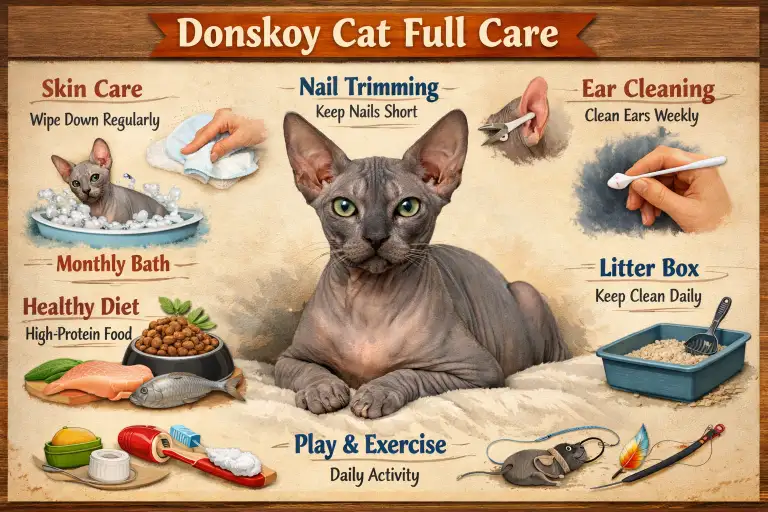
Donskoy cats, also called Don Sphynx cats, are hairless cats with very special care needs. Because they do not have fur, their skin is always exposed. This changes how their body works, how they stay warm, and how owners must care for them every day.
Unlike furry cats, Donskoy cats produce more natural skin oils. Fur usually absorbs this oil, but Donskoy cats have no fur to trap it. This means oil builds up directly on the skin. If this oil is not cleaned regularly, it can cause greasy skin, clogged pores, acne, and even skin infections.
Temperature is another big difference. Fur helps cats stay warm and protects them from heat and sun. Donskoy cats lose body heat quickly and can also burn easily in the sun. They need warm indoor spaces, soft bedding, and protection from cold air or strong sunlight.
Many people think hairless cats are low maintenance. This is not true. Donskoy cats need more hands-on care than most cats. They depend on their owners for warmth, skin care, and daily comfort. Understanding these basics is the first step to keeping a Donskoy healthy and happy.
Daily and Weekly Grooming Essentials for Donskoy Cats
Grooming is the most important part of Donskoy care. Because their skin is bare, dirt and oil collect fast. Gentle, regular cleaning keeps their skin healthy and prevents smell and irritation.
On most days, a simple wipe-down is enough. Use a soft, damp cloth or cat-safe wipes to clean oily areas like the neck, belly, and skin folds. This removes extra oil without drying the skin. Never use human wipes or scented products.
Bathing is needed, but not too often. Most Donskoy cats need a bath every 1–2 weeks. Bathing too often can damage the skin barrier and cause dryness or redness. Use warm water and a mild, cat-safe shampoo only.
Ears, eyes, and nails also need care. Donskoy cats produce more ear wax than furry cats, so weekly ear cleaning is common. Nails should be trimmed often because oil builds up around the nail beds.
Donskoy Grooming Routine Table
| Task | How Often | Why It Matters |
|---|---|---|
| Skin wipe-down | Daily or every other day | Removes oil and dirt |
| Full bath | Every 1–2 weeks | Prevents clogged pores |
| Ear cleaning | Weekly | Prevents ear infections |
| Nail trimming | Every 1–2 weeks | Stops oil buildup and injury |
| Eye cleaning | As needed | Removes discharge |
Feeding, Hydration & Nutrition for Healthy Skin and Energy
Donskoy cats usually eat more than furry cats. Their bodies burn more energy because they work harder to stay warm. This higher metabolism is normal and does not mean the cat is greedy.
A high-quality, balanced cat food is very important. Good protein supports skin health and energy levels. Poor-quality food can make the skin oily, smelly, or irritated. Sudden diet changes can also affect the skin, so changes should be slow.
Water is just as important as food. Hydration helps keep the skin healthy and supports digestion. Many Donskoy cats prefer running water, so a cat water fountain can help them drink more.
Watch your cat’s body condition. You should be able to feel the ribs but not see them clearly. Weight loss, dull skin, or low energy can be signs that the diet needs adjustment or that a vet visit is needed.
Temperature, Comfort & Indoor Setup for Donskoy Cats
Donskoy cats should live indoors only. Without fur, they are at high risk from cold weather, heat, sunburn, and injuries. A safe indoor setup is essential for their comfort and health.
The home should be kept warm, especially in winter. Many Donskoy cats love heated cat beds, warm blankets, and sunny window spots. Always make sure heated products are pet-safe and not too hot.
Clothing can help, but only when used correctly. Soft, breathable cat clothes can keep a Donskoy warm in cooler rooms. Clothes should fit well and be removed often to clean the skin and prevent rubbing or irritation.
Sunlight feels nice to Donskoy cats, but too much sun can burn their skin. Limit direct sun exposure, especially near windows. Never let them sunbathe outdoors without protection.
Ideal Home Conditions Table
| Care Area | Best Practice |
|---|---|
| Room temperature | Warm and stable |
| Sleeping spots | Soft, warm bedding |
| Sun exposure | Limited, indirect light |
| Outdoor access | Not recommended |
| Clothing | Optional, soft, clean |
Common Health Issues and When to Seek Veterinary Care
Skin problems are the most common health issues in Donskoy cats. These include acne, rashes, yeast infections, and redness. Many skin problems start small but can worsen quickly if ignored.
Ear infections are also common because of wax buildup. Head shaking, bad smell, or dark discharge are warning signs. Never use cotton swabs deep in the ear, and always use vet-approved cleaners.
Temperature problems can become emergencies. Shivering, cold ears, or hiding may mean your cat is too cold. Heavy panting, red skin, or lethargy can be signs of overheating or sunburn.
Regular vet checkups are very important for Donskoy cats. Choose a vet who understands hairless breeds if possible. Early care prevents small problems from becoming serious.
Donskoy Warning Signs Table
| Sign | What It May Mean | What To Do |
|---|---|---|
| Red or greasy skin | Skin irritation | Adjust grooming, see vet |
| Strong odor | Oil or infection | Check skin and ears |
| Shivering | Too cold | Warm cat safely |
| Head shaking | Ear infection | Vet visit needed |
| Lethargy | Illness or discomfort | Contact vet |
For more veterinary-backed information on feline skin and hairless cat care, you can visit the International Cat Care website:
https://icatcare.org

Ata Ur Rehman is the founder of Pet Age in Human Years Calculator, an educational platform that provides age conversion charts and lifespan guides for dogs, cats, birds, and other companion animals. His work focuses on helping pet owners understand how animal ages translate into human years using commonly accepted age conversion formulas and published lifespan averages.
The website compiles breed and species lifespan data from kennel clubs, breed organizations, and general animal lifespan studies to present simple and easy-to-understand guides for pet owners worldwide.
This website was created to centralize animal age conversion charts into one easy reference platform for pet owners.