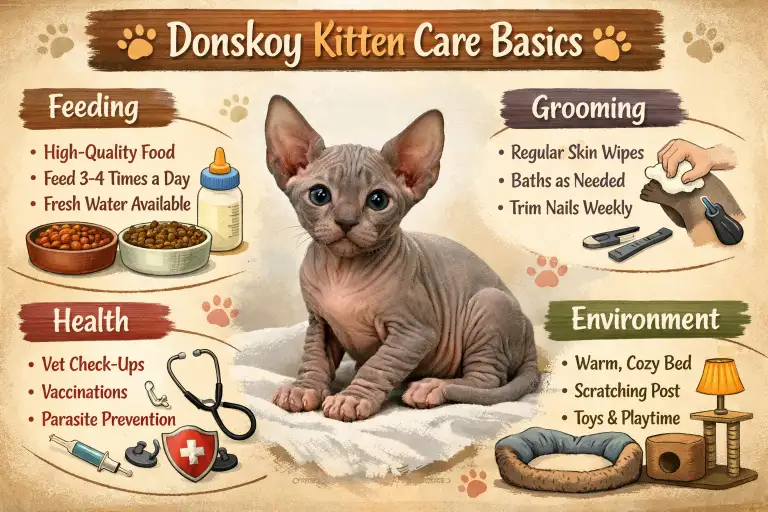
Donskoy kittens are different from many other kittens, and knowing this early helps new owners feel calm and prepared. This breed is known for having little to no fur, warm skin, and a very people-focused nature. Because of these traits, their daily care feels slightly different, but not harder, once you understand what they need.
Many first-time owners worry that hairless kittens are weak or fragile. This is not true. Donskoy kittens are playful, curious, and strong, just like other kittens. The main difference is that their skin is visible, so owners notice changes more easily. This often causes worry, even when the kitten is perfectly healthy.
Donskoy kittens also love human company. They often follow their owners around the house, sleep close to people, and dislike being alone for long hours. This behavior is normal for the breed and does not mean the kitten is needy or spoiled.
Some Donskoy kittens are fully hairless, while others may have soft patches of fur or lose their fur as they grow. Both types need similar care. The key is gentle handling, warmth, and a calm home environment during their early months.
| Care Area | Donskoy Kittens | Typical Kittens |
|---|---|---|
| Fur | Little or none | Full coat |
| Skin visibility | Very high | Low |
| Need for warmth | Higher | Moderate |
| Social behavior | Very people-focused | Varies |
| Indoor living | Strongly recommended | Recommended |
Preparing Your Home for a Donskoy Kitten
Before bringing a Donskoy kitten home, setting up a safe and warm space is very important. These kittens do best indoors, where temperature and safety can be controlled. A quiet room at first helps them feel secure and reduces stress.
Because they do not have fur, Donskoy kittens feel cold more easily. Soft blankets, warm beds, and draft-free areas help them stay comfortable. They often enjoy sleeping near people or curled up in cozy spots. Avoid placing beds near windows or doors where cold air enters.
Your home should also be kitten-proofed. Loose wires, small objects, and sharp edges can be dangerous. Since Donskoy kittens are curious and active, they may explore more than you expect. Keeping things tidy helps prevent accidents.
It is best to prepare food bowls, a litter box, toys, and a scratching area before the kitten arrives. This makes the first days smoother and helps the kitten learn routines quickly.
| Home Item | Why It Matters |
|---|---|
| Warm bedding | Helps prevent chilling |
| Indoor-only space | Protects sensitive skin |
| Litter box | Supports early training |
| Scratching post | Protects furniture |
| Safe toys | Encourages healthy play |
Feeding, Growth, and Daily Routine for Donskoy Kittens
Donskoy kittens grow quickly and use a lot of energy. Because their bodies work harder to stay warm, they may need slightly more frequent meals than other kittens. Feeding small meals several times a day is normal during early growth.
Always choose food made for kittens, as it supports healthy development. Sudden food changes can upset a kitten’s stomach, so changes should be slow. Fresh water should always be available, even if the kitten eats wet food.
Donskoy kittens sleep a lot, often 16 to 20 hours a day. This is normal and healthy. When they are awake, they enjoy short bursts of play followed by rest. Gentle play helps them learn boundaries and build confidence.
Having a simple daily routine helps kittens feel safe. Feeding, playtime, and rest at similar times each day make adjustment easier for both kitten and owner.
| Kitten Age | Feeding Frequency | Play & Activity |
|---|---|---|
| 8–12 weeks | 4 meals daily | Short, gentle play |
| 3–4 months | 3–4 meals daily | More active play |
| 5–6 months | 3 meals daily | Longer play sessions |
Grooming, Skin Care, and Hygiene Basics
Since Donskoy kittens do not have fur to absorb natural oils, their skin may feel slightly oily. This is normal and does not mean the kitten is dirty. Gentle cleaning helps keep their skin comfortable without overdoing it.
Bathing should be calm and not too frequent. Many owners bathe Donskoy kittens every few weeks using warm water. The goal is comfort, not perfection. Too much bathing can dry the skin.
Ears and nails also need basic care. Hairless kittens can collect dirt in their ears more easily, so regular checking is helpful. Nails grow quickly and should be trimmed gently to prevent scratching injuries.
Always watch how your kitten reacts during grooming. Calm handling and soft voices help build trust and make grooming a positive experience.
| Grooming Task | General Frequency |
|---|---|
| Skin cleaning | Every few weeks |
| Ear checking | Weekly |
| Nail trimming | Every 2–3 weeks |
| Eye wiping | As needed |
Health, Safety, and Common Donskoy Kitten Care Mistakes
Healthy Donskoy kittens are active, curious, and alert. Watching daily habits like eating, playing, and sleeping helps owners notice changes early. Small changes are often part of growth, not a reason to panic.
Safety is especially important for hairless kittens. Direct sunlight, cold floors, and rough surfaces can cause discomfort. Keeping the kitten indoors protects them from weather, injury, and skin damage.
New owners often make simple mistakes out of worry. Over-bathing, keeping the home too cold, or assuming every skin change is serious are common. Learning what is normal helps reduce stress for both kitten and owner.
Regular vet visits support healthy growth, but day-to-day care is just as important. A calm home, good routines, and gentle handling go a long way.
| Common Mistake | Better Choice |
|---|---|
| Over-bathing | Gentle, limited bathing |
| Cold sleeping areas | Warm, soft bedding |
| Too much worry | Observe calmly |
| Outdoor access | Safe indoor living |
For additional trusted information on feline care basics, you can also visit the International Cat Care website:
https://icatcare.org

Ata Ur Rehman is the founder of Pet Age in Human Years Calculator, an educational platform that provides age conversion charts and lifespan guides for dogs, cats, birds, and other companion animals. His work focuses on helping pet owners understand how animal ages translate into human years using commonly accepted age conversion formulas and published lifespan averages.
The website compiles breed and species lifespan data from kennel clubs, breed organizations, and general animal lifespan studies to present simple and easy-to-understand guides for pet owners worldwide.
This website was created to centralize animal age conversion charts into one easy reference platform for pet owners.