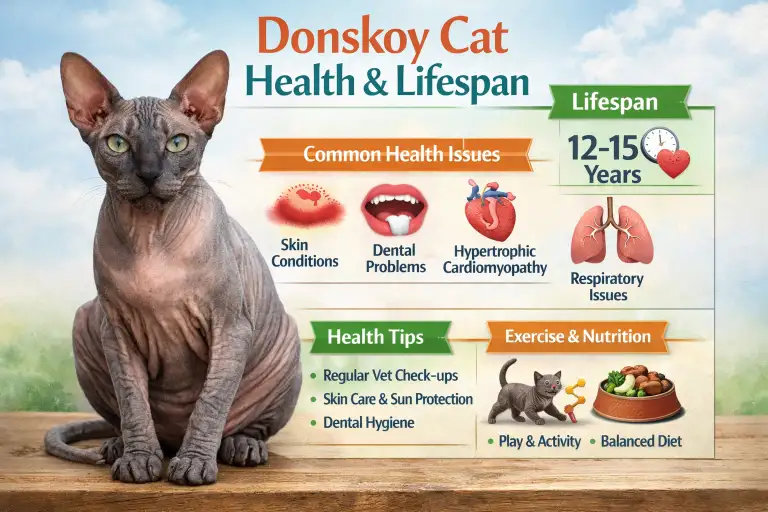
Donskoy cats are known for their hairless look, warm skin, and very social nature. Many people search for this topic because they want to know if Donskoy cats are healthy and how long they usually live. This guide is made to give clear, calm, and honest information for everyday cat owners.
This article focuses on general health patterns and lifespan expectations seen in Donskoy cats. It does not diagnose diseases, suggest treatments, or replace veterinary advice. Every cat is different, and health can vary even within the same breed.
Understanding possible health concerns helps owners notice changes early and support their cat’s well-being over time. Knowing what is normal for the breed can reduce fear and confusion, especially for first-time Donskoy owners.
With proper care, many Donskoy cats live long, comfortable, and affectionate lives. This guide is meant to inform, not alarm, and to help owners feel more confident about caring for their cat.
Donskoy Lifespan: How Long Do Donskoy Cats Live?
Donskoy cats usually have a lifespan similar to many other domestic cats. Most live between 12 and 15 years, and some may live longer with good care and regular vet visits. Lifespan numbers are averages, not promises.
Indoor living plays a big role in how long a Donskoy cat may live. Cats kept indoors are protected from traffic, fights, harsh weather, and many infections. Because Donskoy cats lack fur, indoor living is especially important for their comfort and safety.
Diet, stress levels, and routine care also affect lifespan. Cats that maintain a healthy weight, get mental stimulation, and receive preventive care often age more smoothly.
It is normal for owners to compare breeds, but it is important to remember that individual care matters more than breed alone.
Donskoy Lifespan Expectations
| Living Environment | Average Lifespan |
|---|---|
| Indoor only | 12–15+ years |
| Mixed indoor/outdoor | Shorter, more variable |
| Average domestic cat | 12–16 years |
Common Donskoy Health Issues (What Owners Should Know)
Donskoy cats are not unhealthy by default, but they do have some health tendencies linked to their hairless genetics. These are not guaranteed problems, just patterns seen more often in the breed.
Skin sensitivity is the most well-known concern. Without fur, the skin is more exposed to temperature changes, sun, and irritation. Owners often need to watch for dryness, oil buildup, or redness.
Dental health is another area to monitor. Like many cat breeds, Donskoy cats may develop dental issues if oral care is ignored. Regular checks help catch problems early.
Some Donskoy cats may also gain weight easily if they are overfed or inactive. Maintaining a healthy body condition supports long-term health and mobility.
Common Health Areas to Monitor in Donskoy Cats
| Health Area | Why It Matters | Owner Focus |
|---|---|---|
| Skin | No fur protection | Gentle cleaning, visual checks |
| Teeth & gums | Common in many cats | Regular vet dental checks |
| Weight | Can gain weight easily | Balanced diet, playtime |
| Temperature sensitivity | Hairless body | Warm indoor environment |
Preventive Care That Supports a Healthy Donskoy Life
Preventive care is one of the biggest factors in helping a Donskoy cat live a long and comfortable life. Regular veterinary checkups allow small issues to be noticed before they become serious.
Skin care is part of routine care for many Donskoy cats. Simple monitoring during normal handling can help owners notice changes early. No special products should be used without veterinary guidance.
Dental care and weight tracking are also important. Small changes in eating habits, breath, or activity levels can be useful information to share with a vet during routine visits.
A calm home, regular feeding schedule, and daily interaction help reduce stress, which supports overall health in this very people-focused breed.
Preventive Care Focus by Life Stage
| Life Stage | Key Focus Areas |
|---|---|
| Kitten | Growth, skin comfort, early vet visits |
| Adult | Weight, dental health, routine exams |
| Senior | Mobility, skin changes, appetite shifts |
Aging, Quality of Life, and When to See a Vet
As Donskoy cats age, their needs may slowly change. They may sleep more, move a bit slower, or become more sensitive to cold. These changes can be part of normal aging.
What matters most is noticing changes that last or seem unusual for your cat. Small shifts in behavior, appetite, or comfort are often the first signs that a vet visit may be helpful.
Quality of life is about comfort, routine, and emotional well-being. Donskoy cats are very social, and continued attention and gentle care are important as they grow older.
Owners do not need to panic over every change, but consistent observation and open communication with a veterinarian help ensure aging cats stay comfortable for as long as possible.
Normal Aging vs Signs to Discuss With a Vet
| Normal Aging Changes | Signs to Check With a Vet |
|---|---|
| Sleeping more | Sudden behavior changes |
| Slower movement | Ongoing weight loss |
| Mild appetite changes | Trouble eating or grooming |
For more general feline health guidance from veterinary professionals, you can visit the American Association of Feline Practitioners:
https://catvets.com

Ata Ur Rehman is the founder of Pet Age in Human Years Calculator, an educational platform that provides age conversion charts and lifespan guides for dogs, cats, birds, and other companion animals. His work focuses on helping pet owners understand how animal ages translate into human years using commonly accepted age conversion formulas and published lifespan averages.
The website compiles breed and species lifespan data from kennel clubs, breed organizations, and general animal lifespan studies to present simple and easy-to-understand guides for pet owners worldwide.
This website was created to centralize animal age conversion charts into one easy reference platform for pet owners.