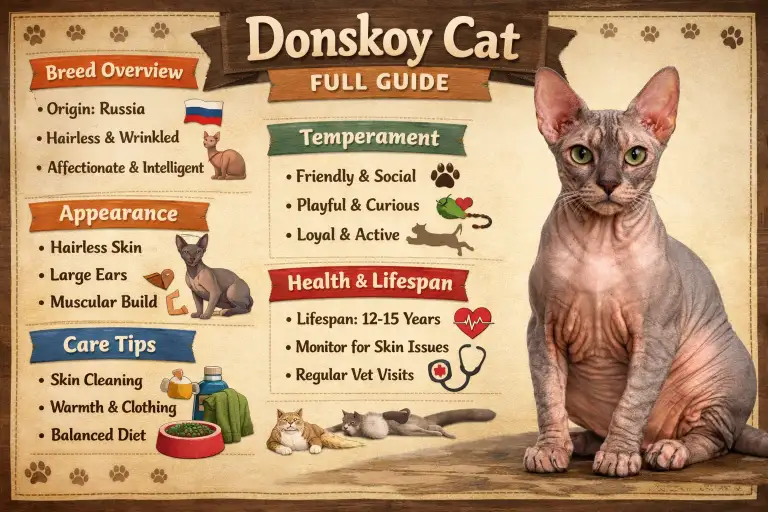
The Donskoy cat, also called the Don Sphynx, is a rare and eye-catching hairless cat breed from Russia. At first glance, many people think it is the same as the Sphynx cat, but the Donskoy is a completely different breed with its own history, genetics, and personality. This breed is known for its wrinkled skin, warm body, and very people-focused nature.
The Donskoy breed began in the late 1980s in Russia when a kitten with hair loss was found and later bred. Unlike the Sphynx, which has a recessive hairless gene, the Donskoy has a dominant hairless gene. This means that even when bred with coated cats, hairless kittens can still appear. This genetic difference is a big reason why cat registries treat the Donskoy as a separate breed.
What really makes the Donskoy special is not just how it looks, but how it behaves. These cats are extremely social and emotional. Many owners describe them as “dog-like” because they follow people around, greet them at the door, and want to be involved in everything. A Donskoy does not like being ignored for long periods.
People usually search for the Donskoy cat because they want a unique companion, are curious about hairless cats, or are looking for a highly affectionate pet. This breed is not low-maintenance or hands-off, but for the right owner, it can be deeply rewarding.
Donskoy Cat Appearance, Size, and Physical Traits
The Donskoy cat has a strong, muscular body with a medium build. Even though it may look thin at first, this cat is solid and well-developed under the skin. The chest is wide, the legs are sturdy, and the tail is long and flexible. When you pick up a Donskoy, it often feels heavier than expected.
Adult Donskoy cats are usually medium in size. Males are larger and more muscular than females. They grow steadily and often reach full size by about 18 months of age. Their body gives them an athletic and balanced appearance rather than a fragile one.
One of the most interesting things about the Donskoy is that not all of them are fully hairless. Some have very fine fuzz or short, patchy coats. Their skin is warm to the touch and often has deep wrinkles, especially around the face, neck, and legs. Skin texture can change with seasons, age, and hormones.
Donskoys can come in many colors and patterns, just like coated cats. You may see solid colors, tabby patterns, or pointed markings. Because there is no fur, these colors appear directly on the skin and can darken or lighten over time.
Donskoy Cat Physical Characteristics
| Feature | Description |
|---|---|
| Average Weight | 8–12 lbs (3.5–5.5 kg) |
| Body Type | Medium, muscular, athletic |
| Coat Types | Hairless, flock, velour, brush |
| Skin Feel | Warm, soft, slightly sticky |
| Common Colors | Black, blue, cream, red, tabby, pointed |
| Ears | Large, wide-set |
| Eyes | Almond-shaped, expressive |
Donskoy Cat Temperament and Personality
The Donskoy cat is known for being extremely affectionate and people-oriented. This is not a breed that enjoys being alone all day. Most Donskoys form strong emotional bonds with their owners and will often choose one favorite person in the household.
These cats are intelligent and curious. They learn routines quickly and like to explore their environment. Many Donskoys enjoy interactive toys, puzzle feeders, and even simple training games. Some owners successfully teach them to walk on a leash or play fetch.
Donskoys are also quite vocal, but not in a harsh or loud way. They use soft sounds to communicate needs, such as wanting attention, food, or warmth. Their vocal behavior feels more like conversation than noise.
With children and other pets, Donskoys usually do well if introduced properly. They are gentle but sensitive, so rough handling can make them anxious. In multi-pet homes, they often seek companionship rather than dominance.
Donskoy Personality Traits at a Glance
| Trait | Level |
|---|---|
| Affection | Very high |
| Intelligence | High |
| Vocalization | Moderate |
| Energy Level | Medium |
| Independence | Low |
| Social Needs | Very high |
Donskoy Cat Care, Grooming, and Activity Needs
Caring for a Donskoy cat is different from caring for a coated cat. Because there is little to no fur to absorb oils, the skin can become oily over time. Most Donskoys need regular gentle baths to keep their skin clean and healthy. Skipping this care can lead to skin irritation or odor.
These cats also need warmth. They lose body heat faster than furry cats, so they enjoy heated beds, blankets, and warm spots in the house. In cooler climates, owners often dress them in soft cat clothing for comfort.
Activity needs are moderate. Donskoys enjoy daily play sessions, especially interactive games with their owners. Mental stimulation is just as important as physical exercise. Without enough attention, they can become bored or stressed.
This breed is best suited for indoor living. Their skin is sensitive to sunburn and cold, and outdoor dangers are much higher for hairless cats. Apartments are usually fine as long as the cat gets enough attention and playtime.
Donskoy Cat Health, Lifespan, Cost, and Ownership Reality
The average lifespan of a Donskoy cat is around 12 to 15 years, though some live longer with good care. Overall, the breed is fairly healthy, but there are some risks owners should understand before adopting.
Skin problems are the most common concern. These include acne, fungal infections, and irritation if hygiene is poor. Dental issues can also occur, so regular dental checks are important. Some lines may have heart concerns, which is why responsible breeders screen for heart disease.
Donskoy kittens are usually expensive due to their rarity. Ongoing costs are also higher than average because of grooming products, skin care, and potential vet visits.
Common Health Issues and Risks
| Health Area | Risk Level |
|---|---|
| Skin infections | Medium |
| Dental disease | Medium |
| Heart conditions | Low to medium |
| Cold sensitivity | High |
Donskoy Cat Cost Breakdown
| Expense Type | Estimated Cost |
|---|---|
| Kitten Price | $1,200–$2,500 |
| Annual Vet Care | $300–$600 |
| Grooming & Skin Care | $200–$400 per year |
| Heating & Bedding | $100–$200 |
Donskoy vs Sphynx vs Peterbald
| Feature | Donskoy | Sphynx | Peterbald |
|---|---|---|---|
| Hairless Gene | Dominant | Recessive | Mixed |
| Personality | Very clingy | Social | Elegant, active |
| Body Type | Muscular | Rounded | Slim |
| Grooming Needs | High | High | Medium |
The Donskoy is best for owners who want a deeply bonded companion and are ready for daily involvement. It may not suit people who are often away from home or prefer low-maintenance pets.
Outbound reference for further breed standards and background information:
https://www.worldcat.org/subjects/donskoy-cat-breed

Ata Ur Rehman is the founder of Pet Age in Human Years Calculator, an educational platform that provides age conversion charts and lifespan guides for dogs, cats, birds, and other companion animals. His work focuses on helping pet owners understand how animal ages translate into human years using commonly accepted age conversion formulas and published lifespan averages.
The website compiles breed and species lifespan data from kennel clubs, breed organizations, and general animal lifespan studies to present simple and easy-to-understand guides for pet owners worldwide.
This website was created to centralize animal age conversion charts into one easy reference platform for pet owners.