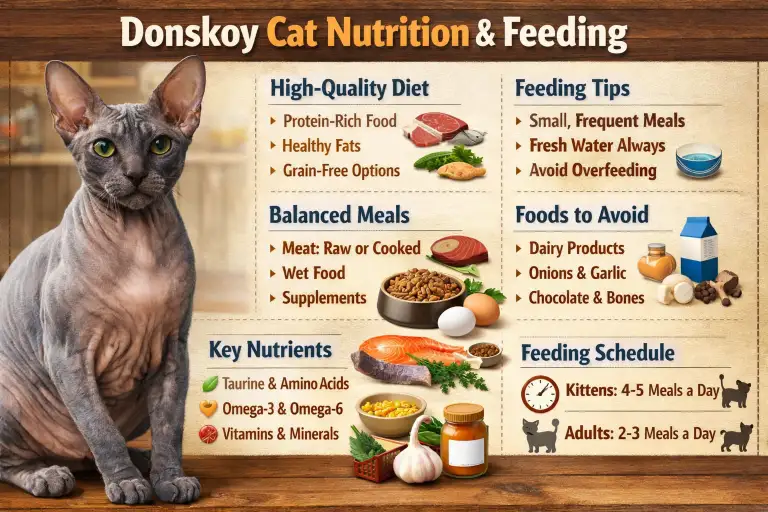
Donskoy cats are hairless, and that one fact changes how their bodies use food. Without fur, they lose body heat faster than coated cats. To stay warm and active, they usually burn more energy during the day. This is why many Donskoy cats seem hungry more often than other cats.
Like all cats, Donskoy cats are obligate carnivores. This means their bodies are designed to get nutrition mainly from animal-based foods. Meat provides protein, fat, and essential nutrients that plant foods cannot fully replace. Even though they may eat more, quality matters more than just filling the bowl.
Their skin also plays a big role in nutrition. Healthy fats help support skin condition and natural oils. A balanced diet helps avoid overly dry skin or excess oil buildup, which some hairless cat owners notice when feeding low-quality food.
It is important to remember that a bigger appetite does not always mean a cat needs unlimited food. Donskoy cats still need proper portions and balanced meals, not constant snacking.
How Donskoy Cats Differ From Coated Cats (Nutrition Basics)
| Feature | Donskoy Cats | Coated Cats |
|---|---|---|
| Body heat loss | Higher | Lower |
| Energy use | Higher | Moderate |
| Appetite | Often strong | Varies |
| Skin care needs | High | Lower |
| Feeding approach | Balanced, controlled | Balanced |
What to Feed a Donskoy Cat (Food Types & Nutrients)
A good Donskoy diet starts with high-quality animal protein. Protein helps maintain muscles, supports the skin, and keeps energy levels stable. The protein should come from named animal sources like chicken, turkey, fish, or beef.
Fat is also important for Donskoy cats. Fat provides energy and helps keep their skin healthy. Hairless cats often do better with diets that are not too low in fat, as fat helps with warmth and overall condition.
Carbohydrates are not essential for cats, but small amounts are commonly found in commercial foods. They are mainly used for structure and energy. The key is that carbs should not be the main part of the diet.
Both wet and dry foods can work for Donskoy cats. Wet food helps with hydration and usually has fewer carbs. Dry food is convenient and calorie-dense, which can be useful for active cats. Many owners choose mixed feeding to get benefits from both.
Wet vs Dry vs Mixed Feeding for Donskoy Cats
| Feeding Type | Benefits | Things to Watch |
|---|---|---|
| Wet food | High moisture, fewer carbs | Spoils faster |
| Dry food | Easy to store, energy-dense | Lower moisture |
| Mixed feeding | Balanced approach | Portion control needed |
How Much and How Often to Feed a Donskoy Cat
Donskoy cats often do better with multiple small meals rather than one or two large ones. This helps manage hunger and keeps energy steady throughout the day. Many owners feed three to four times daily.
Portion size matters more than bowl size. Foods vary in calorie density, so two different foods may require different serving amounts. Always watch your cat’s body shape rather than relying only on hunger signals.
Free-feeding dry food can work for some Donskoy cats, but it often leads to overeating. Scheduled meals make it easier to control portions and notice changes in appetite early.
A healthy Donskoy should feel firm but not bony. You should be able to feel the ribs with gentle pressure, and the belly should not hang low.
General Feeding Frequency & Portion Overview
| Cat Type | Meals Per Day | Portion Focus |
|---|---|---|
| Active adult | 3–4 | Moderate to high |
| Less active adult | 2–3 | Controlled |
| Growing kitten | 4–5 | Energy-rich |
| Senior | 2–3 | Easy to digest |
Feeding Donskoy Cats at Different Life Stages
Donskoy kittens grow fast and burn energy quickly. They need frequent meals and nutrient-rich food to support growth and warmth. Skipping meals at this stage can lead to poor development.
Adult Donskoy cats need balanced meals that support muscle and skin without causing weight gain. Spayed or neutered adults may need slightly smaller portions since their metabolism can slow down.
Senior Donskoy cats may become less active and may digest food more slowly. They often do better with softer textures and steady meal times. Sudden diet changes should be avoided.
Life stage feeding is about adjustment, not perfection. Watching how your cat moves, eats, and maintains body condition is more useful than following strict rules.
Donskoy Feeding Needs by Life Stage
| Life Stage | Key Focus | Feeding Style |
|---|---|---|
| Kitten | Growth, warmth | Frequent meals |
| Adult | Maintenance | Balanced portions |
| Senior | Comfort, digestion | Gentle, steady |
Common Donskoy Feeding Mistakes and Owner Tips
One common mistake is feeding every time the cat seeks warmth or attention. Donskoy cats often cuddle or cry because they are cold, not because they are hungry. Extra blankets or warm resting spots can help reduce this behavior.
Overusing treats is another issue. Treats should stay a small part of the diet and not replace proper meals. Human food, especially salty or seasoned items, should be avoided.
Some owners change foods too often trying to “fix” skin issues. Frequent changes can upset digestion. A steady, balanced diet usually works best.
If a Donskoy shows sudden weight changes, ongoing stomach issues, or major appetite shifts, a veterinarian should be consulted to rule out health problems.
Do’s and Don’ts of Feeding a Donskoy Cat
| Do | Don’t |
|---|---|
| Feed balanced meals | Overfeed due to begging |
| Watch body condition | Rely only on hunger cues |
| Use treats sparingly | Share table food |
| Keep feeding routine | Change food too often |
For general feline nutrition standards and feeding guidance, you can visit the World Small Animal Veterinary Association nutrition guidelines:
https://wsava.org/global-guidelines/nutrition-guidelines/

Ata Ur Rehman is the founder of Pet Age in Human Years Calculator, an educational platform that provides age conversion charts and lifespan guides for dogs, cats, birds, and other companion animals. His work focuses on helping pet owners understand how animal ages translate into human years using commonly accepted age conversion formulas and published lifespan averages.
The website compiles breed and species lifespan data from kennel clubs, breed organizations, and general animal lifespan studies to present simple and easy-to-understand guides for pet owners worldwide.
This website was created to centralize animal age conversion charts into one easy reference platform for pet owners.