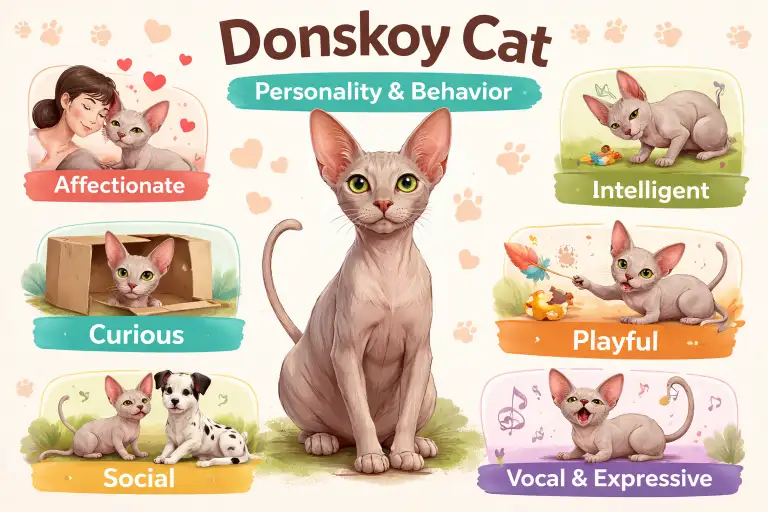
The Donskoy cat is often described as unusual, but not because of its hairless look alone. What really stands out is the way this cat connects with people. Many owners notice that a Donskoy feels more emotionally present than they expected from a cat. This breed often wants to be part of daily life, not just watching from a distance.
Donskoy cats are social by nature, but that does not mean they are needy or demanding. They like being close to humans, sharing space, and staying aware of what is happening around them. Some will follow their owner from room to room, while others simply choose a nearby spot and stay there quietly.
Another important part of the Donskoy personality is sensitivity. These cats are very good at reading tone, mood, and routine changes. Loud environments, sudden changes, or emotional tension in the home can affect how they act. This does not mean they are fragile. It means they are highly aware and responsive.
It is also important to remember that every Donskoy is an individual. Some are very outgoing, while others are calm and reserved. Personality depends on early handling, environment, and the relationship built with their humans, not just the breed itself.
Core Donskoy Personality Traits
Donskoy cats are known for being affectionate, but affection can look different from cat to cat. Some enjoy full body contact, like sitting on laps or sleeping against their owner. Others prefer close presence, such as sitting next to you or touching with a paw.
They are also emotionally aware cats. Many owners notice that their Donskoy reacts to sadness, stress, or excitement in the household. This does not mean the cat understands emotions like a human, but it does mean they respond strongly to changes in energy and routine.
Curiosity is another strong trait. Donskoys like to explore, watch, and investigate. They often enjoy interactive play and observing new objects. This curiosity usually comes with confidence, especially when they feel safe in their home.
At the same time, Donskoys still value independence. They may seek attention often, but they also know when to rest, observe, or spend time alone. This balance is part of what makes their personality feel so engaging.
Donskoy Personality Traits Table
| Trait | How It Shows Up | What It Means |
|---|---|---|
| Affectionate | Follows people, enjoys contact | Strong social bonding |
| Emotionally aware | Reacts to mood and tone | High sensitivity to environment |
| Curious | Explores and watches closely | Mental engagement |
| Confident | Moves freely in the home | Feels secure |
| Independent | Takes breaks from interaction | Healthy self-regulation |
Donskoy Behavior and Communication
Donskoy cats use clear body language to express how they feel. Because they often stay close to humans, their signals can be easier to notice. Relaxed posture, slow blinking, and gentle movement usually mean the cat feels safe and comfortable.
Their tails and ears give strong clues. A softly moving tail or upright ears often show interest or calm attention. A stiff body, flattened ears, or fast tail movement may signal discomfort or overstimulation, not bad behavior.
Many Donskoy cats are also vocal. This does not always mean they want food or attention. Vocal sounds can be a way to greet, respond, or stay connected with their people. Some are chatty, while others are quiet but expressive in different ways.
Understanding these signals helps owners respond calmly and build trust. The goal is not to control behavior, but to listen and adjust the environment when needed.
Body Language and Vocal Signals Table
| Signal | What You See | What It Means |
|---|---|---|
| Slow blinking | Soft eyes, relaxed face | Trust and comfort |
| Gentle vocal sounds | Short meows or chirps | Social communication |
| Upright tail | Tail held high | Confidence and interest |
| Flattened ears | Ears back or sideways | Discomfort or stress |
| Still posture | Freezing or stiff body | Needs space |
Social Behavior With Humans and Other Pets
Donskoy cats usually form strong bonds with their humans. They often like being involved in daily routines, such as sitting nearby while you work or following you through the house. This is not a sign of dependence, but of social connection.
With children, many Donskoys do well when treated gently and respectfully. They tend to prefer calm interaction over rough handling. Teaching children to watch body language helps keep interactions positive.
When it comes to other pets, Donskoys are often tolerant and curious. They may enjoy companionship, especially with other calm animals. However, they still need time and space to adjust, just like any cat.
Their social style is best described as cooperative rather than dominant. They observe first, then engage when they feel safe.
Social Interaction Styles Table
| Situation | Common Response | What’s Normal |
|---|---|---|
| With owner | Staying close or following | Social bonding |
| With visitors | Watching before approaching | Cautious curiosity |
| With children | Calm tolerance | Gentle interaction needed |
| With other cats | Slow engagement | Gradual adjustment |
| With dogs | Observing from distance | Needs safe space |
Commonly Misunderstood Donskoy Behaviors
One of the most common misunderstandings is calling Donskoy cats “clingy.” In reality, they are socially bonded. Staying close is their way of sharing space, not a sign of insecurity.
Another misunderstanding is vocal behavior. A vocal Donskoy is not demanding or misbehaving. Many are simply expressive and use sound as part of normal communication.
Warmth-seeking behavior is also often misunderstood. Because Donskoys have little or no fur, they naturally seek warm places or human contact. This is normal comfort behavior, not anxiety.
Understanding these behaviors helps owners feel more confident and relaxed, which in turn helps the cat feel secure.
Myth vs Reality Table
| Behavior | Common Assumption | Reality |
|---|---|---|
| Following owners | Too needy | Social and bonded |
| Frequent vocalizing | Demanding | Communicative |
| Seeking warmth | Anxious | Physical comfort |
| Close sleeping | Dependent | Trust and safety |
| Sensitivity | Weak | Environment-aware |
For general feline behavior science and communication, you can explore resources from the International Cat Care organization:
https://icatcare.org

Ata Ur Rehman is the founder of Pet Age in Human Years Calculator, an educational platform that provides age conversion charts and lifespan guides for dogs, cats, birds, and other companion animals. His work focuses on helping pet owners understand how animal ages translate into human years using commonly accepted age conversion formulas and published lifespan averages.
The website compiles breed and species lifespan data from kennel clubs, breed organizations, and general animal lifespan studies to present simple and easy-to-understand guides for pet owners worldwide.
This website was created to centralize animal age conversion charts into one easy reference platform for pet owners.