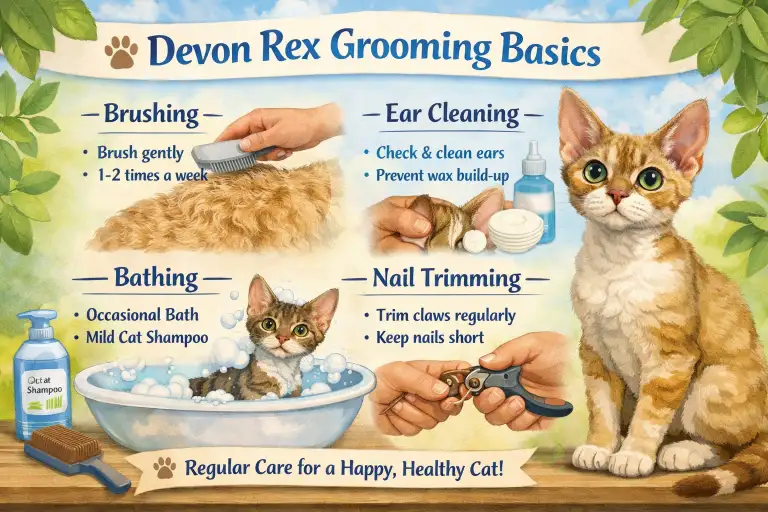
Devon Rex grooming is different from most cats, even though the coat is short. Their fur is very fine, soft, and curly, and their skin makes more natural oil than average. Because of this, grooming is less about brushing hair and more about keeping the skin, ears, and face clean and healthy.
Many new owners think a short coat means “no grooming.” With a Devon Rex, that idea can cause problems. Oil can build up on the skin, especially around the face, neck, and belly. Ears can also get dirty faster than in other breeds. Grooming helps prevent smells, skin irritation, and discomfort.
Devon Rex cats usually enjoy warmth and close contact, which can make gentle grooming easier. Still, their skin is sensitive. Rough tools, hard brushing, or too much bathing can damage the coat or dry the skin. A calm, gentle routine works best.
Grooming needs can also change with age and lifestyle. Kittens need very light handling. Adult indoor cats may need more ear care. Seniors may groom themselves less and need extra help. The goal is simple care, not perfect looks.
Devon Rex Grooming Traits vs Typical Short-Haired Cats
| Grooming Area | Devon Rex | Typical Short-Haired Cat |
|---|---|---|
| Coat texture | Very fine, curly, fragile | Thicker, straight |
| Skin oil | High | Normal |
| Brushing need | Very low | Low to medium |
| Ear cleaning | Frequent | Occasional |
| Bathing | Sometimes needed | Rare |
Brushing and Coat Care for Devon Rex Cats
Brushing a Devon Rex is very different from brushing other cats. Their coat can break easily, so brushing is often not needed at all. Many Devon Rex cats stay healthy with little or no brushing, especially if they are indoor cats.
If brushing is used, it should be very gentle and not frequent. Some owners use a soft cloth or their hands instead of a brush. This helps remove loose hair without pulling or damaging the curls. Brushing too often can cause thin patches or irritation.
Shedding in Devon Rex cats is usually low. You may notice a little more loose hair during seasonal changes or stress, but heavy shedding is not normal. If hair loss looks patchy or the skin looks red, grooming should stop and a vet should be contacted.
The best coat care habit is observation. Feel the coat with your hands. Look for oily areas, dryness, or skin flakes. Simple checks help you know what care is needed and what should be avoided.
Bathing and Skin Care: When a Devon Rex Needs a Bath
Devon Rex cats may need baths more than other short-haired cats, but that does not mean frequent bathing is good. Their skin produces oil, and sometimes that oil builds up and causes a greasy feel or smell. In these cases, a gentle bath can help.
Bathing is usually needed only once every few weeks or even less. Many Devon Rex cats do fine with very occasional baths or just gentle wipe-downs. Over-bathing can dry the skin and make oil problems worse.
A bath may help if the skin feels sticky, the coat looks dull, or dirt is trapped in skin folds. Bathing should be avoided if the skin looks red, flaky, or sore. Those signs need a vet check, not grooming.
Always keep baths calm and short. Warm water, gentle handling, and proper drying are important. Never scrub hard or use strong products made for humans or dogs.
When Bathing Helps vs When It Should Be Avoided
| Situation | Bath Helpful? | Reason |
|---|---|---|
| Greasy skin feel | Yes | Removes oil buildup |
| Mild odor | Yes | Freshens skin safely |
| Red or sore skin | No | Needs vet care |
| Dry or flaky skin | No | Bath can worsen dryness |
| Healthy, clean skin | No | Bath not needed |
Ear, Eye, and Nail Care for Devon Rex Cats
Ear care is one of the most important grooming tasks for a Devon Rex. Their ears often collect wax quickly because of skin oil. Ears should be checked often and cleaned gently when needed. Only clean the parts you can see, and never push anything deep into the ear.
Eye care is usually simple. Some Devon Rex cats get tear marks or small crusts at the corners of the eyes. A soft, damp cloth can be used to wipe the area. This should be gentle and never forced.
Nail trimming is similar to other indoor cats. Because Devon Rex cats are often kept indoors, their nails may need trimming every few weeks. Trim only the sharp tip and stop if the cat becomes stressed.
These small tasks prevent bigger problems and help your cat stay comfortable. Short, calm sessions work better than trying to do everything at once.
Care Task, How Often, and Safety Notes
| Care Task | How Often | Safety Notes |
|---|---|---|
| Ear check | Weekly | Never insert tools deep |
| Ear cleaning | As needed | Stop if redness appears |
| Eye wiping | As needed | Use soft, damp cloth |
| Nail trimming | Every 2–4 weeks | Avoid cutting quick |
Grooming Frequency, Safety Tips, and Common Mistakes
A simple grooming schedule helps owners stay consistent without overdoing it. Devon Rex grooming should be light, regular, and flexible. Needs may change with age, season, or health.
Always watch your cat’s body language. Flat ears, tail flicking, stiff body, or trying to escape are signs to stop. Grooming should never be a struggle. It is better to do less and keep trust.
Common mistakes include bathing too often, brushing too hard, ignoring ear care, and using the wrong products. Another mistake is trying to fix skin or ear problems at home when a vet is needed.
When in doubt, pause grooming and ask a professional groomer or veterinarian for advice. Safe grooming is about comfort, not perfection.
Devon Rex Grooming Frequency Guide
| Grooming Task | Average Frequency |
|---|---|
| Coat wiping | Weekly or as needed |
| Brushing | Rare or none |
| Bathing | Every few weeks if needed |
| Ear cleaning | Every 1–2 weeks |
| Nail trimming | Every 2–4 weeks |
For additional trusted guidance on cat grooming safety, you can visit the ASPCA’s general cat care resources: https://www.aspca.org/pet-care/cat-care

Ata Ur Rehman is the founder of Pet Age in Human Years Calculator, an educational platform that provides age conversion charts and lifespan guides for dogs, cats, birds, and other companion animals. His work focuses on helping pet owners understand how animal ages translate into human years using commonly accepted age conversion formulas and published lifespan averages.
The website compiles breed and species lifespan data from kennel clubs, breed organizations, and general animal lifespan studies to present simple and easy-to-understand guides for pet owners worldwide.
This website was created to centralize animal age conversion charts into one easy reference platform for pet owners.