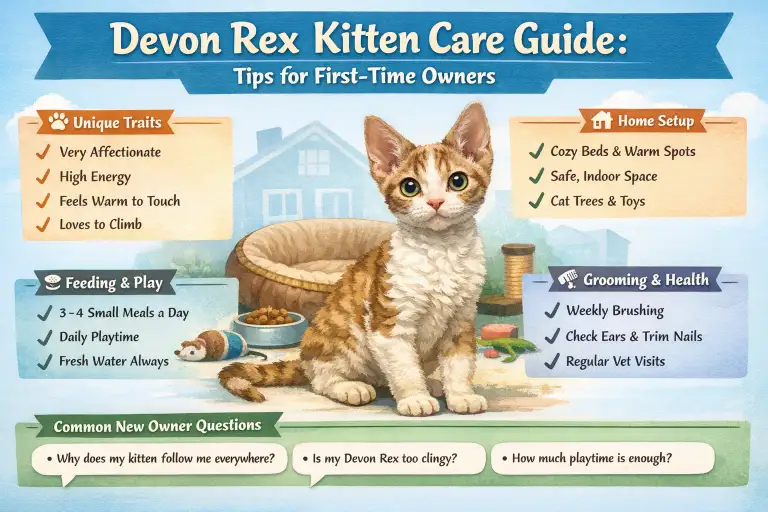
Bringing home a Devon Rex kitten is exciting, but many new owners are surprised by how different this breed can feel. Devon Rex kittens are very social, very active, and very attached to people. They often want to be with you all the time. If your kitten follows you from room to room, this is normal for this breed.
Devon Rex kittens also feel warmer to the touch than many other cats. This is because they have very short, fine fur. It does not mean they have a fever. Many owners worry at first, but warmth-seeking is a normal Devon Rex trait. These kittens often look for sunny spots, blankets, or laps to sleep on.
Their personality is playful and curious. A Devon Rex kitten may climb, jump, and explore more than you expect. They enjoy learning how things work and may open cabinets or jump onto shelves. This does not mean they are naughty. It means they need safe ways to use their energy.
This guide is written to help first-time owners feel calm and confident. You do not need to be perfect. If you provide warmth, food, play, and affection, your Devon Rex kitten will usually thrive.
| Devon Rex Kitten Traits | What Owners Often Notice |
|---|---|
| Very social | Follows people, wants attention |
| Short curly coat | Feels warm, little shedding |
| High energy | Needs daily play sessions |
| Strong bond with humans | Dislikes being ignored |
Preparing Your Home for a Devon Rex Kitten
Before your kitten arrives, set up a small, safe area. This helps your kitten feel secure during the first few days. Include a bed, food and water bowls, a litter box, and a few toys. Devon Rex kittens adjust better when their space feels calm and warm.
Warmth is important for this breed. Place beds away from cold floors and drafts. Soft blankets, padded beds, or covered cat beds work well. Many Devon Rex kittens choose sleeping spots near people or warm surfaces.
Your home should be kitten-proofed. Secure loose cords, remove small objects that can be swallowed, and block unsafe spaces. Devon Rex kittens are curious and may climb into places you did not expect. Check windows and balconies carefully and keep them closed or screened.
The first night can be noisy or restless. Some kittens cry or look for their mother. This is normal. Sit with your kitten, speak softly, and let them settle at their own pace. Most Devon Rex kittens relax within a few days.
Feeding, Daily Routines, and Play Needs
Devon Rex kittens often have strong appetites. They are active and burn energy quickly. Feeding small meals several times a day is usually easier than one or two large meals. Always provide fresh water nearby.
Wet food helps with hydration and is easier for kittens to eat. Dry food can be added if recommended by your vet. Avoid sudden food changes, as this can upset a kitten’s stomach. Slow changes are safer.
Play is not optional for this breed. Devon Rex kittens need daily play to stay happy and calm. Short play sessions spread throughout the day work best. Wand toys, soft balls, and climbing areas are helpful.
Sleep patterns may surprise you. Kittens sleep many hours but wake up in bursts of energy. Play before bedtime can help reduce late-night zoomies.
| Daily Need | What to Expect |
|---|---|
| Feeding | 3–4 small meals per day |
| Play | 2–3 short active sessions |
| Sleep | Many naps between play |
| Social time | Daily interaction needed |
Grooming, Hygiene, and Health Basics
Devon Rex kittens do not need heavy brushing, but gentle grooming helps remove loose hair and keeps skin healthy. Over-brushing can irritate their skin, so less is better.
Their ears may need more attention than other breeds. Some Devon Rex kittens produce more ear wax. Clean ears only when needed and gently. If you are unsure, ask a vet to show you how during a routine visit.
Nail trimming should start early so your kitten gets used to it. Short, regular trims are easier than waiting too long. Handling paws gently during calm moments helps build trust.
Regular vet visits help track growth and general health. This guide does not replace medical advice, but watching appetite, energy, and litter box habits can help you notice changes early.
| Care Task | General Frequency |
|---|---|
| Light grooming | Once a week |
| Ear check | Weekly |
| Nail trimming | Every 2–3 weeks |
| Vet checkups | As advised by your vet |
Common Questions and Beginner Mistakes with Devon Rex Kittens
Many owners worry their Devon Rex kitten is too clingy. In most cases, this is normal. This breed bonds closely with people and enjoys company. Providing attention does not spoil them.
Another common mistake is underestimating play needs. Without enough play, a kitten may become bored and destructive. Daily play helps prevent behavior issues.
Some owners overfeed because their kitten always seems hungry. Stick to regular meal times and monitor growth with your vet’s guidance.
Devon Rex kittens are best kept indoors. Outdoor risks are higher for this breed due to their coat and social nature. Indoor life with enrichment is safer and healthier.
For more trusted breed information, you can visit the ASPCA’s Devon Rex cat page:
https://www.aspca.org/pet-care/cat-care/devon-rex-cat-care

Ata Ur Rehman is the founder of Pet Age in Human Years Calculator, an educational platform that provides age conversion charts and lifespan guides for dogs, cats, birds, and other companion animals. His work focuses on helping pet owners understand how animal ages translate into human years using commonly accepted age conversion formulas and published lifespan averages.
The website compiles breed and species lifespan data from kennel clubs, breed organizations, and general animal lifespan studies to present simple and easy-to-understand guides for pet owners worldwide.
This website was created to centralize animal age conversion charts into one easy reference platform for pet owners.