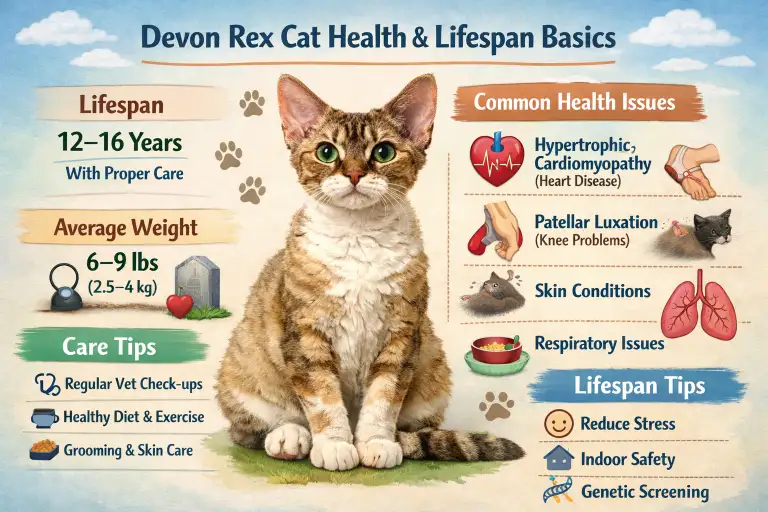
Devon Rex cats are generally known for having a good lifespan when they are well cared for. On average, a Devon Rex cat lives between 12 and 15 years, which is similar to many other indoor domestic cats. Some may live longer, while others may have shorter lives depending on genetics, lifestyle, and overall care.
Most Devon Rex cats live longer lives when they are kept indoors. Indoor cats are safer from accidents, fights, parasites, and infectious diseases. Outdoor cats often face more risks that can shorten their lifespan, even if they seem active and strong.
It is important to understand that lifespan numbers are averages, not promises. Two Devon Rex cats can live very different lives even with similar care. One may stay healthy for many years, while another may face health challenges earlier. This does not mean the breed is unhealthy—it shows how much individual variation exists in cats.
Owners play a big role in lifespan. Regular vet visits, proper food, a safe home, and daily attention can all support a longer and healthier life. Lifespan is not only about years lived, but also about how comfortable and active a cat feels during those years.
Devon Rex Lifespan Overview
| Lifestyle | Typical Lifespan |
|---|---|
| Indoor Devon Rex | 12–15 years or more |
| Indoor–Outdoor | Often shorter |
| Outdoor Only | Usually the shortest |
Are Devon Rex Cats Healthy Overall?
Many people ask if Devon Rex cats are healthy, especially because they look different from other cats. Overall, the Devon Rex is considered a moderately healthy breed. They are not fragile by default, but like many purebred cats, they may have some health tendencies that owners should be aware of.
Their slim body, large ears, and curly coat are normal breed traits and do not mean something is wrong. However, these same traits can sometimes make health changes easier to notice, which is actually helpful for early detection.
Devon Rex cats are usually active, playful, and social. These behaviors often continue well into adulthood. When a Devon Rex becomes unusually quiet, tired, or withdrawn, it can be a sign that something has changed and may need attention.
Health is not only about avoiding illness. It also includes comfort, mobility, appetite, grooming habits, and behavior. A healthy Devon Rex should be curious, alert, and interested in daily activities.
Devon Rex Health at a Glance
| Aspect | Overview |
|---|---|
| Overall health | Generally good |
| Maintenance level | Moderate |
| Vet care importance | Very important |
| Owner observation | Highly valuable |
Common Devon Rex Health Issues to Be Aware Of
Like all cat breeds, Devon Rex cats can be more likely to experience certain health issues. This does not mean every Devon Rex will have these problems. It simply means these issues are reported more often in this breed compared to mixed-breed cats.
Some Devon Rex cats may have skin or coat sensitivities. Their thin, curly fur offers less protection, so their skin may react more easily to oils, dirt, or environmental changes. Gentle grooming and regular observation are often helpful.
Dental health is another area to watch. Smaller jaws can sometimes lead to crowded teeth, which may increase the risk of dental disease over time. Dental issues can affect eating and comfort if they are not noticed early.
Heart-related conditions are sometimes mentioned in Devon Rex health discussions. These are usually genetic and cannot be seen from the outside. This is why routine vet checkups are important, even when a cat seems fine.
Commonly Reported Health Concerns in Devon Rex Cats
| Health Area | Why It Matters |
|---|---|
| Skin and coat | More sensitive than average |
| Dental health | Crowded teeth may occur |
| Heart health | Some inherited risks |
| Weight balance | Lean body can hide changes |
Factors That Influence a Devon Rex’s Lifespan and Health
A Devon Rex’s health and lifespan are shaped by many factors, not just genetics. Lifestyle choices play a very big role and are often under the owner’s control.
Diet is one of the most important factors. Eating too much or too little over time can lead to problems, even in a naturally slim breed like the Devon Rex. Regular weight checks help spot changes early.
Mental and physical activity also matter. Devon Rex cats are intelligent and social. Boredom and stress can affect their health just as much as poor diet. Daily play and human interaction help keep them balanced.
Regular veterinary care supports early detection. Many health problems are easier to manage when they are found early. Cats are very good at hiding discomfort, so routine checkups help fill that gap.
Lifestyle and Care Factors That Impact Longevity
| Factor | Impact on Health |
|---|---|
| Indoor living | Reduces risks |
| Balanced diet | Supports organs and energy |
| Regular play | Maintains muscle and mood |
| Vet visits | Early problem detection |
Supporting Long-Term Health and Quality of Life in Devon Rex Cats
Supporting a Devon Rex’s health is about small, steady habits over time. Watching daily behavior helps owners notice subtle changes that might otherwise be missed.
As Devon Rex cats age, they may slow down slightly but should still show interest in people and play. Aging does not always mean illness, but it does mean care needs may change. Softer bedding, warmer spaces, and easier access to food and litter boxes can improve comfort.
Quality of life includes emotional health. Devon Rex cats often form strong bonds with their owners. Feeling safe, engaged, and included in daily life helps reduce stress and supports overall wellbeing.
When something feels “off,” it is okay to consult a veterinarian, even if the signs seem small. Early conversations can prevent bigger problems later and help owners feel more confident.
Preventive Care Focus by Life Stage
| Life Stage | Care Focus |
|---|---|
| Young adult | Growth, behavior, routine |
| Adult | Weight, dental, activity |
| Senior | Comfort, mobility, monitoring |
If you want to learn more about cat behavior science in general, you can explore trusted resources like the International Cat Care website:
https://icatcare.org

Ata Ur Rehman is the founder of Pet Age in Human Years Calculator, an educational platform that provides age conversion charts and lifespan guides for dogs, cats, birds, and other companion animals. His work focuses on helping pet owners understand how animal ages translate into human years using commonly accepted age conversion formulas and published lifespan averages.
The website compiles breed and species lifespan data from kennel clubs, breed organizations, and general animal lifespan studies to present simple and easy-to-understand guides for pet owners worldwide.
This website was created to centralize animal age conversion charts into one easy reference platform for pet owners.