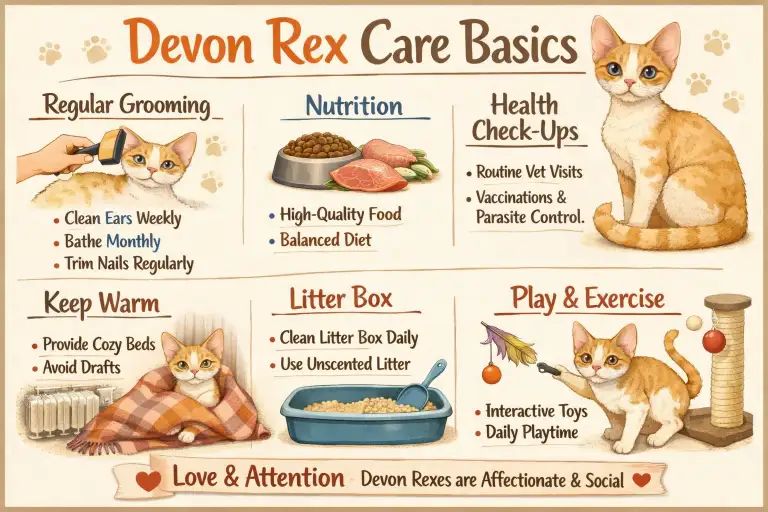
Devon Rex cats are not “low-care” cats, even though their short curly coat makes many people think they are. This breed has very specific needs because of its body shape, skin type, and personality. A Devon Rex feels more like a warm, playful shadow than a typical independent cat. Understanding these differences early helps owners avoid common problems.
One of the biggest differences is their coat and skin. Devon Rex cats have very fine, curly hair and produce more skin oils than most cats. Because their fur is thin, those oils stay on the skin instead of spreading through thick fur. This is why Devon Rex cats can feel greasy if not cared for properly, and why skin care matters more than brushing.
Their large ears are another care challenge. Devon Rex ears collect wax faster than average cats. If owners ignore ear care, infections can develop quietly. This is one of the most common reasons Devon Rex owners end up at the vet.
Finally, their personality affects care. Devon Rex cats crave warmth, attention, and daily interaction. They often follow their owners from room to room and dislike being alone for long hours. Caring for a Devon Rex means caring for both their body and their emotional needs.
Devon Rex Traits and What They Mean for Daily Care
| Devon Rex Trait | What It Means for Owners |
|---|---|
| Curly, thin coat | Less brushing, more skin checks |
| Oily skin | Occasional baths, avoid over-washing |
| Large ears | Regular ear cleaning needed |
| Loves warmth | Provide blankets and warm sleeping spots |
| Very social | Daily play and human interaction required |
Daily & Weekly Devon Rex Care Routine
Daily care for a Devon Rex is simple but important. These cats need warmth, food, clean water, and human attention every single day. Because they burn energy fast, many Devon Rex cats act hungry often. Feeding on a schedule helps prevent begging and overeating.
Warmth is a daily need. Devon Rex cats get cold easily, especially in winter or air-conditioned homes. Soft beds, blankets, and sunny spots help them stay comfortable. Many owners notice their Devon Rex sleeps under covers or presses against people for heat.
Weekly care focuses on checking the body. Owners should look at the ears, skin, nails, and teeth. You are not always cleaning everything every week, but checking helps you catch problems early before they turn serious.
Consistency matters more than perfection. A short daily routine and a simple weekly check keep Devon Rex cats healthy without stress.
Daily vs Weekly Devon Rex Care Checklist
| Care Task | Daily | Weekly |
|---|---|---|
| Fresh food and water | Yes | — |
| Social play and attention | Yes | — |
| Warm sleeping area | Yes | — |
| Skin check (redness, oil) | — | Yes |
| Ear check | — | Yes |
| Nail check | — | Yes |
Grooming, Skin, and Ear Care for Devon Rex Cats
Devon Rex grooming is very different from long-haired cats. Brushing too much can damage their fragile curls and irritate the skin. Most Devon Rex cats do not need regular brushing at all. Instead, owners should focus on gentle skin care.
Bathing is sometimes helpful but should be done carefully. Some Devon Rex cats need a bath every few weeks, while others only need one occasionally. Use a mild cat shampoo and avoid hot water. Too many baths can dry the skin and make oil problems worse.
Ear care is not optional for this breed. Wax buildup happens quickly and often without visible signs. Gentle ear cleaning once every one to two weeks helps prevent infections. Never push deep into the ear canal.
If the skin smells bad, looks red, or feels very greasy all the time, that is not normal and should be checked by a vet.
Grooming Tasks, Frequency, and Common Mistakes
| Task | How Often | Common Mistake |
|---|---|---|
| Brushing | Rare or none | Brushing too hard |
| Bathing | As needed | Bathing too often |
| Ear cleaning | Every 1–2 weeks | Using cotton swabs deeply |
| Skin checks | Weekly | Ignoring redness or odor |
Health, Behavior, and Common Devon Rex Problems
Devon Rex cats are generally healthy, but their bodies show problems quickly if care slips. Skin infections, ear infections, and dental issues are the most common health concerns owners face. Regular checks make a big difference.
Behavior problems often come from boredom or loneliness. A Devon Rex that cries, chews items, or follows obsessively is often asking for more interaction. These cats need daily play and mental stimulation, not just food.
Weight changes should be watched closely. Devon Rex cats are slim by nature, so sudden weight loss or gain is a warning sign. Changes in appetite, energy, or grooming habits should never be ignored.
Common Devon Rex Issues and When to See a Vet
| Issue | Early Sign | Vet Needed? |
|---|---|---|
| Ear infection | Dark wax, head shaking | Yes |
| Skin infection | Redness, bad smell | Yes |
| Dental problems | Bad breath, drooling | Yes |
| Boredom stress | Excessive crying | If ongoing |
Is a Devon Rex the Right Cat for You?
Devon Rex cats are best for people who want a close companion. They do well in indoor homes where they can stay warm and safe. Leaving them alone all day is not ideal unless they have another pet for company.
Many people ask if Devon Rex cats are hypoallergenic. They are not fully hypoallergenic, but some allergy sufferers do better with them because they shed less. Time spent around the cat before adoption is always the best test.
This breed suits owners who enjoy daily interaction, play, and hands-on care. If you want a quiet, independent cat, a Devon Rex may feel demanding. If you want a playful, loving, and people-focused cat, they can be a perfect match.
Devon Rex vs Average Cat Lifestyle Comparison
| Lifestyle Factor | Devon Rex | Average Cat |
|---|---|---|
| Attention needs | Very high | Medium |
| Grooming style | Skin and ears | Brushing |
| Cold tolerance | Low | Normal |
| Alone time | Poor | Better |
For additional veterinary-backed guidance on feline care standards, you can visit the International Cat Care (ISFM) website:
https://icatcare.org

Ata Ur Rehman is the founder of Pet Age in Human Years Calculator, an educational platform that provides age conversion charts and lifespan guides for dogs, cats, birds, and other companion animals. His work focuses on helping pet owners understand how animal ages translate into human years using commonly accepted age conversion formulas and published lifespan averages.
The website compiles breed and species lifespan data from kennel clubs, breed organizations, and general animal lifespan studies to present simple and easy-to-understand guides for pet owners worldwide.
This website was created to centralize animal age conversion charts into one easy reference platform for pet owners.