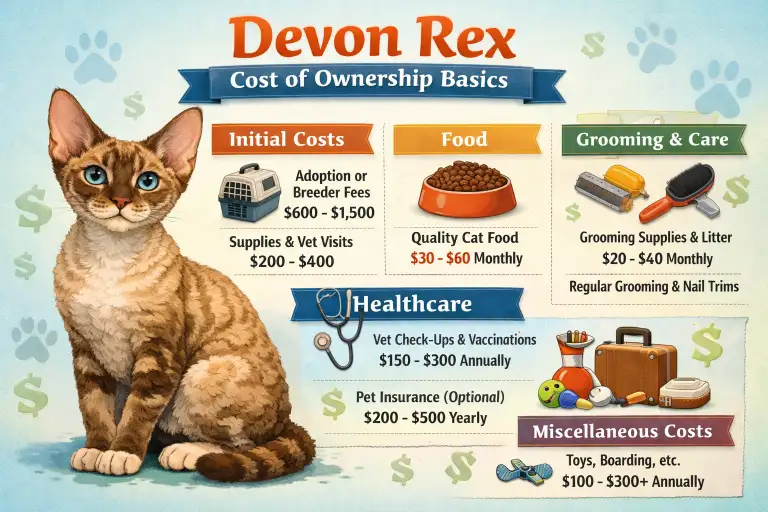
Owning a Devon Rex cat is not just about the purchase price. The real cost shows up over time, through food, vet care, supplies, and daily needs. Many people are surprised to learn that the lifetime cost of a cat can be much higher than expected, even for a small and indoor-only breed like the Devon Rex.
Devon Rex cats are known for their curly coats, big ears, and very social personalities. Because of this, their care needs can be different from other cats. They often need more attention, regular cleaning of ears and skin, and a stable indoor environment. These needs affect the total cost of ownership.
This guide focuses on realistic planning. The goal is not to scare you or sell anything, but to help you decide if a Devon Rex fits your budget and lifestyle. Costs are shown as general ranges and examples, not guarantees. Every cat and household is different.
To keep things clear, this article assumes one indoor Devon Rex cat, living an average lifespan, with standard veterinary care and responsible ownership.
Initial Costs of Owning a Devon Rex (First-Year Expenses)
The first year is usually the most expensive time when getting a Devon Rex. This is because many costs happen only once, or mostly at the beginning. Planning for these early expenses helps avoid stress later.
Initial costs include bringing the cat home, basic supplies, and early vet visits. Whether you adopt or buy from a breeder, you will still need to prepare your home properly. Skipping these steps often leads to higher costs later.
Veterinary care in the first year is important. Kittens and newly adopted cats usually need exams, vaccines, and sterilization if it has not already been done. These are routine but necessary expenses.
Below is a general look at common first-year costs. These are broad ranges and can change based on care choices and location.
| First-Year Cost Category | What It Covers | General Cost Range |
|---|---|---|
| Acquisition | Adoption or breeder fee | Varies widely |
| Basic Supplies | Litter box, bowls, bed, carrier, scratching post | Moderate one-time cost |
| Initial Vet Visits | Exams, vaccines, sterilization | Moderate to high |
| Setup Replacements | Extra bedding, toys, litter types | Low to moderate |
Ongoing Monthly & Annual Costs of a Devon Rex
After the first year, costs become more predictable. These are the expenses you will pay every month or every year for as long as your Devon Rex lives.
Food and litter are the most regular costs. Devon Rex cats are active and social, and they usually need good-quality food to stay healthy. Litter costs depend on the type you use and how often it is changed.
Routine vet care is another steady expense. Even healthy cats need annual checkups and preventive treatments. Grooming costs for a Devon Rex are usually low, but they still need regular ear cleaning and skin care at home.
Looking at monthly and yearly costs together makes budgeting easier.
| Ongoing Cost | Monthly View | Yearly View |
|---|---|---|
| Food | Steady monthly expense | Adds up over the year |
| Litter | Small but regular | Consistent yearly total |
| Routine Vet Care | Not monthly, but planned | Once or twice a year |
| Grooming & Hygiene | Mostly at home | Low yearly cost |
Hidden, Health & Lifestyle Costs Many Devon Rex Owners Miss
Some costs do not show up on basic checklists, but they matter a lot over time. These are the expenses that often catch new owners off guard.
Devon Rex cats can need extra skin and ear care because of their coat type and ear shape. Cleaning supplies are not expensive, but they are ongoing. Skipping care can lead to vet visits that cost more later.
Lifestyle costs are also important. If you travel, you may need pet sitting or boarding. If you work long hours, you might spend more on toys, enrichment, or companionship solutions to keep your cat happy.
As Devon Rex cats age, costs often increase. Older cats usually need more vet visits and may develop health issues that require long-term care. Planning for this early helps avoid hard decisions later.
Lifetime Cost of Owning a Devon Rex (Can You Afford One Responsibly?)
When all costs are added together, the lifetime cost of a Devon Rex is significant. This includes the first year, ongoing care, aging-related needs, and end-of-life comfort care. These costs are spread over many years, but they are real.
Instead of focusing on exact numbers, it helps to think in ranges and scenarios. A low-cost path usually means fewer health issues and careful spending. A higher-cost path often includes medical needs, special diets, or extended senior care.
The table below shows how lifetime costs are often viewed for planning purposes.
| Cost Scenario | What It Looks Like |
|---|---|
| Lower Range | Healthy cat, basic care, minimal emergencies |
| Average Range | Routine care plus occasional health issues |
| Higher Range | Chronic conditions or major medical events |
Before getting a Devon Rex, ask yourself if you can handle these costs without stress. A cat should never become a financial emergency. Responsible ownership means planning for both the expected and the unexpected.
For more general guidance on responsible pet ownership planning, you can visit:
https://www.avma.org/resources/pet-owners/petcare

Ata Ur Rehman is the founder of Pet Age in Human Years Calculator, an educational platform that provides age conversion charts and lifespan guides for dogs, cats, birds, and other companion animals. His work focuses on helping pet owners understand how animal ages translate into human years using commonly accepted age conversion formulas and published lifespan averages.
The website compiles breed and species lifespan data from kennel clubs, breed organizations, and general animal lifespan studies to present simple and easy-to-understand guides for pet owners worldwide.
This website was created to centralize animal age conversion charts into one easy reference platform for pet owners.