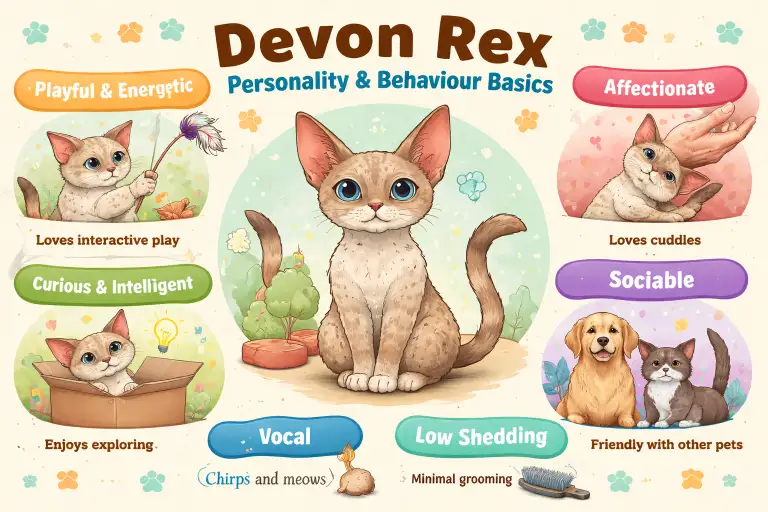
The Devon Rex is known for having a very people-focused personality. This breed is often described as curious, playful, and emotionally connected to its humans. Many owners are surprised by how involved a Devon Rex wants to be in daily life. They do not just share a home with you — they actively participate in it.
Unlike more independent cats, Devon Rex cats often seek closeness. Some enjoy sitting on laps, while others prefer sitting next to you or climbing onto shoulders. Their affection is usually constant, not occasional. This does not mean every Devon Rex behaves the same, but most show a strong interest in human interaction.
Devon Rex cats are also expressive. Their large ears, wide eyes, and active bodies make their moods easy to notice once you learn the signals. They often use movement, eye contact, and soft sounds to communicate instead of staying quiet and distant.
It is important to understand that this breed thrives on attention and mental activity. A Devon Rex left without interaction for long periods may appear bored or restless, not because something is “wrong,” but because this breed is wired to connect.
Devon Rex Temperament at a Glance
| Trait | What It Usually Looks Like |
|---|---|
| Affection level | Very high |
| Social needs | Strong |
| Independence | Low to moderate |
| Curiosity | High |
| Emotional sensitivity | High |
What Shapes Devon Rex Behavior
A Devon Rex’s behavior comes from both genetics and environment. The breed is naturally social and alert, but how those traits show up depends on early life experiences and daily routine. Kittens raised with gentle handling and human contact often grow into confident, outgoing adults.
Environment plays a major role. Devon Rex cats notice changes quickly. New schedules, new people, or less interaction can affect how they behave. They often respond by becoming louder, more clingy, or more playful. This is communication, not misbehavior.
Mental stimulation is also important for this breed. Devon Rex cats are intelligent and curious. When their environment is predictable but boring, they may invent their own activities. This can look like getting into drawers, stealing objects, or following people closely around the house.
It is also important to remember that every Devon Rex has an individual personality. Some are calm and cuddly, others are energetic and mischievous. Breed traits guide tendencies, but they do not erase individuality.
How Devon Rex Cats Interact With Humans
Devon Rex cats usually form strong emotional bonds with their people. Many owners describe them as “velcro cats” because they like to stay close. This may include following you from room to room, sitting on your lap, or resting against your body.
Affection does not always mean constant cuddling. Some Devon Rex cats prefer proximity over touch. They may sit nearby, sleep next to you, or watch you closely. This is still a form of bonding and should not be mistaken for independence.
Vocal behavior is another part of human interaction. Devon Rex cats often use soft chirps, trills, or short meows to get attention. They may “talk” when greeting you or when they want engagement. This is usually social communication, not distress.
These cats often enjoy shared activities. Playing, watching you work, or sitting with you during quiet moments all help them feel secure. They tend to do best in homes where people enjoy interacting with their cat throughout the day.
Devon Rex Affection and Communication Styles
| Behavior | What It Usually Means |
|---|---|
| Following you | Social bonding |
| Sitting very close | Comfort and trust |
| Soft vocal sounds | Requesting interaction |
| Eye contact | Attention and connection |
| Touching with paws | Play or affection |
Playfulness, Energy & Daily Behavior Patterns
Devon Rex cats are playful well into adulthood. Many keep a kitten-like energy for years. They enjoy interactive play, especially games that involve chasing, jumping, or problem-solving.
This breed often likes vertical spaces. Climbing, perching, and jumping are normal behaviors. High places help them feel safe and engaged. These behaviors are part of their natural curiosity, not signs of hyperactivity.
Daily routines matter. Devon Rex cats often adapt to their owner’s schedule, but they still need regular play and attention. Without it, they may become restless, especially in the evening when energy peaks.
Some behaviors are commonly misunderstood. Stealing small objects, exploring bags, or opening cabinets are usually signs of curiosity and intelligence. These cats use their paws almost like hands, which can surprise new owners.
Devon Rex Energy Level vs Owner Lifestyle
| Owner Lifestyle | Devon Rex Match |
|---|---|
| Home often | Excellent |
| Enjoys playing with cat | Excellent |
| Long work hours | Moderate |
| Very quiet household | Moderate |
| Highly active home | Good |
Common Devon Rex Behavior Questions Answered
Many people ask if Devon Rex cats calm down with age. Most do slow slightly, but they usually remain playful and social throughout their lives. Their need for connection often stays strong.
Another common question is whether they can be left alone. Devon Rex cats can handle short periods alone, but they are not ideal for homes where the cat will be ignored most of the day. They do best with companionship, either human or animal.
People also wonder if they are good for families. In many cases, yes. Devon Rex cats often enjoy gentle children and busy homes, as long as they are treated respectfully and given space when needed.
Finally, some ask if Devon Rex cats are “too demanding.” They are demanding only if their social nature is misunderstood. When their need for interaction is met, they are usually relaxed, loving, and fun companions.
If you want to learn more about cat behavior science in general, you can explore trusted resources like the International Cat Care website:
https://icatcare.org

Ata Ur Rehman is the founder of Pet Age in Human Years Calculator, an educational platform that provides age conversion charts and lifespan guides for dogs, cats, birds, and other companion animals. His work focuses on helping pet owners understand how animal ages translate into human years using commonly accepted age conversion formulas and published lifespan averages.
The website compiles breed and species lifespan data from kennel clubs, breed organizations, and general animal lifespan studies to present simple and easy-to-understand guides for pet owners worldwide.
This website was created to centralize animal age conversion charts into one easy reference platform for pet owners.