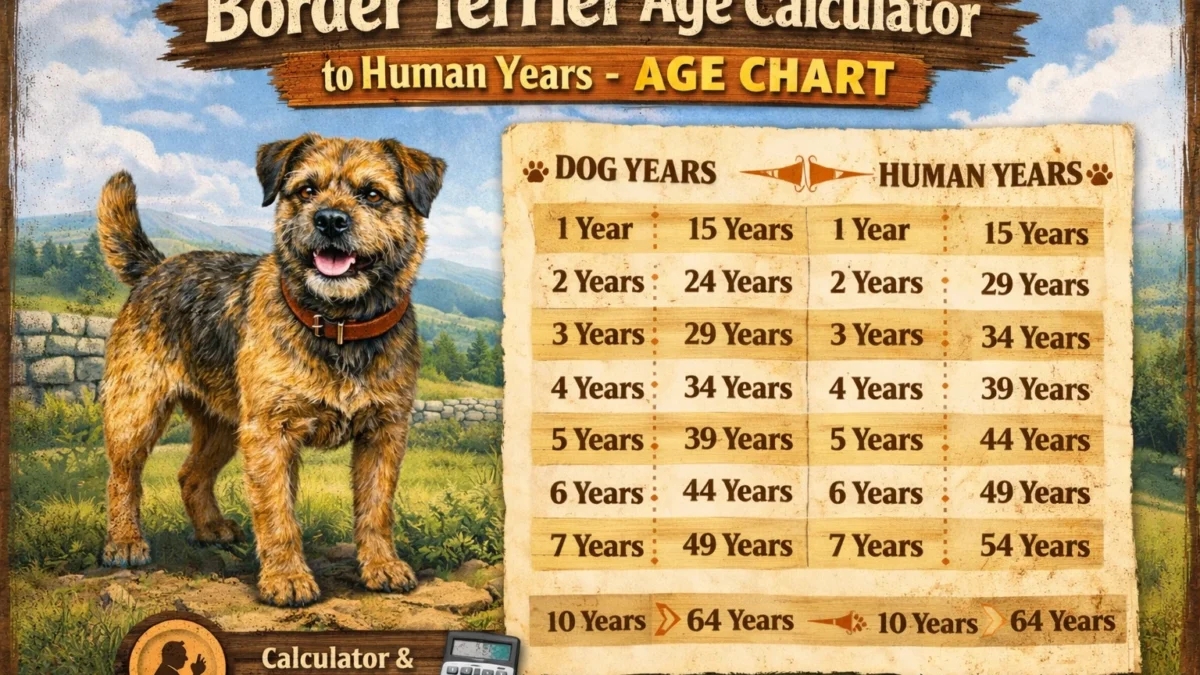
Border Terrier Age Calculator: Dog Years to Human Years Chart
A Border Terrier age calculator helps you estimate how old your dog is in human years by accounting for how dogs actually age—not by using the outdated “1 dog year = 7 human years” rule. Border Terriers are a small, hardy breed, which means they mature quickly in the first years of life and then age more slowly compared to large dogs. This section shows you how to convert Border Terrier age to human years and what those numbers mean in real life.
How to use the Border Terrier age calculator
- Find your dog’s current age in years (use months for puppies).
- Match that age to the human-year equivalent below.
- Note the life stage to understand what’s normal to expect at that age.
The calculator and examples below are based on modern canine aging models that reflect rapid early development followed by slower adult aging—especially accurate for small breeds like Border Terriers.
Quick Border Terrier Age Conversion Examples (Table 1)
| Border Terrier Age | Human Age Equivalent | Life Stage |
|---|---|---|
| 6 months | ~10 human years | Puppy |
| 1 year | ~15 human years | Adolescent |
| 2 years | ~24 human years | Young adult |
| 5 years | ~36 human years | Adult |
| 8 years | ~48 human years | Mature adult |
| 10 years | ~56 human years | Senior |
| 12 years | ~64 human years | Senior |
How to read this table:
- Puppy years translate quickly because growth and development are rapid.
- Adult years add human-age equivalents more slowly.
- Senior years still progress steadily, but lifestyle and health care play a big role in how “old” a Border Terrier feels day to day.
Border Terrier Age Chart (Dog Years to Human Years)
This Border Terrier age chart lets you quickly see how your dog’s age compares to human years. It’s designed to be easy to scan, so you can find your answer in seconds. Border Terriers are a small breed, so they age faster as puppies and more slowly as adults.
Border Terrier Age to Human Years Chart (Table 2)
| Border Terrier Age (Years) | Human Age (Approx.) | Life Stage | What This Usually Means |
|---|---|---|---|
| 2 months | ~3 years | Puppy | Rapid growth, learning basics |
| 4 months | ~6 years | Puppy | Teething, high energy |
| 6 months | ~10 years | Puppy | Fast learning, needs training |
| 1 year | ~15 years | Adolescent | Still maturing, very active |
| 2 years | ~24 years | Young adult | Full size, strong energy |
| 3 years | ~28 years | Adult | Settled behavior begins |
| 4 years | ~32 years | Adult | Prime adult years |
| 5 years | ~36 years | Adult | Healthy, stable routine |
| 6 years | ~40 years | Adult | Slight slowdown may start |
| 7 years | ~44 years | Mature adult | Less intense activity |
| 8 years | ~48 years | Mature adult | More rest between play |
| 9 years | ~52 years | Senior | Early aging signs may appear |
| 10 years | ~56 years | Senior | Slower movement, more naps |
| 11 years | ~60 years | Senior | Needs closer health checks |
| 12 years | ~64 years | Senior | Comfort and care are key |
| 13+ years | 68+ years | Senior | Extra support recommended |
How to use this chart
- Find your Border Terrier’s age in the first column.
- Read across to see the human age and life stage.
- Use the last column to understand what changes are normal at that age.
This chart gives a general estimate. Some Border Terriers feel younger or older depending on health, weight, and daily care.
How Border Terriers Age Compared to Humans
Many people still hear the old rule that 1 dog year equals 7 human years. This sounds simple, but it is not correct, especially for small breeds like Border Terriers.
Why the 7-year rule does not work
- Dogs grow very fast in their first year.
- A 1-year-old Border Terrier is closer to a teenager, not a 7-year-old child.
- After the early years, aging slows down, especially in small dogs.
So dogs do not age at the same speed every year. That is why modern charts and calculators use better methods.
Why Border Terriers age more slowly as adults
Border Terriers are a small breed, and small dogs usually:
- Live longer than large dogs
- Stay active later in life
- Reach senior age more slowly
This means a 10-year-old Border Terrier often feels younger than a 10-year-old large dog.
Dog Aging Methods Compared (Table 3)
| Aging Method | How It Works | Is It Accurate? | Why It’s Used |
|---|---|---|---|
| 7-Year Rule | Every dog year = 7 human years | Low | Easy but outdated |
| Linear Models | Adds fixed human years each dog year | Medium | Better than 7-year rule |
| Modern Small-Breed Models | Fast early aging, slower adult aging | High | Matches real dog biology |
Modern models follow how dogs actually grow and age, which makes them much more accurate for Border Terriers.
Simple way to remember it
- Puppy years = fast aging
- Adult years = slow aging
- Senior years = steady aging with more care needed
Border Terrier Life Stages and Signs of Aging
Border Terriers go through clear life stages as they grow. Each stage comes with normal changes in energy, behavior, and health. Knowing these stages helps you understand what is normal and when your dog may need extra care.
Border Terrier Life Stages Timeline (Table 4)
| Life Stage | Age Range (Approx.) | Physical Changes | Behavior Changes | Owner Focus |
|---|---|---|---|---|
| Puppy | 0–1 year | Fast growth, baby teeth, small body | Very playful, curious, short focus | Training, social skills |
| Young Adult | 1–3 years | Full size reached, strong muscles | High energy, learning limits | Exercise, routine |
| Adult | 3–7 years | Stable weight, good strength | Calm but active, steady habits | Healthy diet, vet checks |
| Mature Adult | 7–9 years | Slight slowing, longer rest | Less intense play | Weight control, joint care |
| Senior | 9+ years | Stiff joints, slower movement | More sleep, less patience | Comfort, health monitoring |
Common signs of aging in Border Terriers
As Border Terriers get older, you may notice:
- Slower walking or running
- More sleeping during the day
- Less interest in long play sessions
- Gray hairs around the face
- Stiffness after resting
These changes are normal, especially after age 9. Aging does not mean sickness, but it does mean your dog needs more comfort and attention.
When aging needs extra attention
You should talk to your vet if you notice:
- Sudden weight loss or gain
- Trouble standing or walking
- Big behavior changes
- Confusion or disorientation
Early care helps senior Border Terriers stay happy and active longer.
Helping Your Border Terrier Live a Longer, Healthier Life
Border Terriers are known for being tough and active, but good daily care makes a big difference as they age. Small habits over time can help your dog feel younger, move better, and stay happy.
Care priorities by age (Table 5)
| Age Range | Food Focus | Exercise Needs | Vet Care | At-Home Tips |
|---|---|---|---|---|
| Puppy (0–1) | High-quality puppy food | Short, fun play | Vaccines, growth checks | Training, safe play |
| Adult (1–7) | Balanced adult diet | Daily walks and play | Yearly checkups | Keep weight healthy |
| Mature (7–9) | Watch calories | Moderate exercise | Joint and dental checks | Warm bed, easy ramps |
| Senior (9+) | Senior-friendly food | Gentle walks | Twice-yearly vet visits | Comfort, routine |
Food and weight
- Keep meals simple and balanced
- Avoid extra treats
- A healthy weight helps protect joints and the heart
Exercise and play
- Border Terriers still enjoy walks, even as seniors
- Short, gentle walks are better than long, hard ones
- Light play keeps the mind active
Vet care matters more with age
Older Border Terriers should see the vet more often. Early checks help catch problems before they become serious.
Comfort at home
Small changes help a lot:
- Soft bedding
- Easy access to food and water
- Quiet rest areas
- Ramps instead of jumping
With good care, many Border Terriers stay playful and loving well into their senior years.
For official breed information, lifespan details, and care guidance, visit the American Kennel Club’s Border Terrier breed profile: https://www.akc.org/dog-breeds/border-terrier/