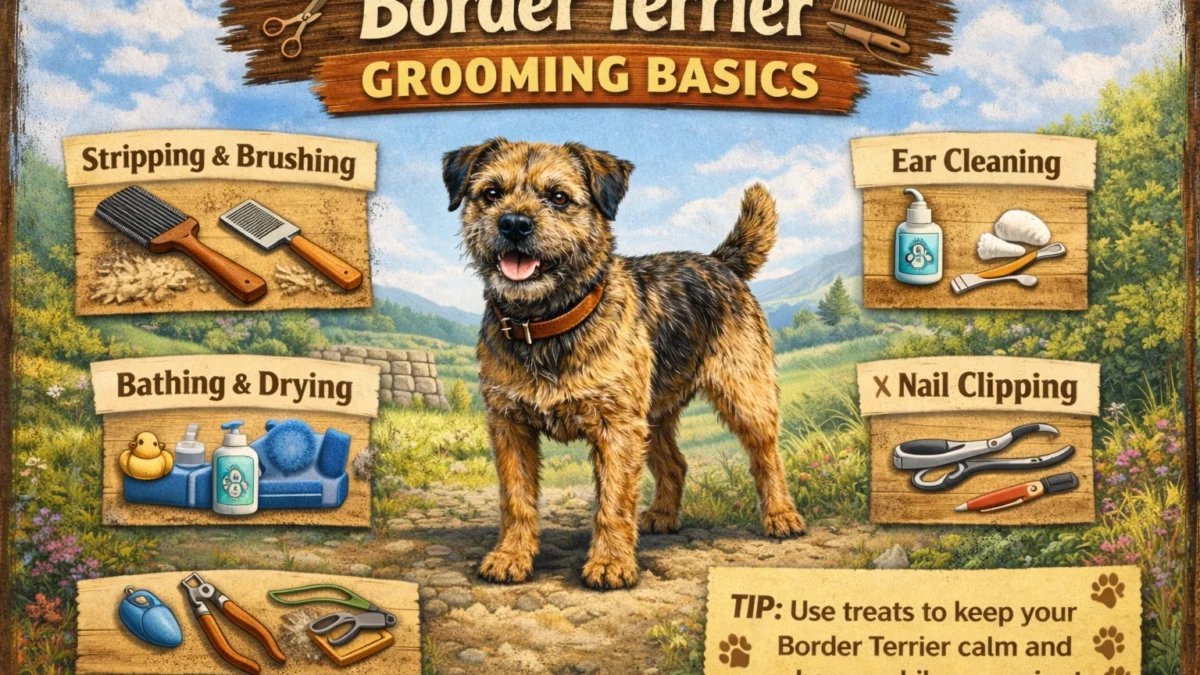
Border Terrier Grooming Basics: Coat Care, Tools, and Maintenance
Border Terrier grooming is less about fancy haircuts and more about maintaining the function of a very specific working coat. This breed was developed to work in rough terrain and harsh weather, and its grooming needs reflect that history. Owners who treat a Border Terrier like a typical clipped pet dog often end up with increased shedding, softer coat texture, skin irritation, and a dog that looks and feels “off” over time.
This guide is designed to give you clear, practical grooming basics that actually work for Border Terriers living as pets today. You’ll learn what makes their coat different, what grooming tasks you can safely handle at home, which tools matter (and which don’t), and when professional help is worth it.
Proper grooming is not just cosmetic for this breed. Done correctly, it:
- Keeps the wiry outer coat weather-resistant and low-odor
- Reduces excessive shedding caused by trapped dead hair
- Helps prevent skin issues hidden under the dense coat
- Makes routine care like bathing and brushing easier over time
- Keeps your Border Terrier comfortable, active, and clean without over-grooming
Just as importantly, good grooming habits help owners avoid common mistakes—like over-bathing, shaving the coat, or using the wrong brushes—that can permanently change coat texture and increase maintenance instead of reducing it.
Whether you plan to groom entirely at home or combine home care with professional grooming, understanding the why behind Border Terrier grooming is the foundation. Once you understand how the coat works, everything else becomes simpler, safer, and more effective.
Border Terrier Coat Type and Why It Needs Special Grooming
The Border Terrier has a very special coat. It is not like the soft coat of many other dogs. This breed has a wire outer coat and a soft undercoat underneath. Both layers work together to protect the dog from cold, rain, dirt, and rough ground.
The outer coat feels rough and wiry. Its job is to block water and dirt. The undercoat is soft and warm. It helps keep the dog comfortable in cold weather. Because of this coat design, loose hair does not fall out on its own very easily. Instead, dead hair stays trapped in the coat until it is removed by grooming.
This is why Border Terriers often seem to shed less, but only when they are groomed the right way. If dead hair is not removed, the coat becomes thick, dull, and uncomfortable. Skin problems and extra shedding can also start under the surface.
Another important thing to understand is that clipping or shaving changes how this coat behaves. Over time, clipping makes the coat softer, increases shedding, and removes its natural dirt resistance. This is why Border Terriers are often groomed differently than other terrier breeds.
Border Terrier Coat Characteristics and Grooming Impact
| Coat Feature | What It Means | Why Grooming Matters |
|---|---|---|
| Wiry outer coat | Hard, rough hair on top | Needs dead hair removed to stay healthy |
| Soft undercoat | Warm insulating layer | Can trap loose hair if not groomed |
| Slow hair shedding | Hair does not fall out easily | Regular grooming prevents buildup |
| Natural dirt resistance | Coat repels mud and water | Over-bathing weakens this protection |
| Coat growth cycle | New hair grows under old hair | Dead hair must be stripped or brushed out |
Because of this coat type, Border Terriers do best with regular light grooming, not heavy grooming all at once. Small, consistent care keeps the coat clean, healthy, and easy to manage.
How to Groom a Border Terrier at Home (Step-by-Step Basics)
Grooming a Border Terrier at home does not need to be hard or stressful. You do not need fancy skills or many tools. What matters most is doing small grooming jobs often, instead of waiting too long.
Home grooming helps remove loose hair, keeps the skin clean, and makes professional grooming easier when needed.
Here are the basic grooming steps most owners can safely do at home.
First, start with brushing. Use a simple slicker brush or a pin brush. Brush slowly and gently. Focus on areas where hair builds up:
- Behind the ears
- Under the legs
- Around the neck and collar area
- Along the back and sides
Brushing removes loose undercoat hair and keeps the coat from feeling heavy or itchy.
Next is light hand grooming. This does not mean full hand stripping. At home, you can gently pull out loose, dead wire hairs using your fingers or a simple stripping tool. If the hair comes out easily, it is ready to be removed. If it hurts the dog, stop.
Bathing should be done only when needed. Border Terriers do not need frequent baths. Too many baths remove natural oils and make the coat soft. Always use a mild dog shampoo and rinse very well.
Finish with basic checks:
- Look at the skin for redness or flakes
- Check ears for dirt or bad smell
- Check nails and trim if they touch the floor
Border Terrier Home Grooming Routine
| Grooming Task | How Often | Notes for Owners |
|---|---|---|
| Brushing | 1–2 times a week | Go slow, focus on problem areas |
| Light hand grooming | Every 4–6 weeks | Only remove loose hair |
| Bathing | Every 6–8 weeks | Use gentle dog shampoo |
| Nail trimming | Every 3–4 weeks | Trim a little at a time |
| Ear checking | Once a month | Clean only if dirty |
Keeping this simple routine helps your Border Terrier stay clean and comfortable without damaging the coat.
Hand Stripping vs Clipping a Border Terrier: What’s Best and Why
Many Border Terrier owners feel confused about hand stripping and clipping. Both methods are used, but they do very different things to the coat. Choosing the right one depends on your dog, your time, and your goals.
Hand stripping means gently pulling out dead wire hair by hand or with a simple stripping tool. This helps new hard hair grow in. When done right, it does not hurt. Hair that is ready to come out will slide out easily.
Clipping means cutting the coat with electric clippers. This is faster, but it cuts the hair instead of removing it. Over time, clipping makes the coat soft, fluffy, and more likely to shed. The coat also loses its natural dirt and water resistance.
For many pet Border Terriers, owners use a mix of both methods. Light hand stripping keeps the coat healthy, while limited clipping may be used for comfort or special needs.
Hand Stripping vs Clipping a Border Terrier
| Method | Benefits | Downsides | Best Choice For |
|---|---|---|---|
| Hand stripping | Keeps coat hard and healthy | Takes time and practice | Most Border Terriers |
| Clipping | Fast and easy | Softens coat, more shedding | Seniors or medical cases |
| Mixed approach | Balance of health and ease | Needs basic knowledge | Busy pet owners |
Important things to remember:
- Hand stripping should never hurt your dog
- If hair does not come out easily, do not pull
- Shaving a Border Terrier very short is not recommended
- Clipping once will not ruin the coat, but repeated clipping can
If you are unsure, a professional groomer who knows wire coats can help you choose the best plan.
Border Terrier Grooming Tools, Bathing, and Maintenance Schedule
You do not need many tools to groom a Border Terrier. Using a few correct tools is better than using many wrong ones. The right tools make grooming easier and help protect the coat and skin.
Start with a slicker brush or pin brush. This helps remove loose hair and keeps the coat tidy. A stripping knife or your fingers can be used to pull out dead wire hair. You do not need sharp tools. Simple is better.
For bathing, always use a dog shampoo. Human shampoo is too harsh for dog skin. Border Terriers should not be bathed often. Too many baths remove natural oils and make the coat soft.
Dry your dog gently after a bath. Towel drying is usually enough. If you use a dryer, keep it on low heat and hold it away from the skin.
Basic Grooming Tools for Border Terriers
| Tool | What It Is Used For | Why It Matters |
|---|---|---|
| Slicker or pin brush | Weekly brushing | Removes loose hair |
| Stripping knife or fingers | Removing dead wire hair | Keeps coat hard |
| Dog shampoo | Bathing | Protects skin |
| Nail clippers or grinder | Nail trimming | Helps posture and walking |
| Ear cleaner (dog-safe) | Ear care | Prevents infections |
Border Terrier Grooming Schedule
| Grooming Task | How Often |
|---|---|
| Brushing | 1–2 times a week |
| Light hand stripping | Every 4–6 weeks |
| Bathing | Every 6–8 weeks |
| Nail trimming | Every 3–4 weeks |
| Ear cleaning | Once a month or as needed |
Following this schedule keeps grooming simple and stress-free for both you and your dog.
Common Border Terrier Grooming Mistakes, Skin Issues, and When to See a Pro
Many grooming problems happen because owners are trying to help but do not know what to avoid. Border Terriers have tough coats, but their skin still needs care and attention.
One common mistake is bathing too often. Too many baths wash away natural oils. This can make the skin dry and itchy and the coat soft and dull.
Another mistake is shaving or heavy clipping. This does not cool the dog and often makes shedding worse. Over time, the coat may never grow back the same way.
Some owners also forget hidden areas. Mats often form:
- Behind the ears
- Under the front legs
- Around collars and harnesses
Always check these spots during brushing.
Common Grooming Problems and What to Do
| Problem | Likely Cause | What You Should Do |
|---|---|---|
| Soft or fluffy coat | Too much clipping | Switch to light hand stripping |
| Extra shedding | Dead hair trapped | Increase brushing or stripping |
| Itchy or red skin | Harsh shampoo or over-bathing | Use gentle dog shampoo |
| Bad smell | Dirty undercoat | Groom more often, bathe only when needed |
| Pain during grooming | Pulling live hair | Stop and seek guidance |
You should see a professional groomer if:
- Your dog is badly matted
- You want full hand stripping done correctly
- Grooming causes stress or pain
You should see a vet if you notice:
- Red, sore, or oozing skin
- Strong smell from ears
- Hair loss or scabs
- Constant scratching or licking
Good grooming keeps problems small and easy to manage. When in doubt, asking for help early is always better.
For more breed-specific grooming standards and coat care guidance, you can also read the official grooming information from the American Kennel Club on their Border Terrier breed page: https://www.akc.org/dog-breeds/border-terrier/