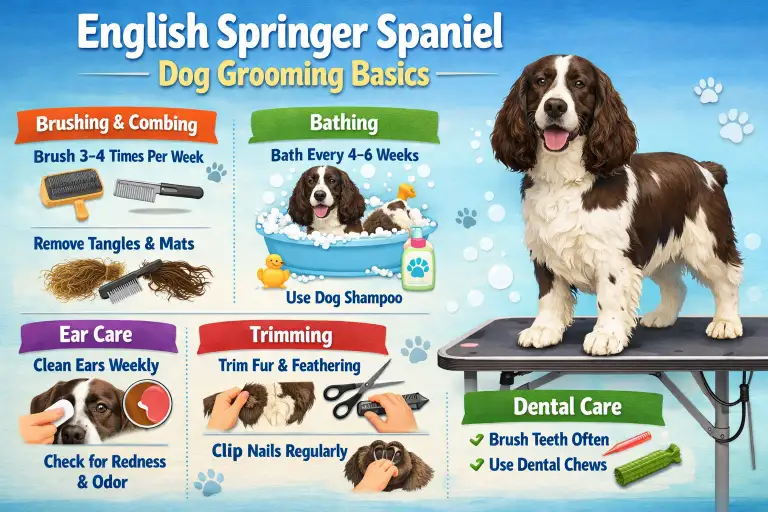
English Springer Spaniel grooming is about much more than keeping your dog looking neat. This breed has a dense, weather-resistant double coat that’s designed to protect them in the field, but that same coat can quickly lead to mats, excessive shedding, skin irritation, and ear problems if it isn’t maintained correctly. A consistent grooming routine helps keep your Springer comfortable, healthy, and easier to manage at home.
This guide is designed to walk you through the essentials of English Springer Spaniel grooming in a clear, practical way. You’ll learn how the Springer’s coat works, how often grooming is actually needed, what tools make the biggest difference, and which common mistakes can cause long-term coat or skin damage. Everything here is written with real-world grooming experience in mind, so it’s useful whether you’re caring for a family pet or an active, outdoor-loving Spaniel.
Proper grooming also plays a direct role in your dog’s overall wellbeing. Regular brushing helps distribute natural oils across the coat, reduces heavy shedding, and allows you to spot early signs of skin problems such as hot spots, irritation, or parasites. Bathing and drying done correctly protect the skin barrier rather than stripping it, while routine ear and nail care reduce the risk of infections and discomfort.
English Springer Spaniels are not a low-maintenance breed, but they don’t need complicated grooming either. With the right knowledge and a simple routine, most owners can keep their Springer’s coat healthy at home and know exactly when it’s time to involve a professional groomer.
English Springer Spaniel Coat Type and Grooming Needs
English Springer Spaniels have a double coat, which means they have two layers of fur that work together to protect their body. The top layer is the outer coat, which helps repel dirt and water. Underneath is the undercoat, which is soft and thick and helps control body temperature. This coat type is great for outdoor dogs, but it also means grooming cannot be skipped.
Some English Springer Spaniels have a lighter field-bred coat, while others have a fuller show-bred coat. Field-bred coats are usually shorter and easier to manage, while show-bred coats are longer, thicker, and more likely to mat. Both types shed, especially during seasonal coat changes.
Because of this coat structure, English Springer Spaniels need regular brushing and proper bathing. Without it, loose fur builds up, mats form behind the ears and legs, and moisture can get trapped against the skin. This can lead to bad smells, itching, and skin infections.
Below is a simple table to help you understand how your Springer’s coat affects grooming needs.
English Springer Spaniel Coat and Grooming Overview
| Coat Feature | What It’s Like | What This Means for Grooming |
|---|---|---|
| Double coat | Two layers: outer coat and undercoat | Needs regular brushing to remove loose fur |
| Shedding level | Moderate to heavy, worse in spring and fall | Expect more brushing during shedding seasons |
| Matting risk | High behind ears, legs, chest, and tail | These areas need extra attention |
| Coat length | Medium with feathering | Trimming and brushing help prevent tangles |
| Skin sensitivity | Can be prone to irritation and hot spots | Gentle products and proper drying are important |
In general, English Springer Spaniels should be brushed at least 2–3 times a week, with more frequent brushing during heavy shedding periods. Bathing is usually needed every 4–6 weeks, unless your dog gets very dirty from outdoor activity.
Understanding your Springer’s coat is the foundation of good grooming. Once you know how the coat behaves, it becomes much easier to choose the right tools and follow a routine that keeps your dog clean and comfortable.
How to Groom an English Springer Spaniel at Home
Grooming an English Springer Spaniel at home is very doable if you follow a simple routine. You do not need to do everything in one day. Short, regular sessions work best and help your dog stay calm and relaxed.
Start with brushing, because this is the most important step. Brushing removes loose hair, prevents mats, and keeps the skin healthy. Always brush before a bath. Brushing a wet or dirty coat can make tangles worse. Pay extra attention behind the ears, under the legs, around the chest, and near the tail. These areas mat faster than the rest of the body.
Bathing should be done only when needed. Too many baths can dry out the skin and cause itching. Use a dog shampoo made for sensitive skin. Make sure the water is warm, not hot. Rinse very well so no soap stays in the coat. Soap left behind can cause skin problems.
After the bath, drying is very important. A damp coat can trap moisture close to the skin, which may lead to hot spots or bad smells. Towel dry first, then use a dog dryer or a hair dryer on a low heat and low speed setting. Keep the air moving and do not point heat at one spot for too long.
Light trimming helps keep the coat neat. This usually includes trimming long hair around the paws, cleaning up feathering on the legs, and keeping the area under the tail clean. Do not shave the coat. Shaving can damage the double coat and cause long-term coat problems.
The table below shows a simple home grooming routine you can follow.
At-Home Grooming Routine for English Springer Spaniels
| Grooming Task | How Often | Simple Tips | Common Mistakes |
|---|---|---|---|
| Brushing | 2–3 times a week | Brush slowly, focus on mat-prone areas | Skipping brushing until mats form |
| Bathing | Every 4–6 weeks | Use dog shampoo, rinse well | Bathing too often |
| Drying | Every bath | Dry fully to prevent skin issues | Leaving coat damp |
| Trimming | Every 4–8 weeks | Trim paws and feathering only | Shaving the coat |
| Shedding care | Seasonal | Brush more during spring and fall | Ignoring loose undercoat |
Keeping a steady routine makes grooming much easier over time. Your dog will also learn that grooming is normal and not stressful.
Grooming Tools, Products, and Care Areas You Can’t Skip
Using the right grooming tools makes caring for an English Springer Spaniel much easier. The wrong tools can pull the coat, miss loose hair, or irritate the skin. You do not need many tools, but the ones you use should match your dog’s coat and skin needs.
A good brush is the most important tool. Most English Springer Spaniels do best with a slicker brush for regular brushing and a metal comb to check for hidden tangles. During shedding season, an undercoat rake helps remove loose undercoat without cutting the top coat.
When it comes to bathing products, always use dog-only shampoo. Dog skin is more sensitive than human skin, and human shampoo can cause dryness and itching. If your dog has sensitive skin or allergies, choose a mild or hypoallergenic shampoo. Conditioner can help keep feathering soft and easier to brush.
Some care areas are often missed but very important. Ears need regular checking and gentle cleaning because Springer Spaniels have long, floppy ears that trap moisture. Nails should be trimmed before they touch the floor when your dog walks. Paw pads should be checked for dirt, mats, or cracks.
The table below shows the most useful grooming tools and what they are used for.
Essential Grooming Tools for English Springer Spaniels
| Tool | What It’s Used For | How Often to Use | What to Avoid |
|---|---|---|---|
| Slicker brush | Removes loose hair and light tangles | 2–3 times a week | Pressing too hard |
| Metal comb | Finds hidden mats | After brushing | Skipping problem areas |
| Undercoat rake | Controls shedding | Seasonal | Overusing on thin coat |
| Dog shampoo | Cleans coat and skin | Every 4–6 weeks | Human shampoo |
| Dog conditioner | Softens feathering | When bathing | Heavy products |
| Nail clippers | Keeps nails short | Every 3–4 weeks | Cutting too short |
| Ear cleaner | Prevents ear infections | Weekly check | Using water or alcohol |
Good tools protect your dog’s coat and skin and make grooming faster and safer. Regular care of ears, nails, and paws helps prevent problems before they start.
Grooming Mistakes, Safety Tips, and When to See a Professional
Many grooming problems happen because of small mistakes that owners do not realize are harmful. One of the most common mistakes is shaving an English Springer Spaniel. This breed has a double coat, and shaving it can damage how the coat grows back. It can also make shedding worse and increase the risk of skin problems.
Another common issue is waiting too long to brush. When brushing is skipped, small tangles turn into painful mats. Mats pull on the skin, trap moisture, and can cause sores. Over-bathing is also a problem. Bathing too often removes natural oils and can lead to dry, itchy skin.
Safety during grooming is very important. Always use tools made for dogs. Be gentle when brushing sensitive areas. Keep dryer heat low and moving to avoid burns. Never put water deep into the ears, as this can cause infections.
Some grooming tasks are safe to do at home, but others are better handled by a professional groomer. A professional groomer has the tools and training to safely remove heavy mats, shape feathering, and handle difficult coats. Dogs with skin problems, severe matting, or strong fear of grooming often need professional help.
The table below shows common grooming mistakes and what to do instead.
Common Grooming Mistakes and Safer Choices
| Common Mistake | Why It’s a Problem | Safer Choice |
|---|---|---|
| Shaving the coat | Damages double coat and skin | Trim feathering only |
| Brushing only sometimes | Leads to mats and skin pain | Brush regularly |
| Bathing too often | Dries out skin | Bathe every 4–6 weeks |
| Skipping ear care | Raises infection risk | Check ears weekly |
| Cutting nails too short | Causes pain and bleeding | Trim small amounts |
You should see a professional groomer if your dog has heavy mats, very thick shedding, or needs a full trim. You should see a vet if you notice skin sores, bad smells from the ears, constant itching, or hair loss.
For more breed-specific background, the American Kennel Club offers helpful information on English Springer Spaniel coats, care, and breed traits at the AKC website.

Ata Ur Rehman is the founder of Pet Age in Human Years Calculator, an educational platform that provides age conversion charts and lifespan guides for dogs, cats, birds, and other companion animals. His work focuses on helping pet owners understand how animal ages translate into human years using commonly accepted age conversion formulas and published lifespan averages.
The website compiles breed and species lifespan data from kennel clubs, breed organizations, and general animal lifespan studies to present simple and easy-to-understand guides for pet owners worldwide.
This website was created to centralize animal age conversion charts into one easy reference platform for pet owners.