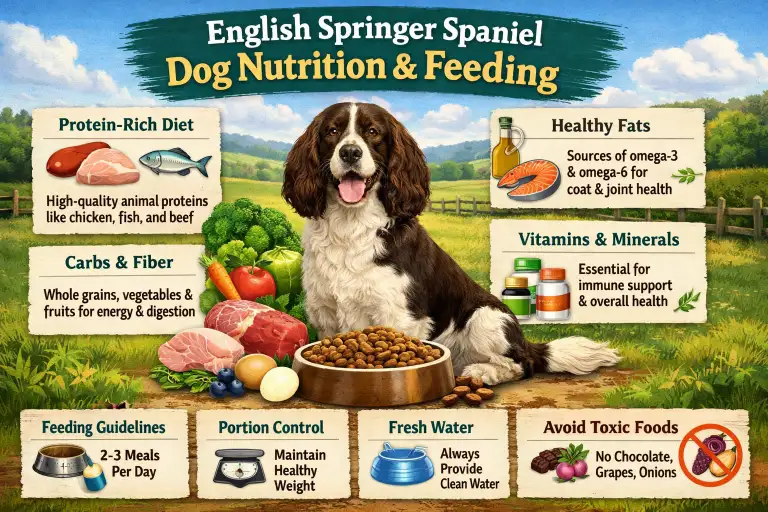
English Springer Spaniels are energetic, people-oriented sporting dogs with big appetites to match their enthusiasm. A well-planned diet is not just about keeping them full — it directly affects their energy levels, weight, coat condition, joint health, digestion, and long-term quality of life.
This guide is designed to help you feed your English Springer Spaniel with confidence, whether you’re raising a high-energy puppy, managing an adult companion dog, or supporting a senior with changing needs. While general dog nutrition advice applies, Springer Spaniels have a few breed-specific traits that make proper feeding especially important.
They are naturally active and athletic, which means they need enough high-quality protein and fat to support muscle maintenance and stamina. At the same time, many English Springer Spaniels are highly food-motivated and prone to overeating if portions aren’t controlled. Without careful feeding, it’s easy for this breed to gain excess weight, which can strain joints, reduce endurance, and increase the risk of chronic health issues.
Nutrition also plays a key role in supporting the Springer Spaniel’s dense, feathered coat and sensitive skin. Diets lacking essential fatty acids, vitamins, or minerals can quickly show up as dull fur, excessive shedding, or itching. Likewise, poor-quality or inappropriate foods may contribute to digestive upset, loose stools, or inconsistent appetite — common concerns reported by Springer Spaniel owners.
By understanding how nutrition influences your dog’s body and behavior, you can make smarter feeding choices that go beyond brand names or marketing claims. The goal is a balanced, breed-appropriate diet that supports steady energy, healthy body condition, and overall well-being throughout every life stage.
What Should English Springer Spaniels Eat? Core Nutritional Needs Explained
English Springer Spaniels do best on a balanced, complete diet that supports their high energy, strong muscles, healthy joints, and sensitive digestion. You don’t need complicated formulas or trendy diets — but you do need to understand what actually matters in their bowl.
At the most basic level, your Springer Spaniel’s food should meet AAFCO or FEDIAF standards, which means it provides all essential nutrients in the right amounts. From there, quality and balance make the real difference.
Here’s what to focus on.
English Springer Spaniels are active dogs, so protein is essential. Protein helps build and maintain muscle, supports the immune system, and keeps your dog feeling strong and satisfied after meals. Low-protein diets often leave active dogs looking thin, tired, or constantly hungry.
Fats are the main energy source for this breed. Healthy fats support stamina, brain health, and coat shine. However, too much fat without enough exercise can quickly lead to weight gain, so balance is key.
Carbohydrates provide quick energy and help with digestion when they come from good sources like whole grains, vegetables, or legumes. Fiber, a type of carbohydrate, is especially important for Springer Spaniels that struggle with soft stool or irregular digestion.
Your dog also needs small but critical amounts of vitamins and minerals. These support bone strength, joint health, skin, coat, and organ function. Most complete commercial foods already include these, which is why random supplements are often unnecessary and sometimes harmful.
Recommended Nutrient Ranges for English Springer Spaniels
| Nutrient | Recommended Range | Why It Matters for Springer Spaniels | Common Food Sources |
|---|---|---|---|
| Protein | 22–30% (dry matter) | Supports active muscles and energy needs | Chicken, turkey, fish, lamb |
| Fat | 12–20% (dry matter) | Provides energy and supports coat health | Fish oil, chicken fat, salmon |
| Carbohydrates | Varies by food | Energy and digestion support | Rice, oats, sweet potatoes |
| Fiber | 3–6% | Helps stool quality and gut health | Beet pulp, pumpkin, vegetables |
| Omega-3s | Small but consistent | Reduces inflammation, supports joints | Fish oil, sardines |
| Calcium & Phosphorus | Balanced ratio | Bone and joint support | Meat, bone meal, fortified foods |
Most English Springer Spaniels do not need supplements if they are eating a high-quality, complete dog food. Adding extra calcium, vitamins, or oils without guidance can throw off nutrient balance, especially in puppies and seniors. Supplements should only be added when a veterinarian recommends them for a specific reason, such as joint disease or skin issues.
When choosing food, focus on clear ingredient lists, named protein sources, and proven nutritional standards, not marketing buzzwords like “miracle,” “premium,” or “ancestral.”
How Much to Feed an English Springer Spaniel (Portions, Calories, Schedule)
English Springer Spaniels love food, and many will happily eat more than they need if given the chance. Feeding the right amount is one of the most important parts of keeping this breed healthy, active, and at a good weight.
There is no one perfect portion size for every Springer Spaniel. How much your dog needs depends on body weight, age, and daily activity. A dog that hunts, runs, or trains often will need more calories than a dog that mostly relaxes at home.
A helpful starting point is daily calorie needs. These numbers are averages and should be adjusted based on your dog’s body shape and energy level.
Daily Calorie Needs for English Springer Spaniels
| Dog Weight | Low Activity | Moderate Activity | High Activity / Working |
|---|---|---|---|
| 40 lb (18 kg) | 800–900 kcal | 1,000–1,100 kcal | 1,300–1,400 kcal |
| 45 lb (20 kg) | 900–1,000 kcal | 1,100–1,200 kcal | 1,400–1,500 kcal |
| 50 lb (23 kg) | 1,000–1,100 kcal | 1,200–1,300 kcal | 1,500–1,600 kcal |
| 55 lb (25 kg) | 1,100–1,200 kcal | 1,300–1,400 kcal | 1,600–1,700 kcal |
These calories are usually split into one or more meals per day. Most adult English Springer Spaniels do best when fed twice daily, which helps prevent hunger spikes and begging.
Feeding Schedule by Life Stage
| Life Stage | Meals Per Day | Helpful Notes |
|---|---|---|
| Puppy (under 6 months) | 3–4 meals | Supports growth and steady energy |
| Puppy (6–12 months) | 2–3 meals | Gradually reduce portions as growth slows |
| Adult | 2 meals | Helps control hunger and weight |
| Senior | 2 smaller meals | Easier digestion and better energy balance |
Portion size should always be adjusted using body condition, not just a measuring cup. You should be able to feel your dog’s ribs with light pressure and see a slight waist when looking from above. If ribs are hard to feel or the waist is missing, your dog is likely eating too much. If ribs are very visible, portions may be too small.
Treats count as calories too. For English Springer Spaniels, treats should make up no more than 10% of daily calories. Many owners accidentally overfeed through snacks alone, which leads to slow and steady weight gain.
Weigh your dog regularly and watch for small changes. A few extra pounds can make a big difference for this breed’s joints and stamina.
Best Dog Food for English Springer Spaniels (Kibble, Fresh, Raw & More)
There is no single “best” food for every English Springer Spaniel. The right choice depends on your dog’s age, activity level, health, and your daily routine. What matters most is that the food is complete, balanced, and made for active dogs.
Many owners feel overwhelmed by options in the pet food aisle. The good news is that several food types can work well for this breed when chosen carefully.
Dry food (kibble) is the most common option. It is easy to store, affordable, and usually balanced when it meets AAFCO or FEDIAF standards. High-quality kibble works well for most English Springer Spaniels, especially adult dogs.
Canned or wet food has more moisture and is often more tasty. It can be helpful for picky eaters or dogs that do not drink enough water. However, it is usually more expensive and easier to overfeed.
Fresh dog food is cooked, soft, and made with whole ingredients. Many owners like it because it looks similar to human food. It can be a good option, but portions must be measured carefully because calories add up fast.
Raw and freeze-dried diets are popular with some owners, especially for very active dogs. These diets require extra care, safe handling, and correct balance. Feeding raw food without proper knowledge can lead to nutrient gaps or health risks.
Homemade diets should only be fed if they are properly planned with a veterinarian or pet nutrition expert. Simply cooking meat and rice at home is not enough to meet a dog’s needs.
Dog Food Types for English Springer Spaniels
| Food Type | Benefits | Drawbacks | Best For |
|---|---|---|---|
| Dry Food (Kibble) | Balanced, affordable, easy to measure | Lower moisture | Most adult Springer Spaniels |
| Canned Food | High moisture, very tasty | Higher cost, easy to overfeed | Picky eaters, seniors |
| Fresh Food | Whole ingredients, soft texture | Expensive, calorie-dense | Owners who measure carefully |
| Raw Food | High protein, appealing to active dogs | Safety and balance concerns | Experienced owners only |
| Freeze-Dried | Long shelf life, nutrient-dense | Costly, needs rehydration | Travel or mixed feeding |
| Homemade | Full control of ingredients | Easy to imbalance | Only with professional guidance |
When reading a dog food label, look for a named animal protein (like chicken or salmon) as the first ingredient. Avoid foods with vague terms like “meat by-products” or long lists of fillers. Marketing words like “natural” or “premium” do not guarantee quality.
Choose food that matches your dog’s lifestyle. A working or very active English Springer Spaniel needs more energy than a calm companion dog. If your dog gains weight easily, choose a food with moderate fat and clear portion guidance.
Common Feeding Problems, Special Diets, and Practical Feeding Tips
English Springer Spaniels are friendly and active, but many owners face feeding problems with this breed. The good news is that most issues can be fixed with small, smart changes.
One common problem is weight gain. Springer Spaniels love food and treats, and they often act hungry even when they have eaten enough. This does not always mean they need more food. Measuring meals, limiting treats, and watching body shape are very important.
Another common issue is sensitive digestion. Some dogs may have soft stool, gas, or stomach upset. This can happen when food is changed too fast or when the food does not suit the dog. Switching foods slowly over 7–10 days helps avoid these problems.
Some English Springer Spaniels also deal with food allergies or sensitivities. Signs can include itching, ear infections, or loose stool. These dogs may need simple diets with fewer ingredients, chosen with help from a veterinarian.
Very active or working Springer Spaniels need more calories and protein, while calm or older dogs often need less. Feeding the same amount for every dog can cause problems over time.
Safe and Unsafe Human Foods for English Springer Spaniels
| Safe in Small Amounts | Unsafe or Toxic | Notes |
|---|---|---|
| Cooked chicken (plain) | Chocolate | Chocolate can be deadly |
| Carrots | Grapes and raisins | Can cause kidney failure |
| Apples (no seeds) | Onions and garlic | Harm red blood cells |
| Plain rice | Xylitol (sweetener) | Found in gum and candy |
| Pumpkin (plain) | Alcohol | Extremely dangerous |
Even safe foods should be given only sometimes and in small amounts. Human food should never replace balanced dog food.
Common Feeding Problems and Simple Fixes
| Problem | Likely Cause | Practical Fix |
|---|---|---|
| Dog gains weight | Too many calories or treats | Measure meals, reduce treats |
| Dog always seems hungry | Food too low in protein or fiber | Choose higher-quality food |
| Soft stool | Fast food change or poor digestion | Switch food slowly |
| Picky eating | Too many treats or table scraps | Set meal times, remove leftovers |
| Low energy | Not enough calories | Adjust portions for activity |
Always make feeding changes slowly. Sudden changes can upset your dog’s stomach and make problems worse.
You should talk to a veterinarian or pet nutrition expert if:
- Your dog keeps gaining or losing weight
- Digestive problems last more than a few days
- You suspect food allergies
- You want to feed a homemade or special diet
A professional can help you choose the right food and portion size for your English Springer Spaniel’s exact needs.
For more details on complete and balanced pet food standards, you can review the official AAFCO nutrient profiles here: https://www.aafco.org/resources/pet-food-nutrition/

Ata Ur Rehman is the founder of Pet Age in Human Years Calculator, an educational platform that provides age conversion charts and lifespan guides for dogs, cats, birds, and other companion animals. His work focuses on helping pet owners understand how animal ages translate into human years using commonly accepted age conversion formulas and published lifespan averages.
The website compiles breed and species lifespan data from kennel clubs, breed organizations, and general animal lifespan studies to present simple and easy-to-understand guides for pet owners worldwide.
This website was created to centralize animal age conversion charts into one easy reference platform for pet owners.