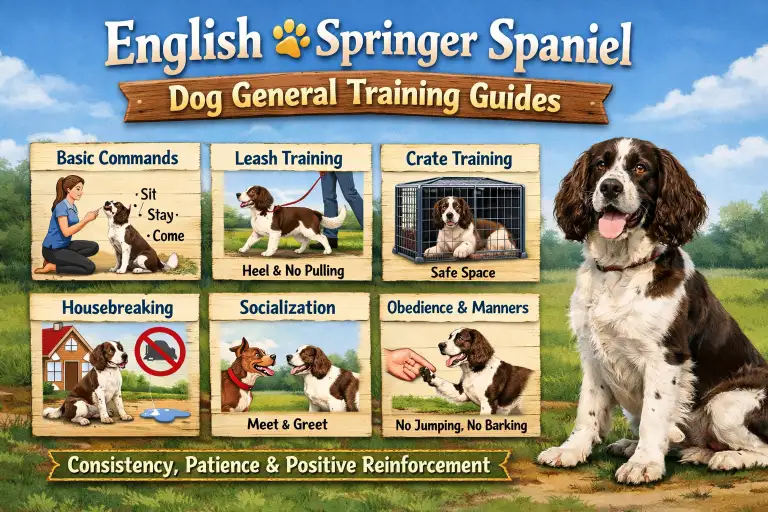
English Springer Spaniel training is often described as “easy” because the breed is intelligent and eager to please. In real life, many owners quickly discover that intelligence alone does not guarantee good behavior. Springers are energetic, emotionally sensitive dogs with strong working instincts, and without clear structure, that energy can turn into chaos.
This guide is designed for real owners training English Springer Spaniels in everyday homes—not just professional handlers. Whether you’re raising a puppy, dealing with a stubborn adolescent, or refining training with an adult dog, the goal is the same: build reliable behavior, not just short-term obedience.
English Springer Spaniels thrive when training is consistent, rewarding, and mentally engaging. When training is rushed, inconsistent, or purely physical, common problems like poor recall, leash pulling, jumping, and overexcitement tend to appear. Understanding how this breed learns and what it truly needs sets the foundation for everything that follows.
Throughout this guide, you’ll learn what makes English Springer Spaniel training different, how long progress realistically takes, and how to apply simple, science-backed training methods that work in real-world environments—not just in your living room.
Understanding English Springer Spaniel Behavior and Learning Style
English Springer Spaniels were bred to work closely with people for long hours. This history explains why they are friendly, smart, and very active dogs. It also explains why they can struggle when they are bored, confused, or left without clear guidance.
Most Springers are:
- Very energetic
- Fast learners
- Easily distracted
- Emotionally sensitive
They want to do the right thing, but they also react quickly to sounds, movement, and excitement. This is why many owners say their Springer “listens perfectly at home but ignores everything outside.”
Springers do best with calm, clear training. Yelling, harsh corrections, or rushing lessons often backfire and make them anxious or overexcited. Short, positive training sessions help them focus and learn faster.
Age also matters:
- Puppies are curious and easily distracted
- Adolescents often test limits and forget training
- Adult Springers are more focused but still need mental work
Understanding these traits helps you train smarter, not harder.
English Springer Spaniel Traits and How They Affect Training
| Breed Trait | What Owners Commonly See | How It Affects Training |
|---|---|---|
| High energy | Constant movement, restlessness | Needs short, frequent sessions |
| High intelligence | Learns fast, gets bored fast | Training must stay interesting |
| Strong emotions | Overexcitement or stress easily | Calm handling works best |
| Working instincts | Chasing birds, ignoring recall | Recall and focus must be trained early |
| People-oriented | Wants attention and approval | Rewards and praise work very well |
When owners understand that these behaviors are normal for the breed, training becomes less frustrating and much more successful.
How to Train an English Springer Spaniel Step by Step
Training an English Springer Spaniel works best when it is simple, calm, and done every day. Long or intense sessions often make this breed tired or too excited. Short, clear training sessions help them stay focused and learn faster.
Start with a quiet space where your dog feels safe. Use treats, praise, or toys as rewards. Give the reward right after your dog does the right thing. This helps your dog understand exactly what behavior you want.
Train a few times each day instead of one long session. Even five minutes can be very effective. As your dog improves, slowly practice training in places with more distractions, like the yard or during walks.
Focus on these core skills first:
- Paying attention to you
- Coming when called
- Walking calmly on a leash
- Waiting instead of jumping
Be patient. Some days will feel easy, and other days may feel like no progress at all. This is normal, especially during the teenage stage.
Daily Training Structure for English Springer Spaniels
| Training Type | Session Length | Times Per Day | Main Goal |
|---|---|---|---|
| Basic commands | 5–10 minutes | 2–3 times | Build focus and understanding |
| Recall practice | 3–5 minutes | 2 times | Improve safety and response |
| Leash training | 10–15 minutes | 1–2 times | Calm walking skills |
| Mental games | 5–10 minutes | 1–2 times | Reduce boredom and stress |
Training Timeline Expectations
| Training Stage | What to Expect | Common Challenges |
|---|---|---|
| First 2 weeks | Learning basic cues | Short attention span |
| 1–3 months | Better focus indoors | Outdoor distractions |
| 3–6 months | Stronger obedience | Adolescent testing |
| 6+ months | More reliable behavior | Needs ongoing practice |
Progress depends on age, routine, and how consistent training is. Every Springer learns at a different speed, and that is okay.
Common English Springer Spaniel Training Problems and Solutions
Many English Springer Spaniel owners face similar training problems. These issues are common for this breed and usually come from high energy, excitement, or unclear training—not from bad behavior.
Below are the problems owners mention most often and what actually helps.
Common Training Problems and Fixes
| Problem | Why It Happens | What Helps |
|---|---|---|
| Dog is too hyper | Too much energy, not enough calm training | Short training, daily mental games |
| Ignores recall outside | Strong chasing instinct | Practice recall with rewards and long leash |
| Pulls on the leash | Excitement and lack of focus | Stop walking, reward calm steps |
| Jumps on people | Wants attention | Reward calm greetings only |
| Forgets training | Teen stage or stress | Go back to basics, stay patient |
Many owners try to fix these problems by being louder or more strict. This often makes things worse. Calm, clear training works better for this breed.
Also watch for these common mistakes:
- Training only when problems happen
- Skipping training on busy days
- Expecting fast results in new places
Fixing small issues early makes training much easier later.
When to Get Professional Help for English Springer Spaniel Training
Most English Springer Spaniels can be trained at home with time, patience, and daily practice. Some problems, however, need extra support. Getting help early can prevent small issues from turning into serious behavior problems.
You should consider professional help if your dog:
- Shows fear, shaking, or hiding often
- Growls, snaps, or bites
- Panics when left alone
- Reacts strongly to people or other dogs
- Does not improve after weeks of training
These behaviors are not signs of a “bad dog.” They often come from fear, stress, or confusion.
A qualified dog trainer or behavior professional can watch your dog, find the cause, and create a safe plan. For serious fear or aggression, a vet behavior expert may also be needed.
When Training at Home Is Not Enough
| Behavior Issue | Try Home Training First | Get Professional Help |
|---|---|---|
| Pulling on leash | Yes | No |
| Poor recall | Yes | No |
| Mild jumping | Yes | No |
| Fear or anxiety | Sometimes | Yes |
| Aggression | No | Yes |
Choosing help early often saves time, stress, and money.
For more science-based guidance on positive reinforcement and humane dog training methods, the American Veterinary Society of Animal Behavior (AVSAB) provides clear, vet-backed resources for dog owners.

Ata Ur Rehman is the founder of Pet Age in Human Years Calculator, an educational platform that provides age conversion charts and lifespan guides for dogs, cats, birds, and other companion animals. His work focuses on helping pet owners understand how animal ages translate into human years using commonly accepted age conversion formulas and published lifespan averages.
The website compiles breed and species lifespan data from kennel clubs, breed organizations, and general animal lifespan studies to present simple and easy-to-understand guides for pet owners worldwide.
This website was created to centralize animal age conversion charts into one easy reference platform for pet owners.