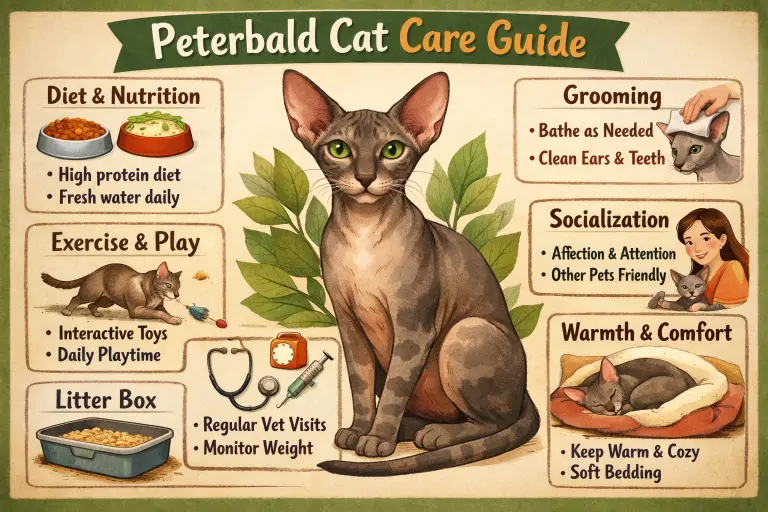
Caring for a Peterbald cat is not the same as caring for a typical furry cat. This breed is often called “hairless,” but that word can be misleading. Some Peterbald cats have no fur at all, while others have very fine peach-fuzz skin or a short, sparse coat. No matter the coat type, their skin is exposed in ways that most cats’ skin is not. Because of this, daily care focuses much more on skin health, warmth, and cleanliness than brushing fur.
One of the biggest differences owners notice is skin oil. A normal cat’s fur absorbs oils that the skin produces. A Peterbald does not have that protection. The oil stays on the skin and can build up quickly. This does not mean the cat is dirty or unhealthy. It is simply how their body works. Without regular care, though, this oil can cause clogged pores, irritation, or a strong smell. Many first-time owners are surprised by this and assume something is wrong when it is actually normal.
Temperature sensitivity is another major factor. Peterbald cats lose body heat faster than cats with full coats. They often seek out warm places like laps, blankets, sunny windows, or heated beds. In cooler homes, they may need extra help staying warm. On the other hand, they can also get sunburned more easily than other cats. This balance between warmth and protection is a daily part of Peterbald care.
Their personality also affects how you care for them. Peterbald cats are known for being very social, curious, and emotionally connected to their people. They do not do well with long periods of loneliness. When their emotional needs are ignored, it can show up as stress behaviors like overeating, vocalizing, or skin over-grooming. Good care is not only about skin and health, but also about time, attention, and mental comfort.
Peterbald Traits and How They Affect Daily Care
| Peterbald Trait | What It Means for Care |
|---|---|
| Little or no fur | Skin needs regular cleaning and checks |
| High skin oil | Bathing and wiping are part of routine |
| Gets cold easily | Needs warm spaces and sometimes clothing |
| Sensitive skin | Only gentle, cat-safe products should be used |
| Very social | Needs daily interaction and attention |
Daily and Weekly Peterbald Care Routine
A good care routine keeps a Peterbald healthy and comfortable. The routine does not need to be complicated, but it does need to be consistent. Small daily actions prevent bigger problems later. Many owners find that once the routine becomes a habit, it only takes a few minutes a day.
Daily care usually starts with a quick skin check. This can be as simple as gently running your hands over your cat while petting them. You are feeling for excess oil, small bumps, redness, or dry patches. At the same time, you can wipe the skin lightly with a soft, damp cloth if needed. This helps remove surface oil and dirt without drying the skin. Daily care also includes checking that your cat is warm enough and has clean bedding.
Feeding is part of daily care as well. Peterbald cats often have a faster metabolism because they burn more energy to stay warm. Many need slightly more calories than a typical cat of the same size. Meals should be regular and measured, not left out all day, so you can notice changes in appetite quickly. Fresh water should always be available, since hydration supports healthy skin.
Weekly care tasks go a bit deeper. Most Peterbald cats need a bath every one to two weeks, depending on how oily their skin gets. Ear cleaning is also often a weekly task, because wax can build up faster in this breed. Nail trimming, paw checks, and washing bedding usually fit into the weekly routine as well.
Peterbald Care Frequency Chart
| Care Task | How Often |
|---|---|
| Quick skin check | Daily |
| Light skin wipe | Daily or every other day |
| Feeding and water check | Daily |
| Bathing | Every 1–2 weeks |
| Ear cleaning | Weekly |
| Nail trimming | Every 2–3 weeks |
| Wash bedding | Weekly |
Skin, Grooming, and Hygiene Essentials
Skin care is the heart of Peterbald grooming. Because the skin is exposed, it reacts quickly to products, fabrics, and the environment. Gentle care keeps the skin balanced, while harsh products can cause problems fast. Many skin issues in this breed come from using the wrong products or bathing too often.
Bathing should be done with warm water and a mild, cat-safe shampoo. Human shampoos, even baby shampoos, are not a good choice. They are made for human skin and can strip too much oil from a cat’s skin, leading to dryness and irritation. During a bath, focus on gently cleaning folds, paws, and areas where oil builds up, such as the neck and underarms. Rinse very well, because leftover shampoo can irritate the skin.
Between baths, hygiene is just as important. Soft blankets, cat beds, and clothes should be washed often. Oil transfers from the cat’s skin onto fabric, and dirty bedding can cause skin breakouts. If your Peterbald wears clothes, they should be clean, soft, and not tight. Clothes are for warmth, not fashion. They should never rub or trap moisture against the skin.
Ear care deserves special attention. Peterbald cats often produce more ear wax than other breeds. This does not always mean infection. Weekly gentle cleaning with a vet-approved ear cleaner helps prevent buildup. Cotton pads are safer than cotton swabs, which can push wax deeper into the ear.
Safe vs Unsafe Products for Peterbald Skin
| Product Type | Safe to Use | Avoid |
|---|---|---|
| Shampoo | Cat-specific, fragrance-free | Human or dog shampoo |
| Wipes | Unscented cat wipes | Alcohol or scented wipes |
| Moisturizers | Vet-approved only | Oils, lotions for humans |
| Fabrics | Soft cotton, fleece | Rough or synthetic fabrics |
Common Peterbald Care Mistakes and Safety Risks
Many problems with Peterbald cats come from good intentions but poor information. New owners often try to “fix” normal traits instead of working with them. Knowing common mistakes helps you avoid stress for both you and your cat.
One of the most common mistakes is over-bathing. Because the skin gets oily, owners may bathe their cat too often. This can actually make the problem worse. Over-bathing dries the skin, causing it to produce even more oil to protect itself. The goal is balance, not constant cleaning.
Another major risk is sun exposure. Peterbald cats can sunburn just like people. Direct sunlight through windows or outdoor access without protection can damage their skin. Sunburn can lead to pain, peeling, and long-term skin problems. These cats should not be allowed outdoors without strict supervision, and sunny spots indoors should be monitored.
Temperature neglect is also common. Some owners assume indoor cats are always warm enough. Peterbald cats often need extra warmth, especially at night or in winter. Cold stress can weaken the immune system and increase discomfort. Shivering, curling tightly, or hiding in warm places are signs they may be too cold.
Common Mistakes and Their Consequences
| Mistake | Possible Result |
|---|---|
| Bathing too often | Dry, irritated skin |
| Using human products | Allergic reactions |
| Too much sun | Sunburn, skin damage |
| Not enough warmth | Stress, illness |
| Ignoring behavior changes | Missed health problems |
Health Monitoring and When to See a Vet
Regular health monitoring helps catch problems early. With Peterbald cats, small changes are often easier to see because of their exposed skin and expressive behavior. Owners should pay attention to both physical signs and behavior.
Some skin redness, oiliness, and warmth are normal. However, sores that do not heal, strong odors, swelling, or discharge are not normal. These signs can point to infection or allergic reactions and should be checked by a veterinarian. Ear issues are similar. Regular wax is normal, but dark discharge, bad smell, or frequent scratching are not.
Weight changes are another important signal. Because Peterbald cats burn energy quickly, weight loss can happen fast if there is a health problem. Sudden weight gain can also mean overfeeding or reduced activity. Weighing your cat at home once a month helps you notice trends early.
Behavior often changes before physical signs appear. A normally social Peterbald that becomes withdrawn, aggressive, or unusually quiet may be uncomfortable or sick. These cats are very people-focused, so changes in interaction are important clues.
Normal Peterbald Traits vs Veterinary Red Flags
| Normal | See a Vet |
|---|---|
| Mild skin oil | Open sores or bleeding |
| Warm skin | Hot, inflamed patches |
| Regular ear wax | Foul smell or discharge |
| High appetite | Sudden appetite loss |
| Social behavior | Sudden withdrawal |
Caring for a Peterbald cat is a daily commitment, but it is also deeply rewarding. With the right routine, gentle products, and close attention, these cats thrive as loving, healthy companions. For more professional guidance on feline skin health and preventive care, you can also explore resources from the International Society of Feline Medicine: https://icatcare.org

Ata Ur Rehman is the founder of Pet Age in Human Years Calculator, an educational platform that provides age conversion charts and lifespan guides for dogs, cats, birds, and other companion animals. His work focuses on helping pet owners understand how animal ages translate into human years using commonly accepted age conversion formulas and published lifespan averages.
The website compiles breed and species lifespan data from kennel clubs, breed organizations, and general animal lifespan studies to present simple and easy-to-understand guides for pet owners worldwide.
This website was created to centralize animal age conversion charts into one easy reference platform for pet owners.