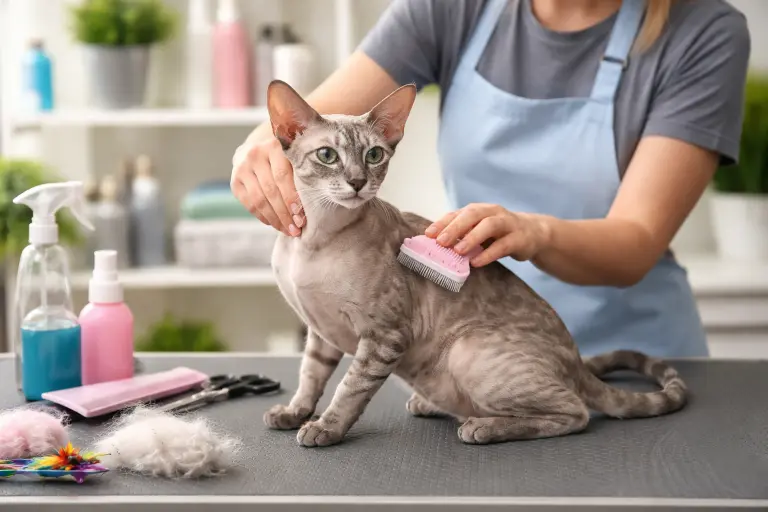
Peterbald cats look simple to care for at first glance because many of them have very little fur or none at all. This often leads new owners to believe grooming is optional or only about the occasional bath. In reality, Peterbald grooming is different, not easier. Their skin replaces many of the jobs that fur does on other cats, which means owners need to understand skin care, temperature comfort, and gentle handling from day one.
Peterbalds can be hairless, velour, brush-coated, or even have a short straight coat. Each type changes how grooming is done. A fully hairless Peterbald has no fur to absorb skin oils, so those oils stay on the skin surface. A velour or brush coat may trap oils and dirt in light fuzz, which still needs regular care. This makes grooming more about skin health than brushing loose hair.
Another important difference is personality. Peterbalds are very social and human-focused. Many enjoy touch, but they also get overstimulated easily. Grooming sessions that are too long, too warm, or too frequent can cause stress even if the cat seems calm at first. Understanding this balance helps owners avoid common mistakes like over-bathing or excessive wiping.
Finally, Peterbalds live best indoors. Indoor life protects their skin from sunburn, cold air, and rough surfaces. Grooming routines should match this indoor lifestyle. Instead of trying to groom “by the calendar,” owners should watch the cat’s skin, ears, and nails and adjust care based on real signs, not habits borrowed from furry cats.
Peterbald Skin & Coat Care Routine
Skin care is the center of Peterbald grooming. Their skin produces natural oils that would normally spread through fur. Without fur, these oils can build up, making the skin feel greasy or sticky. This is normal, but it still needs gentle management to prevent clogged pores, irritation, and odor.
Most Peterbalds do not need daily baths. Instead, light wiping with a soft, damp cloth works well for regular care. Focus on areas where oils collect, such as the neck folds, under the arms, belly, and behind the ears. The goal is to remove excess oil, not to strip the skin dry. Dry skin can crack and become painful, especially in cooler seasons.
Healthy Peterbald skin should feel smooth, warm, and flexible. It should not smell sour, look red, or have open sores. Small blackheads can appear, especially on the chin or tail base, but heavy buildup or swelling is not normal and should be checked by a vet. Grooming can support skin health, but it cannot treat infections or allergies.
Owners should also pay attention to temperature. After wiping or bathing, Peterbalds lose body heat fast. Always dry them fully and keep them in a warm room. Many owners use soft blankets or cat-safe sweaters after grooming to keep the cat comfortable.
Peterbald Coat Type vs Skin Care Needs
| Coat Type | Oil Buildup Level | Main Grooming Focus | Care Notes |
|---|---|---|---|
| Hairless | High | Skin wiping, warmth | Needs frequent gentle wiping |
| Velour | Medium | Light wiping, occasional brushing | Oils trap in fuzz |
| Brush | Medium | Brushing and wiping | Mats are rare but possible |
| Straight coat | Low to medium | Brushing | Skin care still matters |
Bathing a Peterbald Cat Safely
Bathing is the most misunderstood part of Peterbald grooming. Some owners bathe too often, believing it keeps the skin clean. In truth, frequent bathing can dry out the skin, increase oil production, and make problems worse. Baths should be used as a tool, not a routine.
A Peterbald usually needs a bath only when the skin feels very greasy, has visible buildup, or smells unpleasant even after gentle wiping. For many cats, this means once every few weeks or even less. Kittens and seniors may need even fewer baths because their skin is more sensitive.
When bathing is needed, keep it short and calm. Use warm water, not hot. Avoid soaking the cat for long periods. Gently wash using your hands, not rough cloths or sponges. Rinse well, because soap residue can irritate the skin. Dry immediately with a soft towel and keep the cat warm afterward.
Never bathe a Peterbald if the skin is red, broken, or painful unless a vet tells you to. Never use human shampoos or strong scents. These can burn sensitive skin and cause long-term problems.
When to Bathe vs When to Skip Bathing
| Situation | Bath Needed? | Better Option |
|---|---|---|
| Light oil on skin | No | Damp cloth wipe |
| Sticky feeling with odor | Yes | Short warm bath |
| Red or irritated skin | No | Vet check |
| Cold weather | Rarely | Spot cleaning only |
| Kitten under 4 months | Usually no | Gentle wiping |
Essential Grooming Tasks Beyond Bathing
Even without fur, Peterbalds still need regular grooming in other areas. Nail trimming is very important because long nails can scratch their own delicate skin. Trim nails every two to three weeks. Use calm handling and stop if the cat becomes tense. Only trim the sharp tip and avoid the pink quick inside the nail.
Ear care is a high-priority task for Peterbalds. They tend to produce more ear wax than many other breeds. Check ears weekly. A small amount of brown wax is normal. Thick, dark, or smelly discharge is not. Clean only the visible part of the ear and never push tools deep inside.
Eye care is usually simple. Some Peterbalds have mild eye discharge due to light sensitivity. Wipe gently with a soft, damp cloth as needed. Always use a clean area of the cloth for each eye to prevent spreading bacteria.
Dental care is often overlooked but still part of grooming. Even basic habits like checking the mouth and offering dental-friendly routines can help prevent future problems. Do not force brushing if the cat resists strongly. Stress-free habits matter more than perfect technique.
Essential Grooming Tasks Overview
| Task | Why It Matters | Frequency |
|---|---|---|
| Nail trimming | Prevents skin injury | Every 2–3 weeks |
| Ear cleaning | Prevents buildup | Weekly check |
| Eye wiping | Comfort and hygiene | As needed |
| Dental checks | Long-term health | Weekly glance |
Grooming Frequency, Safety & Common Mistakes
Peterbald grooming works best when it is gentle, flexible, and based on observation. Instead of fixed schedules, owners should look for signs like greasy skin, long nails, or ear buildup. Short, calm sessions are better than long ones. Always stop grooming if the cat shows stress signals such as tail flicking, ear flattening, stiff body posture, or sudden attempts to escape.
One common mistake is over-grooming. Too many baths, wipes, or cleanings can strip the skin and cause more oil production. Another mistake is ignoring temperature. Cold rooms after baths can make Peterbalds uncomfortable or sick. Drying and warmth are part of grooming, not optional steps.
Owners should never try to treat skin infections, deep ear problems, or painful sores at home. Grooming is for maintenance, not medical care. When in doubt, a vet visit is safer than experimenting.
Grooming Task Frequency Guide
| Grooming Task | Typical Frequency | Notes |
|---|---|---|
| Skin wiping | 1–3 times weekly | Adjust based on oil |
| Bathing | Every few weeks or less | Only when needed |
| Nail trimming | 2–3 weeks | Watch the quick |
| Ear check | Weekly | Clean only if dirty |
| Eye care | As needed | Gentle wiping only |
Common Grooming Mistakes and Why They Are Harmful
| Mistake | Why It’s a Problem |
|---|---|
| Bathing too often | Dries skin, increases oil |
| Using human products | Causes irritation |
| Ignoring stress signs | Breaks trust |
| Skipping nail trims | Leads to skin injuries |
| Treating infections at home | Delays proper care |
This completes the article. For more veterinary-backed information on feline skin and grooming health, you can visit the Cornell Feline Health Center: https://www.vet.cornell.edu/departments-centers-and-institutes/cornell-feline-health-center

Ata Ur Rehman is the founder of Pet Age in Human Years Calculator, an educational platform that provides age conversion charts and lifespan guides for dogs, cats, birds, and other companion animals. His work focuses on helping pet owners understand how animal ages translate into human years using commonly accepted age conversion formulas and published lifespan averages.
The website compiles breed and species lifespan data from kennel clubs, breed organizations, and general animal lifespan studies to present simple and easy-to-understand guides for pet owners worldwide.
This website was created to centralize animal age conversion charts into one easy reference platform for pet owners.