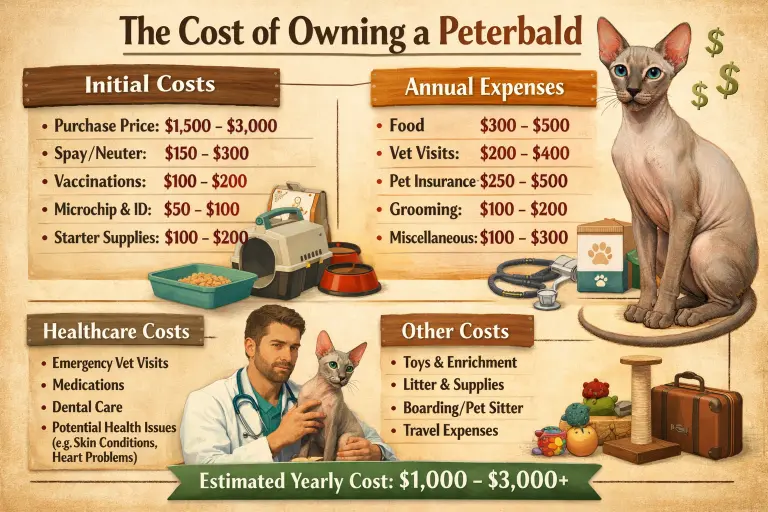
Many people first notice Peterbald cats because of their unusual look and close bond with humans. What often gets missed is how their body type and personality affect long-term costs. A Peterbald is not just a “normal cat without fur.” The lack of a full coat changes daily care, home setup, and even how much attention they need from their owner. All of this adds to the cost in small but steady ways.
One reason costs feel higher is consistency. A Peterbald usually needs regular skin care, warmth, and routine monitoring. These are not one-time purchases. They are repeating habits that become part of everyday life. Even when nothing goes wrong, these small needs add up month after month. Owners who expect costs similar to short-haired cats are often surprised.
Another factor is their strong social nature. Peterbalds tend to bond deeply with their people and do poorly when ignored or left alone for long hours. This can lead to extra spending on enrichment, companionship, or care during travel. While this is not a “medical” cost, it is still a real ownership expense that affects budgets.
Finally, many cost guides underestimate planning stress. Owners often focus on food and litter but forget comfort, time, and backup care. A Peterbald usually thrives in a stable, well-planned environment. When planning is weak, expenses become reactive instead of controlled. Understanding this early helps set realistic expectations and prevents regret later.
One-Time and First-Year Costs of Owning a Peterbald
The first year of owning a Peterbald is usually the most expensive. This is when most setup costs happen at once, even though they are meant to support many years of care. Ethical acquisition or adoption alone can require planning, especially when reputable breeders or rescue groups are involved. These initial steps are about long-term health, not shortcuts.
Early veterinary care is another major part of the first year. Baseline exams, sterilization if not already done, and early preventive care create a health foundation. Skipping these steps may lower costs at first but often increases spending later. First-year vet visits also help owners learn what is normal for this breed’s skin, weight, and behavior.
Home setup matters more for Peterbalds than for many other cats. Because they lack full fur, they are sensitive to temperature changes and rough surfaces. Soft bedding, warm resting areas, and safe indoor spaces are not luxury items for them. They are basic comfort needs that reduce stress and health risks.
Supplies bought in the first year often last a long time, but they still affect the initial budget. Many owners underestimate how much trial and adjustment happens early on. Finding the right bedding, care products, and enrichment tools can involve replacing items that do not work well for this breed.
First-Year Cost Categories for a Peterbald
| Cost Category | What It Includes | Why It Matters |
|---|---|---|
| Acquisition or Adoption | Ethical sourcing, transport | Health and temperament stability |
| Initial Veterinary Care | Exams, sterilization, baseline care | Prevents future complications |
| Home Setup | Bedding, warm spaces, safe furniture | Comfort and temperature control |
| Starter Supplies | Bowls, litter tools, care items | Daily function and hygiene |
| Adjustment Costs | Replacements and upgrades | Finding what truly works |
Ongoing Monthly and Annual Peterbald Ownership Costs
Once the first year passes, costs become more predictable but do not disappear. Food and litter remain the most obvious monthly expenses. Peterbalds often have a fast metabolism, which can mean consistent food intake. While this does not always mean “more food,” it does mean stable quality and routine feeding.
Skin care is a unique ongoing cost. Without full fur, oils build up on the skin and need gentle cleaning. This is not about appearance. It is about comfort and preventing irritation. Supplies used for skin care are usually small purchases, but they repeat regularly and should be planned into the monthly budget.
Routine veterinary care continues throughout the year. Even healthy cats need checkups and preventive treatments. These visits help catch problems early, which often lowers long-term costs. Annual expenses feel heavier when they are not expected, so spreading awareness across the year helps with planning.
Environmental costs are often overlooked. Heating, soft bedding replacement, and indoor enrichment all support a Peterbald’s wellbeing. These are not dramatic expenses on their own, but together they form a steady part of ownership. Planning for them reduces financial stress.
Monthly vs Annual Ownership Cost Types
| Cost Type | Monthly Pattern | Annual Pattern |
|---|---|---|
| Food and Litter | Regular, predictable | Stable over the year |
| Skin Care Supplies | Small but frequent | Adds up slowly |
| Routine Vet Care | Minimal monthly | Noticeable annual visits |
| Home Comfort Items | Occasional | Replacement over time |
| Enrichment | Ongoing | Refresh as needed |
Unexpected, Medical, and Long-Term Costs to Plan For
No matter how careful an owner is, unexpected costs are part of pet ownership. Peterbald cats are not fragile, but their skin and temperature sensitivity can lead to issues that need professional attention. Minor problems can become expensive when ignored, which is why planning for surprises matters.
Emergency veterinary visits are often the largest unplanned expense. These visits are unpredictable and emotionally stressful. While not frequent for every cat, they should always be part of a responsible cost plan. Having a financial buffer reduces panic decisions and rushed choices.
As Peterbalds age, costs often increase. Older cats may need more frequent checkups, special diets, or additional comfort care. Aging is not a failure of care; it is a normal life stage. Owners who plan for these changes are better prepared emotionally and financially.
End-of-life care is another area many guides avoid. This stage can involve difficult decisions and increased costs over a short time. While it is uncomfortable to think about, acknowledging this phase helps owners understand the full responsibility they are taking on.
Common Unplanned Cost Scenarios
| Scenario | Why It Happens | Planning Benefit |
|---|---|---|
| Skin Irritation | Sensitivity or environment | Early care lowers severity |
| Sudden Illness | Normal risk of life | Emergency buffer reduces stress |
| Injury | Accidents indoors | Fast response improves outcomes |
| Senior Care Needs | Natural aging | Gradual budget adjustment |
| End-of-Life Support | Compassionate care | Emotional and financial readiness |
Can You Realistically Afford a Peterbald Cat?
Affording a Peterbald is not just about having money today. It is about stability over many years. Owners should ask whether their lifestyle supports daily care, consistent routines, and the ability to absorb surprise costs. A tight budget can work only when it is stable and well planned.
Time is part of affordability. Peterbalds need attention, warmth, and interaction. If work or travel keeps an owner away often, costs may rise due to paid care or stress-related issues. These indirect costs are real, even though they do not show up on receipts.
It is also important to separate desire from readiness. Loving the breed does not always mean being ready for the responsibility. Delaying ownership until finances and time allow is a valid and often wise choice. Responsible ownership starts with honest self-assessment.
A simple way to evaluate readiness is to review key pressure points. If multiple areas feel uncertain, it may be better to wait. This is not failure. It is planning with respect for the animal’s needs.
Affordability Self-Check
| Question | Yes | No |
|---|---|---|
| Can you handle steady monthly costs? | ☐ | ☐ |
| Do you have room for surprise expenses? | ☐ | ☐ |
| Is your home suitable year-round? | ☐ | ☐ |
| Can you provide daily interaction? | ☐ | ☐ |
| Are you prepared for long-term care? | ☐ | ☐ |
If you answered “no” to several questions, waiting or choosing a lower-maintenance pet may be the kinder option for both you and the cat.For additional general information about cat care standards and ownership responsibilities, you can review guidance from the American Veterinary Medical Association:
https://www.avma.org/resources-tools/pet-owners/petcare/cats

Ata Ur Rehman is the founder of Pet Age in Human Years Calculator, an educational platform that provides age conversion charts and lifespan guides for dogs, cats, birds, and other companion animals. His work focuses on helping pet owners understand how animal ages translate into human years using commonly accepted age conversion formulas and published lifespan averages.
The website compiles breed and species lifespan data from kennel clubs, breed organizations, and general animal lifespan studies to present simple and easy-to-understand guides for pet owners worldwide.
This website was created to centralize animal age conversion charts into one easy reference platform for pet owners.