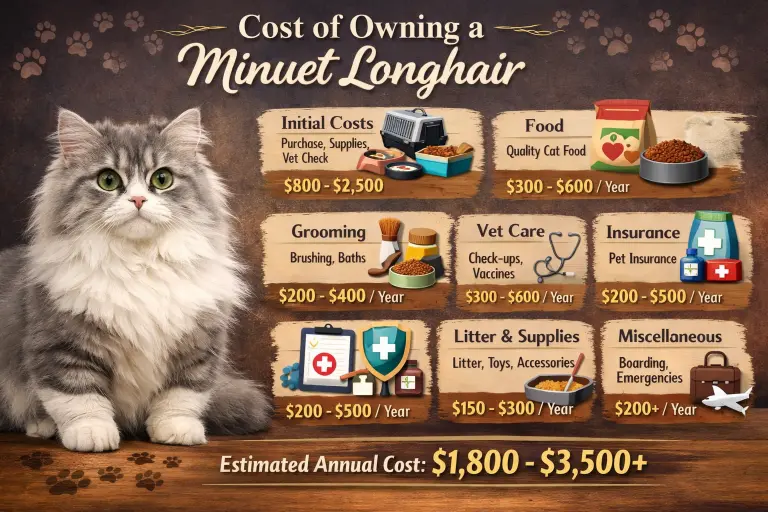
Owning a Minuet Longhair cat is not just about enjoying a cute and loving companion. It is also a long-term financial responsibility. Many people focus only on the adoption or purchase price, but that is only a small part of the total cost. Real ownership costs build slowly over time and can surprise unprepared owners.
Cats often live 12 to 16 years, sometimes longer. That means your budget must support food, litter, vet care, grooming, and emergencies for more than a decade. Understanding costs early helps you avoid stress later, especially during unexpected vet visits or life changes.
Planning ahead also protects the cat. When owners run into money trouble, pets often suffer first. Skipping vet care, delaying grooming, or buying poor-quality food can lead to health problems that cost even more later.
This guide is designed to help you decide responsibly. It explains what you are likely to spend, what costs change over time, and where people often underestimate expenses. The goal is not to scare you, but to help you make a smart, informed decision.
One-Time and Setup Costs for a Minuet Longhair
The first year of owning a Minuet Longhair is usually the most expensive. These are costs you pay once or mainly at the beginning. Even if some items last for years, they still require upfront money.
Common one-time costs include adoption or purchase fees, spaying or neutering, first vet visits, vaccines, and basic supplies like litter boxes, carriers, bowls, and scratching posts. Longhair cats may also need grooming tools from day one.
Some owners already have supplies from previous pets, which can lower costs. Others start from zero, which raises the setup budget. These differences matter when planning.
Below is a general breakdown of typical one-time costs. These are estimates, not fixed prices, and can vary widely by region and care level.
| One-Time Cost Item | Low Range | Average Range | High Range |
|---|---|---|---|
| Adoption or purchase fee | Low | Medium | High |
| Spay/neuter surgery | Low | Medium | High |
| Initial vet exams & vaccines | Low | Medium | High |
| Basic supplies (box, bowls, bed, carrier) | Low | Medium | High |
| Grooming tools (brush, comb, clippers) | Low | Medium | High |
These setup costs are unavoidable. Skipping them often leads to health or behavior problems later, which usually cost more to fix
Monthly and Ongoing Expenses You Should Expect
Monthly costs are the core of cat ownership. These expenses repeat every month and form the base of your long-term budget. Even small monthly costs add up over many years.
Food is the biggest regular expense. Minuet Longhairs do not eat huge amounts, but quality food still matters for health and coat condition. Litter is another steady cost, especially for indoor cats.
Grooming is often underestimated. Longhair cats need regular brushing to prevent mats and hairballs. Some owners groom at home, while others pay for professional grooming a few times a year.
There is also a “time cost.” Daily feeding, litter cleaning, brushing, and playtime take real effort. While this is not money, it affects lifestyle and should be considered part of ownership.
| Monthly Expense | What It Covers | Notes |
|---|---|---|
| Food | Dry and/or wet food | Quality affects long-term health |
| Litter | Clumping or non-clumping | Indoor cats use more |
| Grooming | Brushes or grooming service | Longhair needs more care |
| Preventive items | Flea or parasite control | Often monthly or seasonal |
These costs stay fairly stable but may rise with inflation, food quality upgrades, or health changes.
Annual, Aging, and Unexpected Veterinary Costs
Annual vet care is essential, even for healthy cats. Routine checkups help catch problems early, which usually lowers long-term costs and improves quality of life.
As cats age, vet costs almost always increase. Senior cats may need blood tests, dental care, or medication. These are normal parts of aging, not signs of bad care.
Unexpected costs are the hardest to plan for. Accidents, sudden illness, or chronic conditions can appear without warning. This is where many owners feel financial pressure.
Below is a simple way to think about yearly and surprise costs.
| Cost Type | Frequency | Why It Matters |
|---|---|---|
| Annual wellness exams | Once per year | Early problem detection |
| Vaccines & preventive care | Yearly or scheduled | Disease prevention |
| Dental care | Occasional | Common hidden expense |
| Emergency treatment | Unpredictable | Often high cost |
| Senior care needs | Later years | Increases with age |
Being honest about these risks helps you plan calmly instead of reacting in panic when something goes wrong.
Lifetime Cost Summary and Affordability Reality Check
When you combine setup costs, monthly care, yearly vet visits, and emergencies, the lifetime cost of owning a Minuet Longhair becomes clear. This is not a short-term commitment.
Lifestyle choices affect total cost. Indoor cats often have higher litter costs but fewer injury risks. Multi-cat homes may save on some supplies but increase food and vet expenses.
| Care Level | What It Usually Includes | Lifetime Cost Trend |
|---|---|---|
| Basic care | Essentials only | Lower but higher risk |
| Average care | Balanced food, routine vet care | Moderate |
| High care | Premium food, regular grooming, full vet care | Higher but more stable |
A good question to ask yourself is not “Can I afford a cat now?” but “Can I afford this cat for the next 15 years?” If the answer feels uncertain, waiting or planning more is the responsible choiceFor more general guidance on responsible pet ownership and planning, you can read resources from the ASPCA:
https://www.aspca.org/pet-care

Ata Ur Rehman is the founder of Pet Age in Human Years Calculator, an educational platform that provides age conversion charts and lifespan guides for dogs, cats, birds, and other companion animals. His work focuses on helping pet owners understand how animal ages translate into human years using commonly accepted age conversion formulas and published lifespan averages.
The website compiles breed and species lifespan data from kennel clubs, breed organizations, and general animal lifespan studies to present simple and easy-to-understand guides for pet owners worldwide.
This website was created to centralize animal age conversion charts into one easy reference platform for pet owners.