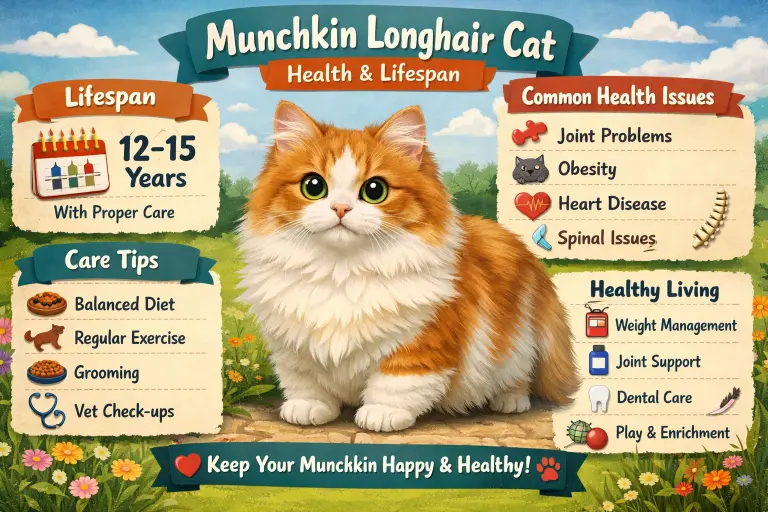
The Minuet Longhair is a small, affectionate cat known for its sweet nature and short legs. Many people choose this breed because it fits well into quiet homes and enjoys close contact with family members. When owners search for health and lifespan information, they usually want calm, honest answers, not scary warnings. This guide is written to do exactly that.
This article gives a general health and lifespan overview for Minuet Longhair cats. It explains what owners often notice over time, what is considered common in everyday ownership, and how long these cats usually live. It does not diagnose illness or replace veterinary advice. Every cat is an individual, and health can vary widely.
Minuet Longhairs are often described as sturdy companion cats when they come from responsible breeders and live indoors. Like all cats, they can develop health issues, especially as they age, but many live long and comfortable lives with basic preventive care and observation.
Think of this guide as a long-term ownership roadmap. It focuses on awareness, prevention, and quality of life rather than fear or medical details.
Minuet Longhair Lifespan – What Owners Can Expect
Most Minuet Longhair cats live a moderate to long life compared to many other companion cats. Lifestyle plays a major role in how long a cat lives, especially whether they live indoors or outdoors.
Indoor Minuet Longhairs usually live longer because they face fewer risks such as accidents, infections, and parasites. Outdoor access, even limited, can shorten lifespan due to factors outside an owner’s control.
Lifespan numbers are averages, not promises. Some cats live longer than expected, while others may face challenges earlier. Genetics, diet, activity level, stress, and routine veterinary care all influence longevity.
Below is a simple overview to help set realistic expectations.
| Lifestyle | Typical Lifespan Range | Notes |
|---|---|---|
| Indoor only | 12–16 years (sometimes longer) | Lower risk environment |
| Indoor with limited outdoor access | 10–14 years | Depends on safety and supervision |
| Mostly outdoor | Often shorter | Higher risk factors |
Common Health Issues Seen in Minuet Longhair Cats
Minuet Longhairs are not considered fragile, but they do share some health patterns seen in many companion cats. “Common” does not mean that every cat will have these problems. It simply means owners should be aware and observant.
Their short legs and body shape may affect movement over time, especially in later years. Some cats may become less active or hesitant to jump, which owners often notice gradually rather than suddenly.
Dental health is another area that many owners overlook. Tartar buildup and gum issues are very common in pet cats and can affect comfort, appetite, and overall health if ignored.
Like many indoor cats, Minuet Longhairs can also struggle with weight gain if food intake and activity are not balanced. Extra weight can place stress on joints and reduce mobility as cats age.
| Health Area | General Description | Life Stage Often Noticed |
|---|---|---|
| Mobility | Stiffness or reduced jumping | Adult to senior |
| Dental health | Tartar or gum irritation | All ages |
| Weight | Easy weight gain indoors | Adult |
| Urinary health | Litter box habit changes | Adult to senior |
| Coat and skin | Matting or dry skin | All ages |
Preventive Care and Early Health Awareness
Preventive care is one of the most important factors in a Minuet Longhair’s long-term comfort. Simple routines help owners notice changes early, when they are easier to address with a veterinarian.
Regular vet checkups allow professionals to track weight, teeth, and overall condition over time. Even when a cat seems healthy, routine visits help catch small issues before they become bigger problems.
At home, grooming is more than just keeping the coat pretty. Brushing helps owners notice skin changes, lumps, or sensitivity. Watching eating, drinking, and litter box habits also gives early clues when something is off.
The table below shows general preventive focus areas by life stage.
| Life Stage | Main Health Focus | Owner Awareness Tips |
|---|---|---|
| Kitten | Growth and development | Appetite, play, energy |
| Adult | Weight and dental care | Body shape, teeth, habits |
| Senior | Comfort and mobility | Movement, sleep, behavior |
Aging, Quality of Life, and When to Consult a Vet
As Minuet Longhairs grow older, changes usually happen slowly. Many senior cats sleep more, play less, and prefer calm routines. These changes are often normal, but they still deserve attention.
Supporting quality of life means making daily living easier. Soft bedding, easy-to-reach food bowls, and gentle play can help aging cats stay comfortable and engaged. Keeping routines stable also reduces stress.
Owners should trust their instincts. Sudden changes in behavior, appetite, breathing, or litter box use should not be ignored. Consulting a veterinarian early is always safer than waiting and worrying at home.
In summary, Minuet Longhairs often live happy, affectionate lives when owners focus on observation, prevention, and comfort rather than fear. Good care does not mean doing everything perfectly—it means paying attention and responding with care.
For additional general feline health guidance from veterinary professionals, you can visit:
https://catfriendly.com/

Ata Ur Rehman is the founder of Pet Age in Human Years Calculator, an educational platform that provides age conversion charts and lifespan guides for dogs, cats, birds, and other companion animals. His work focuses on helping pet owners understand how animal ages translate into human years using commonly accepted age conversion formulas and published lifespan averages.
The website compiles breed and species lifespan data from kennel clubs, breed organizations, and general animal lifespan studies to present simple and easy-to-understand guides for pet owners worldwide.
This website was created to centralize animal age conversion charts into one easy reference platform for pet owners.