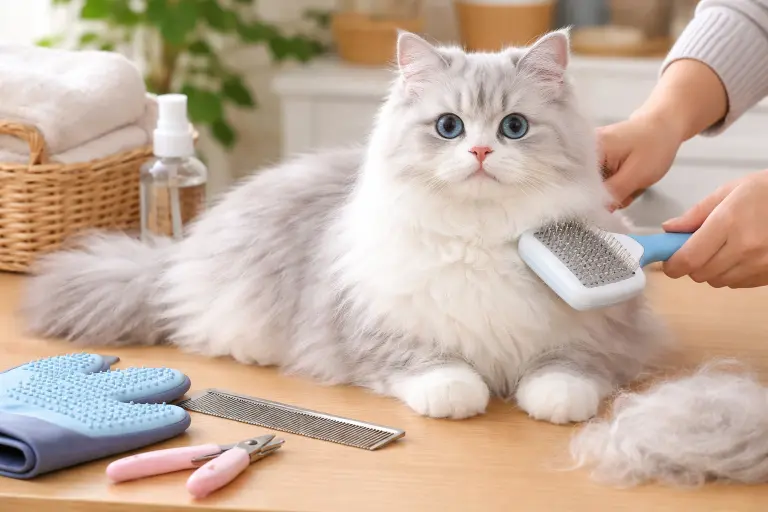
Minuet Longhair cats may look small and soft, but their grooming needs are not small at all. This breed has a long, thick coat and a short body with short legs. Because of this body shape, Minuets cannot reach all parts of their body when grooming themselves. Areas like the belly, chest, and under the arms often get ignored, which leads to tangles and mats.
Many new owners think Minuets are low-maintenance because of their size or calm nature. In real life, their coat needs regular help from humans. If grooming is skipped, mats can form close to the skin. These mats can pull on the skin and cause pain, skin infections, and behavior changes.
Most Minuet Longhairs live indoors, which changes grooming needs. Indoor cats shed year-round, not just in spring or fall. Dust, litter, and natural oils stay trapped in the coat. This means brushing is not optional—it is part of basic care.
Understanding these needs early helps owners avoid stress later. A calm grooming routine keeps the coat healthy, reduces shedding, and makes your cat more comfortable every day
Brushing and Coat Care for Minuet Longhair Cats
Brushing is the most important grooming task for a Minuet Longhair cat. Ideally, brushing should happen every day or at least 4–5 times a week. Short sessions work best. Even five minutes a day can prevent painful mats.
Always brush gently. Pulling the brush through knots hurts the skin and can make your cat hate grooming. Start with easy areas like the back and sides before moving to sensitive spots. Many Minuets dislike belly brushing, so go slowly and stop if your cat shows stress.
Mats do not appear overnight. They start as small tangles that feel slightly thick under your fingers. If you catch them early, gentle brushing is enough. Never cut mats with scissors at home. Cat skin is thin and easy to injure.
Shedding increases during seasonal changes, especially in spring. During these times, brushing may need to happen daily to keep loose fur under control.
Common Mat-Risk Areas in Minuet Longhairs
| Body Area | Mat Risk Level | Grooming Focus |
|---|---|---|
| Under arms | High | Brush gently and often |
| Belly | High | Short sessions only |
| Behind ears | Medium | Check daily |
| Chest | Medium | Use light pressure |
| Tail base | Low | Brush weekly |
Nail, Ear, Eye, and Dental Grooming Basics
Nail trimming is important for Minuet cats because long nails affect how they walk. Their short legs mean extra pressure on joints when nails are overgrown. Most Minuets need nail trimming every 2–3 weeks.
Only trim the sharp tip of the nail. Never cut into the pink area inside the nail, called the quick. If your cat struggles, trim one or two nails at a time and stop.
Ears and eyes also need gentle care. Some Minuets have round faces, which can cause mild eye discharge. Wipe eyes with a soft, damp cloth only. Never use drops unless a vet tells you to.
Ear cleaning should be limited. If ears look clean, leave them alone. If you see dark wax or smell odor, a vet check is safer than home cleaning.
Dental care supports grooming too. Cats with mouth pain often resist brushing and handling. Brushing teeth a few times a week or using vet-approved dental care helps long-term comfort.
Bathing Minuet Longhair Cats and When It’s Necessary
Most Minuet Longhair cats do not need regular baths. In fact, too many baths can dry out the skin and make coat problems worse. Baths are only useful when the coat is greasy, dirty, or contaminated with something unsafe.
If a bath is needed, preparation matters. Brushing before the bath removes loose fur and prevents mats from tightening when wet. Water should be warm, not hot. Use only cat-safe shampoo.
Never give a “panic bath” because your cat smells or shed a lot. These baths often cause fear, scratching, and long-term grooming problems. For many owners, spot cleaning with a damp cloth works better.
Most healthy Minuets only need a bath a few times a year, if at all. If bathing becomes frequent, a professional groomer or vet should be involved.
Grooming Frequency, Safety, and Common Mistakes
Consistency is more important than perfection. Small, calm grooming sessions build trust and prevent big problems later. Always watch your cat’s body language. Swishing tail, flat ears, or sudden tension means it’s time to stop.
Never hold your cat down or force grooming. This increases fear and can lead to biting or scratching. It is okay to spread grooming over several short sessions.
Minuet Longhair Grooming Frequency Guide
| Grooming Task | How Often |
|---|---|
| Brushing | Daily or 4–5x per week |
| Nail trimming | Every 2–3 weeks |
| Eye wiping | As needed |
| Ear checking | Weekly |
| Bathing | Only when necessary |
Grooming Safety: Do and Don’t
| Do | Don’t |
|---|---|
| Use gentle brushing | Cut mats with scissors |
| Keep sessions short | Force your cat to continue |
| Stop when stressed | Bathe too often |
| Ask a groomer for help | Use dog or human products |
Many owners wait too long before getting help. If mats are tight, skin looks sore, or grooming causes panic, a professional groomer or veterinarian is the safest choic If you want trusted external guidance on basic cat grooming safety, you can also read this resource from the ASPCA:
https://www.aspca.org/pet-care/cat-care/cat-grooming-tips

Ata Ur Rehman is the founder of Pet Age in Human Years Calculator, an educational platform that provides age conversion charts and lifespan guides for dogs, cats, birds, and other companion animals. His work focuses on helping pet owners understand how animal ages translate into human years using commonly accepted age conversion formulas and published lifespan averages.
The website compiles breed and species lifespan data from kennel clubs, breed organizations, and general animal lifespan studies to present simple and easy-to-understand guides for pet owners worldwide.
This website was created to centralize animal age conversion charts into one easy reference platform for pet owners.