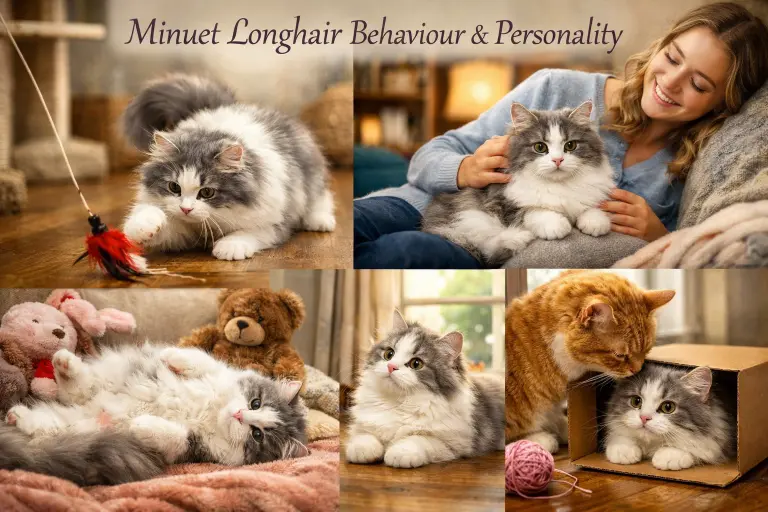
The Minuet Longhair, also known as the Napoleon Longhair, is often described as gentle and people-oriented, but it helps to understand that personality is not fixed by breed alone. Every Minuet Longhair is an individual. Some are outgoing and cuddly, while others are calm observers who prefer quiet company. This section helps set realistic expectations so owners do not feel confused or worried by normal behavior differences.
A cat’s personality develops through a mix of genetics, early life experiences, and daily environment. Minuet Longhairs may share some general tendencies, but how they act in your home depends on how safe, predictable, and comfortable they feel. Cats that feel secure often show their true personality more clearly over time.
Many Minuet Longhairs show a balanced nature. They are usually not overly demanding, but they enjoy being part of household life. They may follow their favorite person from room to room, sit nearby during rest time, or quietly watch activities without needing constant attention.
Understanding personality early helps owners avoid labeling normal behavior as a problem. A Minuet Longhair who prefers calm spaces is not unfriendly. A playful one is not “hyper.” Both are healthy expressions of personality.
Key Influences on Minuet Longhair Personality
| Influence | How It Affects Behavior |
|---|---|
| Genetics | Sets general temperament range |
| Early handling | Builds confidence or caution |
| Home routine | Creates security and predictability |
| Human interaction | Shapes trust and attachment |
| Environment | Affects stress and comfort levels |
Core Personality Traits of the Minuet Longhair
Minuet Longhairs are often known for their soft, affectionate nature, but affection does not look the same in every cat. Some enjoy sitting on laps, while others prefer resting close by. Both styles show bonding and trust.
Many Minuet Longhairs balance independence with attachment. They like human company but usually do not demand attention all day. This makes them a good fit for people who enjoy companionship without constant activity.
Playfulness is another common trait, especially in younger cats. Their play style is often gentle rather than intense. Short bursts of play followed by long rest periods are normal and healthy.
Calm behavior is sometimes mistaken for laziness. In reality, many Minuet Longhairs simply conserve energy and enjoy peaceful environments. This does not mean they lack curiosity or intelligence.
Common Minuet Longhair Personality Traits Explained
| Trait | How It Appears | What It Means |
|---|---|---|
| Affectionate | Sits near or on owner | Feels safe and bonded |
| Calm | Long rest periods | Normal energy balance |
| Curious | Watches surroundings | Mental engagement |
| Independent | Enjoys alone time | Healthy confidence |
| Gentle | Soft play and interaction | Low reactivity |
Minuet Longhair Behavior With Humans and Pets
With humans, Minuet Longhairs often form strong bonds with one or two people. They may greet their favorite person quietly or wait nearby rather than rushing for attention. This behavior shows trust, not distance.
Around children, many Minuet Longhairs do well in calm homes where interactions are gentle and predictable. Loud or sudden handling can make any cat cautious, so slow and respectful contact is important.
When living with other cats or pets, Minuet Longhairs often prefer peaceful coexistence. Some enjoy social interaction, while others are content sharing space without close contact. Both behaviors are normal.
Their body language gives clear clues during social moments. A relaxed posture, slow blinking, and neutral tail position usually mean comfort. Avoid forcing interaction when a cat chooses space.
Minuet Longhair Social Behavior Patterns
| Situation | Common Behavior |
|---|---|
| With owners | Quiet companionship |
| With strangers | Cautious but curious |
| With children | Calm if treated gently |
| With cats | Coexistence or slow bonding |
| With dogs | Observant and reserved |
Communication, Play, and Natural Instincts
Minuet Longhairs communicate mostly through body language. Small signals like ear position, tail movement, and eye shape say more than sounds. Learning these signs helps owners understand needs without stress.
Vocal sounds vary by individual. Some Minuet Longhairs are quiet, while others use soft meows to greet or request attention. Loudness alone does not show happiness or trouble; context matters more.
Play reflects natural hunting instincts. Many Minuet Longhairs enjoy ground-based play, short chase games, and watching toys closely before pouncing. These behaviors are normal and healthy.
They also enjoy safe perches and observation spots. Watching from a low height or window allows mental stimulation without high energy use.
Body Language and Vocal Signals in Minuet Longhairs
| Signal | Meaning | Normal Context |
|---|---|---|
| Slow blink | Trust | Relaxed moments |
| Upright tail | Friendly | Greeting |
| Quiet meow | Communication | Request or greeting |
| Paused play | Overstimulated | Needs rest |
| Observing posture | Interest | Safe engagement |
Commonly Misunderstood Minuet Longhair Behaviors
Some Minuet Longhairs are called lazy when they rest often. In reality, cats are natural energy savers. Resting helps them stay balanced and calm.
Closeness is sometimes labeled as clingy behavior. When a Minuet Longhair stays near you, it usually means they feel safe and comfortable, not anxious or needy.
Quiet cats are often misunderstood as shy. Many Minuet Longhairs simply prefer calm observation and show affection in subtle ways.
A strong preference for routine is another normal trait. Cats feel secure when daily patterns stay the same. This is not stubbornness but a natural comfort behavior.
Misunderstood Behavior vs What’s Really Happening
| Behavior | Common Mislabel | Real Meaning |
|---|---|---|
| Frequent resting | Lazy | Normal energy use |
| Staying close | Clingy | Secure attachment |
| Quiet nature | Shy | Calm confidence |
| Routine preference | Stubborn | Emotional safet |
For more general feline behavior education from a trusted animal welfare source, you can visit:
https://www.aspca.org/pet-care/cat-care/cat-behavior-tips

Ata Ur Rehman is the founder of Pet Age in Human Years Calculator, an educational platform that provides age conversion charts and lifespan guides for dogs, cats, birds, and other companion animals. His work focuses on helping pet owners understand how animal ages translate into human years using commonly accepted age conversion formulas and published lifespan averages.
The website compiles breed and species lifespan data from kennel clubs, breed organizations, and general animal lifespan studies to present simple and easy-to-understand guides for pet owners worldwide.
This website was created to centralize animal age conversion charts into one easy reference platform for pet owners.