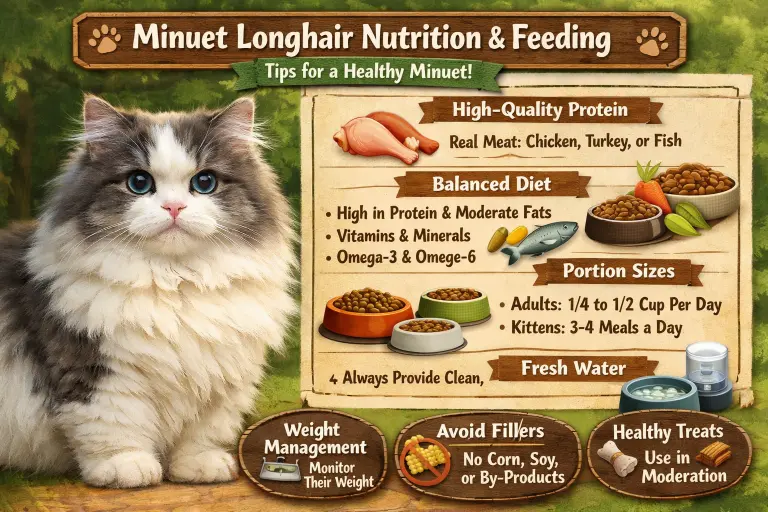
Minuet Longhair cats are small, compact cats with long, soft coats and a calm nature. Their size and coat make good nutrition extra important. What they eat affects their energy, digestion, coat shine, and overall comfort. A balanced diet helps them stay active without gaining extra weight.
Like all cats, Minuet Longhairs are obligate carnivores. This means their bodies are made to use nutrients from animal-based foods. Meat is not just a preference for cats—it is a biological need. Plant-based foods alone cannot meet their daily nutrition needs.
Their long coat also plays a role in diet choices. Long-haired cats swallow more hair during grooming. This makes digestion and stool quality important. Diets with proper protein, moisture, and gentle fiber can support smoother digestion.
Because Minuet Longhairs are often indoor cats, their activity level may be lower than outdoor cats. This means calories must be controlled carefully. Feeding the right amount is just as important as choosing the right food.
| Nutritional Need | Why It Matters for Minuet Longhairs |
|---|---|
| Animal protein | Supports muscles, energy, and organ health |
| Moderate fat | Provides energy without excess weight |
| Moisture | Helps digestion and urinary health |
| Fiber (small amounts) | Helps move swallowed hair through digestion |
Best Diet for Minuet Longhair Cats
A good diet for a Minuet Longhair starts with high-quality animal protein. Chicken, turkey, fish, or lamb are common examples. Protein helps maintain muscle and keeps your cat feeling full and satisfied after meals.
Fat is also important because it provides energy and supports skin and coat health. However, too much fat can lead to weight gain, especially in small cats. Balanced fat levels help keep the coat soft without adding extra calories.
Carbohydrates are not essential for cats, but small amounts can be used in cat food. They help shape kibble and provide quick energy. The key is that carbs should not replace animal protein as the main ingredient.
Micronutrients like taurine, vitamins, and minerals are essential for heart health, vision, and immunity. Most complete commercial cat foods include these nutrients in safe amounts. This is why feeding a complete and balanced diet is important.
| Nutrient | Role in the Diet | What Owners Should Know |
|---|---|---|
| Protein | Muscle and energy | Should come from animal sources |
| Fat | Energy and coat health | Needs balance, not excess |
| Carbohydrates | Minor energy source | Not a main requirement |
| Taurine | Heart and eye health | Must be included in cat food |
Wet Food vs Dry Food for Minuet Longhairs
Wet food contains a lot of moisture, which helps keep cats hydrated. This is useful because many cats do not drink enough water on their own. Wet food can also be easier to chew and digest.
Dry food is convenient and easy to store. Some cats enjoy crunching kibble, and it can be left out longer without spoiling. However, dry food has less moisture and is more calorie-dense.
Many owners choose mixed feeding. This means offering wet food for meals and dry food in measured portions. This approach can support hydration while keeping feeding routines flexible.
There is no single “best” choice for every Minuet Longhair. The best option is one your cat eats well, digests easily, and maintains a healthy body shape on.
| Feeding Type | Benefits | Possible Downsides |
|---|---|---|
| Wet food | High moisture, easy to eat | Spoils quickly once opened |
| Dry food | Convenient, long shelf life | Low moisture, calorie-dense |
| Mixed feeding | Balance of both | Needs portion control |
Feeding Schedule, Portion Size & Life Stage Needs
Kittens need more frequent meals because they are growing fast. They use more energy and need steady nutrition throughout the day. Small meals spread out work best.
Adult Minuet Longhairs usually do well with two meals per day. This helps control calories and creates a routine. Free-feeding can lead to overeating, especially in indoor cats.
Senior cats may eat smaller amounts or eat more slowly. They may benefit from softer food and steady routines. Watching body weight and appetite becomes more important as cats age.
Always check feeding guides on food labels, but remember they are only starting points. Every cat is different, so portions should match your cat’s size, activity level, and body condition.
| Life Stage | Feeding Frequency | General Focus |
|---|---|---|
| Kitten | 3–4 meals daily | Growth and energy |
| Adult | 2 meals daily | Weight balance |
| Senior | 2 small meals | Muscle and digestion |
Treats, Hydration & Common Feeding Mistakes
Treats should be a small part of a Minuet Longhair’s diet. Too many treats can unbalance nutrition and add extra calories. Treats should never replace meals.
Human foods can be risky. Some foods are unsafe for cats, and others can upset their stomach. It is safer to stick to cat-specific treats and foods made for feline needs.
Hydration is very important, especially for long-haired cats. Fresh water should always be available. Some cats drink more when water bowls are kept clean and placed away from food.
Common feeding mistakes include overfeeding, sudden food changes, and choosing food based only on marketing claims. Slow changes and simple routines usually work best.
| Do | Don’t |
|---|---|
| Measure food portions | Guess serving sizes |
| Provide fresh water daily | Rely only on dry food for hydration |
| Change foods slowly | Switch foods suddenly |
| Use treats sparingly | Feed table scraps |
For general feline nutrition standards and how pet foods are balanced, you can learn more from the Association of American Feed Control Officials (AAFCO): https://www.aafco.org

Ata Ur Rehman is the founder of Pet Age in Human Years Calculator, an educational platform that provides age conversion charts and lifespan guides for dogs, cats, birds, and other companion animals. His work focuses on helping pet owners understand how animal ages translate into human years using commonly accepted age conversion formulas and published lifespan averages.
The website compiles breed and species lifespan data from kennel clubs, breed organizations, and general animal lifespan studies to present simple and easy-to-understand guides for pet owners worldwide.
This website was created to centralize animal age conversion charts into one easy reference platform for pet owners.