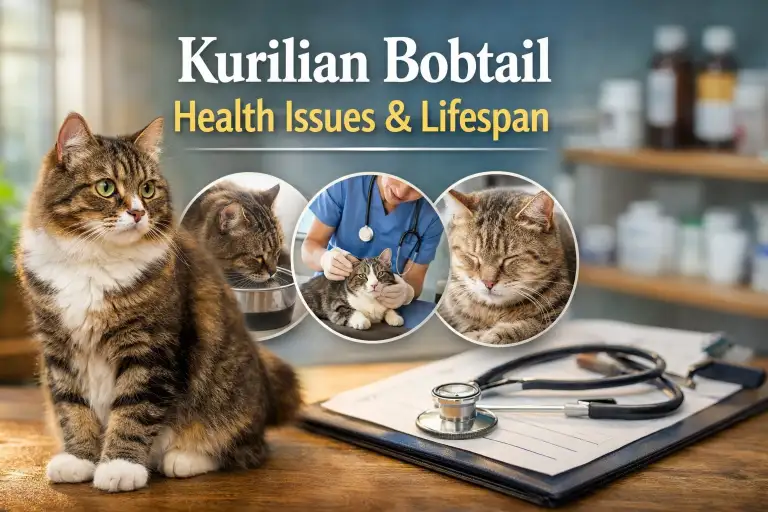
Kurilian Bobtails are often described as long-lived cats, but like all breeds, their lifespan is influenced by many factors beyond genetics alone. Most healthy Kurilian Bobtails live well into their teens, and some may reach their late teens or early twenties with attentive care, a safe environment, and regular veterinary oversight. That said, lifespan numbers are always averages, not guarantees.
Because the Kurilian Bobtail is a relatively rare and naturally developed breed, there is less large-scale lifespan data available compared to more common cats. This means reported ranges are best understood as general expectations rather than fixed outcomes.
One of the biggest influences on lifespan is whether a cat lives indoors or outdoors. Indoor cats are typically protected from many risks that can shorten life expectancy, while outdoor access introduces variables that are harder to control.
| Living Situation | Typical Lifespan Range | Important Context |
|---|---|---|
| Indoor Kurilian Bobtail | 14–18 years or longer | Reduced exposure to accidents, predators, and infectious diseases |
| Outdoor or Indoor/Outdoor Kurilian Bobtail | Often shorter on average | Higher risk from trauma, parasites, and environmental hazards |
| General Domestic Cat (Indoor) | 12–16 years | Provides a broad comparison point, not a benchmark |
It’s also important to remember that lifespan is shaped by daily life over many years, not by breed alone. Nutrition quality, body weight, dental health, stress levels, and routine preventive care all play a meaningful role in how long and how comfortably a cat lives. Two Kurilian Bobtails with similar genetics may age very differently depending on these factors.
Rather than focusing on a specific number of years, it’s more helpful for owners to think in terms of supporting long-term health and quality of life. With attentive care and early attention to subtle changes, many Kurilian Bobtails enjoy long, active lives well beyond the average expectations.
Are Kurilian Bobtails Healthy Cats? An Overview of Breed Health
Kurilian Bobtails are often called a healthy and strong breed, and this reputation comes from their natural development rather than heavy selective breeding. They were shaped by their environment over many years, which can support overall resilience. However, being a “healthy breed” does not mean a cat will never have health problems.
It helps to think of breed health as a starting point, not a promise. Kurilian Bobtails still share the same basic biology as other domestic cats. This means they can experience many of the common health issues seen in cats as they age, especially if preventive care is missed or lifestyle needs are not met.
Here is a simple way to understand what “healthy breed” really means for owners:
| Common Belief | What It Actually Means |
|---|---|
| Kurilian Bobtails are very healthy | They may have fewer known inherited problems, not zero risk |
| Natural breed equals no health issues | All cats can develop age-related or lifestyle-related conditions |
| Healthy cats don’t need vet visits | Routine checkups help keep healthy cats that way |
Because the Kurilian Bobtail is not a very common breed, there is limited long-term health data compared to more popular cats. This makes regular observation by owners even more important. Small changes in behavior, appetite, or energy level are often the first signs that something may need attention.
Overall, Kurilian Bobtails are best described as generally robust cats that still benefit greatly from good nutrition, dental care, weight management, and regular veterinary checkups. Good health is something that is supported over time, not something guaranteed by breed alone.
Common Health Issues Seen in Kurilian Bobtails and Cats in General
Kurilian Bobtails do not have a long list of breed-specific health problems. Still, like all cats, they can develop common health issues over time. These concerns are not unusual or rare, and many are linked to age, lifestyle, and daily care rather than breed alone.
Most health problems in cats develop slowly, which is why they are sometimes missed in the early stages. Cats are very good at hiding discomfort, so small changes are often the first clue that something is different.
The table below shows common health areas that affect many cats, including Kurilian Bobtails. This is meant to help owners know what to watch for, not to diagnose problems.
| Health Area | Why It Matters | Changes Owners May Notice |
|---|---|---|
| Dental health | Dental disease is very common in adult cats | Bad breath, drooling, eating more slowly |
| Weight and metabolism | Extra weight can stress joints and organs | Weight gain, less play, tiring easily |
| Urinary health | Cats can be sensitive to litter box issues | Urinating more or less often, litter box avoidance |
| Kidney health | Kidney changes are common as cats age | Increased thirst, larger urine clumps |
| Digestive health | Sensitive digestion can affect comfort | Vomiting more often, loose stools |
| Age-related changes | Older cats naturally slow down | Stiff movement, more sleeping |
It’s important to understand that common does not mean unavoidable. Many of these issues can be managed or delayed when they are noticed early and discussed with a veterinarian during routine visits.
Owners play a key role by paying attention to everyday habits. Eating, drinking, grooming, using the litter box, and playing normally are all signs that help show how a cat is feeling over time.
What Affects a Kurilian Bobtail’s Health and Lifespan
A Kurilian Bobtail’s health and lifespan are shaped by daily life choices, not just genetics. Small habits repeated over many years can make a big difference in how a cat feels and ages.
Many of the most important factors are things owners can influence at home.
| Factor | Why It Matters Over Time |
|---|---|
| Diet and portion size | Balanced food and healthy weight support organs and joints |
| Activity and play | Regular movement helps muscles, heart health, and mental well-being |
| Dental care | Healthy teeth and gums support eating and overall comfort |
| Stress and routine | Calm, predictable homes reduce long-term stress |
| Indoor living | Indoor cats face fewer risks from injuries and disease |
| Regular vet visits | Routine checks help spot changes early |
Weight is one of the most common issues that affects long-term health. Even a small amount of extra weight can put strain on a cat’s body over time. Keeping playtime fun and regular helps support both physical and mental health.
Dental health is another area that is often overlooked. Changes in eating habits or bad breath are sometimes mistaken for normal aging, but dental discomfort can affect a cat’s quality of life if left unnoticed.
A stable environment also matters. Cats do best when they feel safe and know what to expect each day. Sudden changes in routine, loud environments, or ongoing stress can affect appetite, behavior, and overall health.
When these factors are supported together, Kurilian Bobtails are more likely to stay active and comfortable as they grow older.
Supporting Long-Term Health and Knowing When to See a Veterinarian
Supporting a Kurilian Bobtail’s health is about watching small changes and acting early, not waiting for serious problems. Cats often hide discomfort, so owners are usually the first to notice when something feels off.
Not every change is an emergency, but some signs should lead to a calm check-in with a veterinarian.
| What You Notice at Home | What It May Mean |
|---|---|
| Eating a little less for a day | Monitor and note patterns |
| Eating much less for several days | Schedule a vet visit |
| Slight drop in activity | Normal aging or mild stress |
| Sudden hiding or behavior change | Worth discussing with a vet |
| Drinking a bit more during hot days | Often normal |
| Ongoing increase in thirst or urination | Vet visit recommended |
| Mild stiffness after rest | Common in older cats |
| Trouble jumping or moving | Vet check can help clarify causes |
Routine veterinary visits are important even when a cat seems healthy. These visits help track changes over time and allow problems to be noticed earlier, when they are often easier to manage.
As Kurilian Bobtails age, they may sleep more, play less, or move more slowly. Many of these changes are normal, but they should still be talked about, not ignored. Aging does not mean discomfort should be accepted as normal.
The best approach is to see your veterinarian as a long-term partner in your cat’s care. Asking questions early and sharing observations helps support comfort and quality of life at every stage.
For more general, science-based guidance on feline wellness and preventive care, you can also explore the American Association of Feline Practitioners (AAFP) resources for cat owners:
https://catfriendly.com

Ata Ur Rehman is the founder of Pet Age in Human Years Calculator, an educational platform that provides age conversion charts and lifespan guides for dogs, cats, birds, and other companion animals. His work focuses on helping pet owners understand how animal ages translate into human years using commonly accepted age conversion formulas and published lifespan averages.
The website compiles breed and species lifespan data from kennel clubs, breed organizations, and general animal lifespan studies to present simple and easy-to-understand guides for pet owners worldwide.
This website was created to centralize animal age conversion charts into one easy reference platform for pet owners.