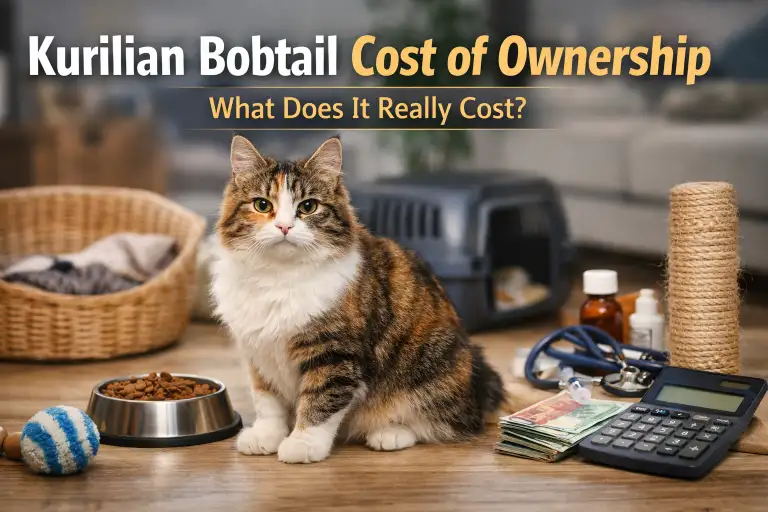
When people ask how much a Kurilian Bobtail costs, they’re usually thinking about the purchase price. That number matters, but it’s only a small part of the financial picture. The real cost of owning a Kurilian Bobtail is the total cost of care over many years, spread across predictable expenses, occasional spikes, and a few surprises most first-time owners don’t plan for.
This guide treats cost of ownership the way a budget should: as an ongoing commitment, not a one-time transaction. Owning a Kurilian Bobtail means paying for food, litter, routine veterinary care, enrichment, and preventive health needs every month, with additional costs appearing annually or unexpectedly. Over time, even modest recurring expenses add up to a meaningful long-term financial obligation.
It’s also important to understand why cost estimates for this breed vary so widely online. Differences in lifestyle, housing, local veterinary pricing, diet choices, and health outcomes can shift ownership costs significantly. Two Kurilian Bobtails can live very different financial lives depending on whether they’re indoor or outdoor, travel frequently with their owner, or develop age-related health needs later on.
Throughout this article, all costs are discussed as ranges and scenarios, not guarantees. The goal isn’t to scare or oversell—it’s to help you decide whether owning a Kurilian Bobtail fits comfortably within your financial reality. If you can plan for the typical costs and absorb the occasional expensive year without stress, ownership is usually manageable. If not, it’s better to recognize that early than after you’ve already made a long-term commitment.
In the sections that follow, we’ll break down where the money actually goes, which costs are easy to predict, which ones catch owners off guard, and how those expenses change over a cat’s lifetime.
How Much Does a Kurilian Bobtail Really Cost to Own?
When people ask how much a Kurilian Bobtail costs, they’re usually thinking about the purchase price. That number matters, but it’s only a small part of the financial picture. The real cost of owning a Kurilian Bobtail is the total cost of care over many years, spread across predictable expenses, occasional spikes, and a few surprises most first-time owners don’t plan for.
This guide treats cost of ownership the way a budget should: as an ongoing commitment, not a one-time transaction. Owning a Kurilian Bobtail means paying for food, litter, routine veterinary care, enrichment, and preventive health needs every month, with additional costs appearing annually or unexpectedly. Over time, even modest recurring expenses add up to a meaningful long-term financial obligation.
It’s also important to understand why cost estimates for this breed vary so widely online. Differences in lifestyle, housing, local veterinary pricing, diet choices, and health outcomes can shift ownership costs significantly. Two Kurilian Bobtails can live very different financial lives depending on whether they’re indoor or outdoor, travel frequently with their owner, or develop age-related health needs later on.
Throughout this article, all costs are discussed as ranges and scenarios, not guarantees. The goal isn’t to scare or oversell—it’s to help you decide whether owning a Kurilian Bobtail fits comfortably within your financial reality. If you can plan for the typical costs and absorb the occasional expensive year without stress, ownership is usually manageable. If not, it’s better to recognize that early than after you’ve already made a long-term commitment.
Monthly and Annual Ownership Costs You Should Budget For
After the first setup costs, owning a Kurilian Bobtail becomes a regular monthly and yearly responsibility. These costs may feel small on their own, but they repeat again and again, which is why planning matters.
Monthly costs
These are the expenses you’ll see almost every month.
Food
Your cat needs daily meals for many years. Better food often costs more, but it can help support long-term health. Food costs stay steady, which makes them easier to plan for.
Litter and cleaning supplies
Litter is a constant need. You may also buy cleaning sprays or liners to keep things fresh. These costs are small but never go away.
Toys and enrichment
Kurilian Bobtails are active and smart. They need playtime and mental stimulation. Toys wear out or get boring, so replacing them is normal.
Basic grooming
Even cats that groom themselves still need help sometimes. This may include brushes, nail trimmers, or occasional grooming help.
Annual and periodic costs
Some costs do not happen every month, but they are still part of ownership.
Routine vet visits
Most cats need a regular check-up to stay healthy. These visits help catch problems early and keep vaccinations up to date.
Preventive care
This includes things like parasite prevention or booster shots. These costs help avoid bigger problems later.
Replacing supplies
Scratching posts, beds, and carriers don’t last forever. Over time, they need to be replaced.
Travel and pet care
If you travel, you may need a pet sitter or boarding service. This cost is easy to forget but important to plan for.
Why these costs add up
Monthly and yearly costs are the core cost of ownership. Missing even one category in your budget can cause stress later. Planning for them early helps make ownership smoother and more enjoyable.
Unexpected, Emergency, and Long-Term Costs
Not all costs come on a schedule. Some expenses show up without warning, and these are often the hardest to handle if you are not prepared.
Emergency vet visits
Cats can get sick or hurt even when they are well cared for. This may include:
- Sudden illness
- Accidents inside or outside the home
- Eating something they should not
Emergency vet visits often cost more than regular visits because they happen fast and may need tests or treatment right away.
Illness and ongoing care
Some health problems need long-term care. This can mean:
- Repeat vet visits
- Special food
- Ongoing medicine
These costs can last months or even years.
Aging-related costs
As Kurilian Bobtails get older, their care needs often increase. Older cats may need:
- More vet checkups
- Dental care
- Help with movement or comfort
Costs usually rise slowly with age, which makes them easy to overlook.
End-of-life care
Every pet owner eventually faces this stage. Costs here are not only financial but also emotional. Planning ahead helps reduce stress when decisions are harder to make.
Why planning matters
Many owners believe problems “won’t happen to their cat.” Most of the time, cats are healthy—but not always. Having room in your budget for unexpected costs helps you focus on care, not money, when something goes wrong.
Can You Afford a Kurilian Bobtail? Final Cost Breakdown and Owner Guidance
By now, you’ve seen that owning a Kurilian Bobtail is not just about buying a cat. It is a long-term money and time responsibility that lasts for many years.
When you look at the full picture, the total cost comes from:
- One-time setup costs at the beginning
- Monthly and yearly care costs that repeat
- Unexpected and emergency costs that can happen at any time
Even small monthly expenses can turn into a large amount over a cat’s lifetime. This is normal and true for all cats, but it matters more with a rare breed where some costs may be higher.
Questions to ask yourself before deciding
Before bringing a Kurilian Bobtail home, it helps to ask:
- Can I comfortably pay for monthly care without stress?
- Do I have savings or backup plans for emergencies?
- Am I ready for higher costs as the cat gets older?
- Will my housing or job situation change soon?
Answering these honestly is part of being a responsible owner.
Cost is not about being rich
You do not need to be wealthy to own a Kurilian Bobtail. You do need:
- Stable income
- Basic savings
- Willingness to plan ahead
Many problems happen when people rush into ownership without thinking long-term.
Final thoughts
A Kurilian Bobtail can be a wonderful companion, but only when its needs fit your life and budget. Planning ahead makes ownership less stressful and more enjoyable for both you and the cat.
For more detailed information about the Kurilian Bobtail breed — including history, personality, and general care tips — you can visit this breed profile from The Spruce Pets: https://www.thesprucepets.com/kurilian-bobtail-cat-breed-profile-5186554

Ata Ur Rehman is the founder of Pet Age in Human Years Calculator, an educational platform that provides age conversion charts and lifespan guides for dogs, cats, birds, and other companion animals. His work focuses on helping pet owners understand how animal ages translate into human years using commonly accepted age conversion formulas and published lifespan averages.
The website compiles breed and species lifespan data from kennel clubs, breed organizations, and general animal lifespan studies to present simple and easy-to-understand guides for pet owners worldwide.
This website was created to centralize animal age conversion charts into one easy reference platform for pet owners.