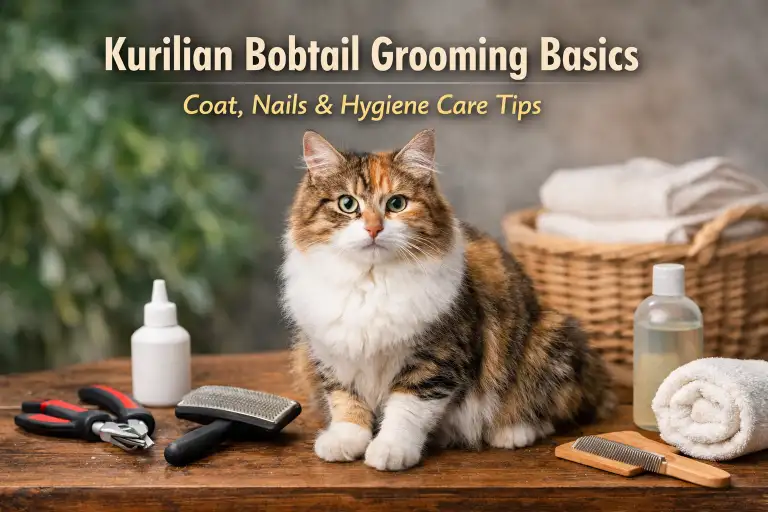
Kurilian Bobtails are often described as low-maintenance cats, but that description can be misleading for new owners. While they do not require intensive grooming like some long-haired breeds, they still rely on regular human help to stay comfortable, clean, and healthy. Understanding why and how their grooming needs differ is the foundation of safe, stress-free care.
Kurilian Bobtails come in two coat varieties: short-haired and semi-long-haired. Both have a dense, resilient coat that evolved for harsh climates, which means the fur is not delicate—but it does shed and can tangle if ignored. The undercoat becomes thicker during seasonal changes, especially in spring and fall, increasing loose hair and the risk of minor matting in friction areas.
Age also plays a major role in grooming needs. Kittens are still learning how to groom themselves and benefit from gentle handling early on. Adult Kurilian Bobtails are usually excellent self-groomers but still need routine maintenance. Seniors often groom less effectively due to stiffness, dental issues, or reduced mobility, which makes owner involvement more important.
Lifestyle matters too. Indoor Kurilian Bobtails typically accumulate more loose fur, while outdoor or indoor-outdoor cats may bring in dirt, plant debris, or oils that require closer coat checks. None of these situations mean heavy grooming—but they do mean consistent grooming.
The table below gives a clear overview of how coat type and life stage affect grooming needs.
Kurilian Bobtail grooming needs by coat type and age
| Category | Grooming impact | What owners should know |
|---|---|---|
| Short coat | Low mat risk | Weekly brushing still needed to remove loose hair |
| Semi-long coat | Moderate mat risk | Chest, belly, and armpits need regular checks |
| Kitten | Learning phase | Short, positive sessions build lifelong tolerance |
| Adult | Stable coat | Routine maintenance prevents buildup |
| Senior | Reduced self-grooming | More frequent assistance may be needed |
One of the most important things to understand is what Kurilian Bobtails cannot manage on their own. They cannot trim their nails, clean their ears safely, remove excess shedding efficiently, or deal with developing mats in hard-to-reach areas. These tasks fall entirely on the owner and are easiest when handled regularly rather than waiting for a problem to appear.
When grooming is approached as light, routine care instead of occasional “fix-it” sessions, Kurilian Bobtails tend to tolerate it well and often relax into the process. This mindset sets the stage for brushing, nail trimming, and other grooming tasks covered in the next sections.
Brushing and Coat Care for Kurilian Bobtails
Brushing is the most important grooming task for Kurilian Bobtails. Even though their coat is not high-maintenance, brushing helps remove loose hair, lowers shedding around the home, and prevents small tangles from turning into painful mats.
Kurilian Bobtails can have a short coat or a semi-long coat. Short-haired cats usually need less brushing, but they still shed. Semi-long-haired Bobtails need more attention, especially in areas where the fur rubs together when they move or lie down.
Most owners make the mistake of brushing only when they see a problem. Brushing works best when it is done before the coat looks messy.
Brushing frequency guide
| Coat type | Normal season | Shedding season |
|---|---|---|
| Short coat | Once a week | Two times a week |
| Semi-long coat | Two times a week | Three to four times a week |
Shedding seasons usually happen in spring and fall. During these times, your cat may shed much more than usual. Brushing a little more often during these weeks keeps the coat comfortable and clean.
When brushing your Kurilian Bobtail, move slowly and gently. Start at the neck and work your way down the body. Always brush in the direction the fur grows. Use short strokes and stop if your cat becomes tense or tries to move away.
Some parts of the body tangle faster than others. These areas need extra care.
Common tangle zones
| Area | Why it tangles | What owners should do |
|---|---|---|
| Chest | Constant movement | Brush gently and often |
| Armpits | Rubbing while walking | Check every session |
| Belly | Licking and softness | Light brushing only |
| Tail base | Natural oil buildup | Slow, careful strokes |
If you find a small tangle, try to loosen it with gentle brushing. Never pull hard and never cut mats with scissors. Cat skin is thin and easy to injure. If a mat will not loosen, it is safer to ask a professional groomer or a veterinarian for help.
Keep brushing sessions short, especially in the beginning. Even five minutes is enough. Ending the session before your cat becomes upset helps build trust and makes future grooming easier.
Essential Grooming Tasks: Nails, Ears, Eyes, and Bathing
Brushing keeps the coat healthy, but Kurilian Bobtails also need help with a few other basic grooming tasks. These tasks are simple, but they must be done carefully to keep your cat safe and calm.
Nail trimming is important even for active cats. Kurilian Bobtails climb, jump, and play, but their nails still grow too long. Long nails can snag on fabric, scratch skin, or grow into the paw pad.
Most cats need their nails trimmed every two to four weeks. Trim only the sharp tip of the nail. Never cut into the pink area inside the nail, called the quick, because it can bleed and hurt. If your cat pulls away or becomes upset, stop and try again another day.
Ear care should be gentle and limited. Healthy cat ears are usually clean and have no strong smell. Check your cat’s ears once a week. If you see a small amount of dirt, you can wipe the outer ear with a soft, damp cloth. Never push anything deep into the ear. Redness, bad odor, or thick discharge means it is time to call a vet.
Eye care is usually needed only when there is visible dirt or tear buildup. Use a clean, soft cloth and warm water to wipe away debris from the corner of the eye. Always wipe outward and use a fresh area of the cloth for each eye. Do not use eye drops or medicine unless your vet tells you to.
Bathing is rarely needed for Kurilian Bobtails. Most cats clean themselves very well. Baths may be helpful only if your cat gets into something dirty or oily that brushing cannot remove. Do not bathe your cat just because of normal shedding or light odor.
Grooming task frequency guide
| Task | How often | Important notes |
|---|---|---|
| Nail trimming | Every 2–4 weeks | Cut tips only |
| Ear check | Weekly | Clean only if dirty |
| Eye cleaning | As needed | Use soft cloth |
| Bathing | Rare | Only when necessary |
| Dental care | A few times a week | Start slowly |
Dental care is often skipped, but it matters. Plaque can build up and cause pain over time. If possible, use a cat-safe toothbrush or dental product recommended by a vet. Go slowly and do not force your cat to accept it all at once.
Keep grooming sessions calm and short. It is better to stop early than to push your cat too far.
Safe Handling, Common Mistakes, and When to Get Professional Help
How you handle your Kurilian Bobtail during grooming is just as important as the grooming itself. Most grooming problems happen not because the task is hard, but because the cat feels scared or forced.
Kurilian Bobtails are usually confident and active cats, but even calm cats can become stressed during grooming. Always groom in a quiet place where your cat feels safe. Let your cat sit or lie in a natural position. Avoid holding them down or using force.
Watch your cat’s body language closely. Cats give clear signs when they are uncomfortable. Stopping early is better than pushing through stress.
Cat stress signals during grooming
| Signal | What it means | What you should do |
|---|---|---|
| Ears flat or sideways | Strong stress | Stop grooming |
| Tail lashing | Overstimulated | Pause or end session |
| Growling or hissing | Feeling threatened | End grooming |
| Stiff body | Uncomfortable | Switch task or stop |
If you see these signs, stop grooming and give your cat space. Trying again later is safer and builds trust over time.
Many beginners also make common grooming mistakes that can cause fear or injury.
Common grooming mistakes
| Mistake | Why it is a problem |
|---|---|
| Skipping brushing | Leads to mats and shedding buildup |
| Cutting mats with scissors | High risk of skin injury |
| Bathing too often | Dries out skin |
| Holding or forcing the cat | Causes long-term fear |
| Ignoring stress signs | Makes grooming harder later |
It is important to know when home grooming is no longer the right choice. You should contact a professional groomer or a veterinarian if your Kurilian Bobtail has tight mats, painful skin, severe nail problems, ear infections, or becomes aggressive during grooming. Professionals have the training and tools to handle these situations safely.
Grooming should feel routine and calm, not like a battle. Small, regular sessions build trust and keep your cat healthy without stress.
Final Grooming Summary for Kurilian Bobtail Owners
Kurilian Bobtails are not hard to groom, but they still need regular care. Light grooming done often is safer and easier than trying to fix problems later.
Brushing helps control shedding and keeps the coat comfortable. Nail trimming prevents pain and accidents. Ear and eye checks help catch problems early. Baths are rarely needed and should only be done when truly necessary.
Always keep grooming calm and short. Stop if your cat shows stress. Forcing grooming can make your cat afraid and harder to handle in the future. It is okay to ask a professional groomer or a vet for help when something feels unsafe.
The most important rule is consistency. Small, gentle grooming sessions build trust and keep your Kurilian Bobtail healthy and happy.
For more general guidance on safe cat care and handling, you can also read the ASPCA’s official guide on cat grooming, which explains basic grooming needs and safety tips for all cats:
https://www.aspca.org/pet-care/cat-care/cat-grooming-tips

Ata Ur Rehman is the founder of Pet Age in Human Years Calculator, an educational platform that provides age conversion charts and lifespan guides for dogs, cats, birds, and other companion animals. His work focuses on helping pet owners understand how animal ages translate into human years using commonly accepted age conversion formulas and published lifespan averages.
The website compiles breed and species lifespan data from kennel clubs, breed organizations, and general animal lifespan studies to present simple and easy-to-understand guides for pet owners worldwide.
This website was created to centralize animal age conversion charts into one easy reference platform for pet owners.