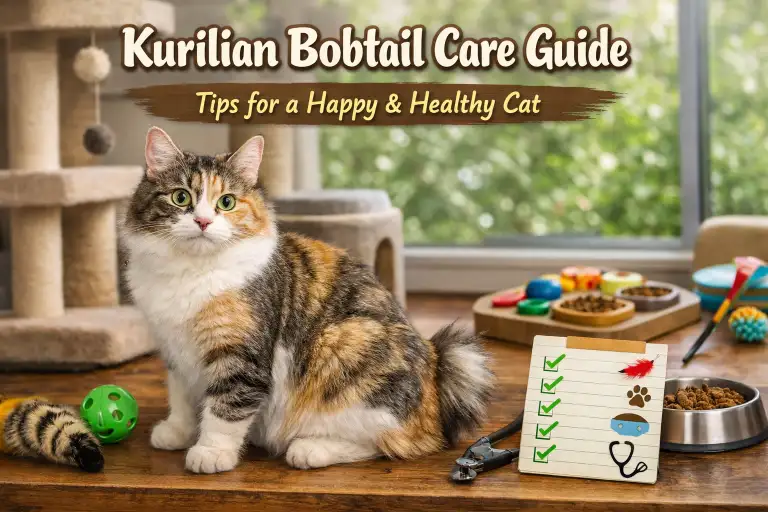
Kurilian Bobtail care isn’t difficult, but it is different from caring for a typical low-energy house cat. This breed developed naturally on the Kuril Islands, where cats needed strength, intelligence, and adaptability to survive. Those traits still show up clearly in modern Kurilian Bobtails—and they shape how you should care for them.
If you’re expecting a cat that’s happy sleeping all day with minimal interaction, this may not be the right breed. Kurilian Bobtails are active, alert, and deeply engaged with their environment, and their care needs reflect that.
Here’s what sets Kurilian Bobtail care apart from generic cat care:
- High activity and athleticism
Kurilian Bobtails are muscular, agile cats that enjoy climbing, jumping, and interactive play. A lack of physical outlets often leads to boredom-related behavior issues, not “bad behavior.” - Strong intelligence and problem-solving ability
This breed thrives on mental stimulation. Puzzle toys, rotating enrichment, and interactive play are not optional extras—they’re part of basic care. - People-oriented but not clingy
Kurilian Bobtails bond closely with their owners and like being involved in daily life, but they’re not constant lap cats. Ignoring their social needs can lead to withdrawal or frustration. - Naturally resilient but not maintenance-free
They’re generally healthy and hardy, but their strength and curiosity mean owners must pay attention to injury risks, weight management, and subtle stress signals.
In practical terms, caring for a Kurilian Bobtail means balancing physical exercise, mental engagement, and routine monitoring, rather than focusing heavily on grooming or complex maintenance. Owners who understand this early tend to find the breed incredibly rewarding; those who don’t often feel “surprised” by how much interaction these cats expect.
This guide focuses on what owners actually need to do—day to day and over time—to keep a Kurilian Bobtail healthy, content, and well-adjusted in a home environment.
Caring for a Kurilian Bobtail is mostly about daily attention and simple habits, not complicated tasks. When their basic needs are met, these cats are calm, confident, and happy.
Below is what a normal care routine looks like for most Kurilian Bobtail owners.
Daily care tasks
Kurilian Bobtails do best with daily interaction. This does not mean hours of work, but it does mean being present.
- Play and movement
Spend at least 20–30 minutes a day on active play. Use toys that let them run, jump, and chase. Short play sessions spread through the day work better than one long session. - Mental stimulation
These cats get bored easily. Puzzle toys, treat games, or simple training help keep their minds busy. - Litter box check
Scoop the litter box once a day. This breed is usually very clean, and a dirty box can cause stress or litter problems. - Food and water check
Make sure fresh water is always available. Watch their appetite and energy, as changes are often the first sign something is wrong.
Weekly and occasional care tasks
These tasks don’t take much time, but they help prevent future problems.
- Brushing the coat
Brush once a week to remove loose hair. During shedding seasons, you may need to brush more often. - Nail trimming
Trim nails every 2–3 weeks if they don’t wear down naturally. - Ear and teeth check
Look inside the ears for redness or dirt. Check the teeth and gums for bad smell or swelling. - Home refresh
Rotate toys and clean scratching areas to keep the environment interesting.
Care routine at a glance
| Care task | How often | Why it matters |
|---|---|---|
| Interactive play | Daily | Prevents boredom and behavior problems |
| Mental games | Daily | Keeps smart cats calm and focused |
| Litter box scooping | Daily | Supports hygiene and comfort |
| Brushing | Weekly | Controls shedding and coat health |
| Nail trimming | Every 2–3 weeks | Prevents scratches and nail issues |
When owners follow a simple routine like this, Kurilian Bobtails usually stay balanced and easy to live with.
Common Kurilian Bobtail Care Mistakes to Avoid
Kurilian Bobtails are usually easy to live with, but many problems happen because owners misunderstand their needs. Most mistakes are not harmful on purpose, but they can slowly affect your cat’s health or behavior.
Here are the most common care mistakes to avoid.
Not giving enough play and activity
Kurilian Bobtails are very active cats. When they do not get enough daily play, they may become bored, restless, or destructive. Scratching furniture, knocking things over, or ignoring people are often signs of boredom, not bad behavior.
Treating them like a quiet lap cat
Some owners expect this breed to be calm and lazy. In reality, Kurilian Bobtails like to be involved, move around, and explore. Forcing cuddles or ignoring their need for movement can cause stress.
Overfeeding because they look strong
This breed has a muscular body, which can make weight gain hard to notice. Overfeeding can lead to joint problems and low energy over time. Always watch body shape and activity level, not just the number on the scale.
Ignoring mental boredom
These cats are smart. If their days feel the same, they may lose interest in toys, people, or routines. Rotating toys and changing play styles helps keep their minds active.
Missing early stress signs
Small behavior changes are often early warning signs. Hiding more than usual, reduced play, or less interest in food can mean stress or discomfort. Catching these signs early makes care easier.
Care mistakes at a glance
| Common mistake | Better care choice |
|---|---|
| Skipping daily play | Short active play every day |
| Too much food | Balanced meals and movement |
| Few toys | Rotate toys weekly |
| Ignoring behavior changes | Observe and act early |
Avoiding these mistakes helps your Kurilian Bobtail stay calm, healthy, and well-behaved in the long run.
Special Care Considerations by Age and Lifestyle
Kurilian Bobtail care can change based on your cat’s age and how they live. A kitten, an adult cat, and a senior cat do not have the same needs. The home setup also matters a lot.
Understanding these differences helps you avoid problems and give better care.
Kurilian Bobtail kitten care
Kittens have high energy and are still learning how to behave.
- Play several short times a day to help burn energy
- Teach gentle play early to avoid biting or scratching
- Provide safe climbing areas to build strength
- Keep routines steady to reduce stress
Early training and social time help kittens grow into calm adults.
Adult Kurilian Bobtail care
Adult Kurilian Bobtails are strong, active, and confident.
- Daily play is still important
- Mental games help prevent boredom
- Watch weight closely, as adults can gain weight quietly
- Respect their independence while staying involved
This stage is usually the easiest if routines are followed.
Senior Kurilian Bobtail care
Older cats slow down, but they still need attention.
- Shorter, gentler play sessions
- Softer bedding and easy-to-reach resting spots
- Watch for stiffness, less jumping, or behavior changes
- More frequent vet checkups
Small changes in care can greatly improve comfort for senior cats.
Indoor-only and outdoor access
Lifestyle affects safety and care needs.
- Indoor cats need more play and enrichment
- Outdoor access increases injury and health risks
- Supervised outdoor time or enclosed patios are safer options
Multi-cat homes
Kurilian Bobtails usually get along well with other cats, but space matters.
- Provide more than one litter box
- Give separate feeding areas
- Allow escape routes and quiet spaces
Good setup helps prevent stress and conflict.
Health Monitoring, Safety Tips, and When to See a Vet
Kurilian Bobtails are usually healthy cats, but no cat is free from health problems. Paying attention to small changes helps you catch issues early, when they are easier to treat.
This section explains what to watch for and when to ask for help.
Daily health checks at home
You do not need special tools to check your cat’s health. Simple observation is enough.
- Watch eating and drinking habits
- Notice changes in energy or play interest
- Check the coat for dullness or heavy shedding
- Look for limping, stiffness, or trouble jumping
Small changes that last more than a day or two should not be ignored.
Common safety risks for Kurilian Bobtails
Because this breed is active and curious, some risks are higher.
- Jumping from high places can cause joint strain
- Chasing objects can lead to falls or injuries
- Open windows and balconies can be dangerous
- Bored cats may chew unsafe items
Keeping the home safe reduces accidents.
Normal behavior vs warning signs
| Normal signs | Warning signs |
|---|---|
| High energy play | Sudden low energy |
| Strong appetite | Refusing food |
| Regular grooming | Matted or greasy coat |
| Curiosity | Hiding often |
If warning signs appear and do not improve, contact a vet.
When to see a veterinarian
You should contact a vet if you notice:
- Loss of appetite for more than 24 hours
- Sudden behavior changes
- Pain, limping, or trouble moving
- Vomiting or diarrhea that does not stop
- Breathing problems or extreme tiredness
Regular checkups help prevent serious problems, especially for senior cats.
For expert-backed, practical cat care guidelines developed with veterinarians and feline behavior specialists, check out the Cat Carer Guides from International Cat Care, the organization behind the former International Society of Feline Medicine (ISFM), which offers trusted advice for everyday feline health and wellbeing: https://icatcare.org/cat-advice/cat-carer-guides

Ata Ur Rehman is the founder of Pet Age in Human Years Calculator, an educational platform that provides age conversion charts and lifespan guides for dogs, cats, birds, and other companion animals. His work focuses on helping pet owners understand how animal ages translate into human years using commonly accepted age conversion formulas and published lifespan averages.
The website compiles breed and species lifespan data from kennel clubs, breed organizations, and general animal lifespan studies to present simple and easy-to-understand guides for pet owners worldwide.
This website was created to centralize animal age conversion charts into one easy reference platform for pet owners.