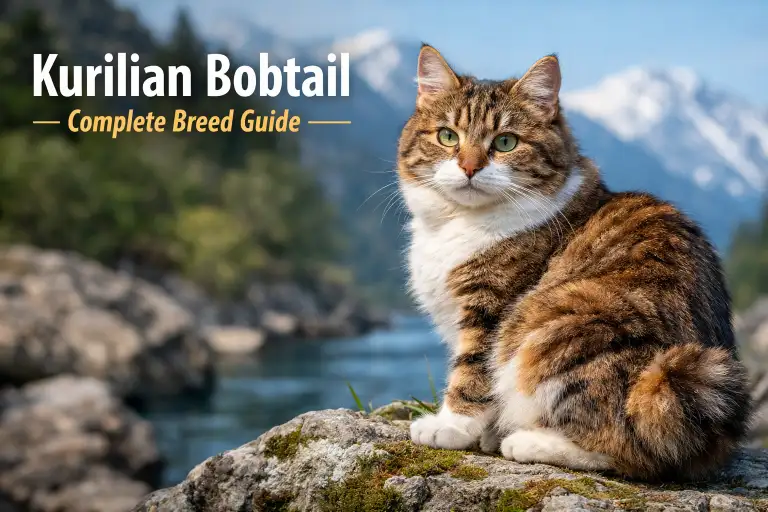
The Kurilian Bobtail is a rare, naturally developed cat breed known for its muscular build, bobbed tail, sharp intelligence, and unusually balanced personality. Originating on the rugged Kuril Islands between Russia and Japan, this breed wasn’t shaped by fashion or extreme breeding goals—it evolved through survival. That natural background still shows in the Kurilian Bobtail’s confidence, adaptability, and robust health today.
Unlike many “exotic” breeds, the Kurilian Bobtail doesn’t feel fragile or overly ornamental. Living with one feels more like sharing your home with a clever, observant companion than a decorative pet. Owners often describe them as dog-like but not needy: they enjoy human company, follow their people from room to room, and like being involved, yet they rarely demand constant attention or lap time.
Before diving deeper, this quick snapshot helps anchor what the breed is really like at a glance.
| Trait | Kurilian Bobtail |
|---|---|
| Origin | Kuril Islands (Russia & Japan) |
| Breed Type | Natural landrace |
| Size Category | Medium to large |
| Energy Level | Moderately high, athletic |
| Affection Style | Loyal, interactive, not clingy |
| Vocalization | Low to moderate |
| Intelligence | Very high |
| Rarity | Rare outside Russia and Europe |
Personality and Temperament in Real Life
The Kurilian Bobtail’s temperament is often described as confident, calm, and quietly affectionate. They tend to bond strongly with their household rather than fixating on a single person, which makes them well-suited to families. That said, many owners notice a subtle preference for one “main” human—the person they check in on most often or choose to sleep near.
Affection from a Kurilian Bobtail is rarely loud or demanding. Instead of constant meowing or insistently climbing into laps, they show love by staying close, observing, and joining whatever you’re doing. It’s common for them to sit nearby rather than on you, or to gently follow you from room to room like a silent supervisor.
They are also notably emotionally steady. This breed is less prone to anxiety-driven behaviors than many high-intelligence cats. Changes in routine, visitors, or moderate household noise are usually handled with curiosity rather than stress—one reason Kurilian Bobtails integrate well into busy homes.
Intelligence Without Chaos
Kurilian Bobtails are exceptionally smart, but their intelligence is not chaotic or destructive by default. They learn patterns quickly, understand household routines, and are skilled problem-solvers. Many owners report their cats figuring out doors, food puzzles, and even simple fetch games on their own.
What sets them apart from some other intelligent breeds is self-regulation. While they enjoy play and mental stimulation, they are not constantly “on.” After a good play session, a Kurilian Bobtail is just as happy to relax and observe quietly.
Vocalization and Communication Style
This breed is not overly vocal, especially compared to Siamese or Oriental cats. When Kurilian Bobtails do vocalize, it’s usually purposeful—soft chirps, trills, or short meows used to communicate rather than demand. Many owners find their voices surprisingly gentle for such a sturdy, athletic cat.
Body language plays a big role in how they communicate. Eye contact, tail movement, and positioning near their humans often say more than sound.
Who This Breed Is (and Isn’t) For
At a high level, the Kurilian Bobtail is ideal for people who want:
- An intelligent, interactive cat without constant attention demands
- A confident breed that adapts well to family life
- A naturally healthy, athletic cat with a grounded temperament
They may be less suitable for someone looking for:
- A constant lap cat
- A very vocal, chatty breed
- A low-interaction, purely decorative pet
Kurilian Bobtail Size, Appearance, and Physical Characteristics
The Kurilian Bobtail is easy to recognize once you know what to look for. This breed is strong, solid, and athletic, with a short tail that makes every cat look a little different. They are not slim or delicate cats. Instead, they are built for movement, jumping, and climbing.
Many people are surprised by how powerful a Kurilian Bobtail feels when they pick one up. Even though they are not huge cats, their muscles are dense and well developed.
Size and Weight
Kurilian Bobtails are medium to large cats. Males are usually bigger and heavier than females. They also grow slowly, often taking several years to fully mature.
| Category | Average Range |
|---|---|
| Adult male weight | 11–15 pounds (5–7 kg) |
| Adult female weight | 8–12 pounds (3.5–5.5 kg) |
| Body length | Medium to long |
| Full maturity | 3–5 years |
Because they mature slowly, young Kurilian Bobtails may look lean at first. Their broad chest and strong body become more noticeable as they grow older.
Body Shape and Build
This breed has a compact but muscular body. The chest is wide, the shoulders are strong, and the legs are sturdy. The back legs are often slightly longer than the front legs, which helps with jumping and gives them a powerful push when they run.
Kurilian Bobtails are very balanced. They do not look short and round like some stocky breeds, and they are not long and thin either. Everything about their body looks practical and natural.
The Bobtail: Short but Unique
The tail is the most famous feature of the Kurilian Bobtail. No two tails are exactly the same. Some are curved, some are kinked, and some look like a small pom-pom.
| Tail Feature | Description |
|---|---|
| Length | Usually 1–5 inches |
| Shape | Curved, bent, or knotted |
| Movement | Flexible, not stiff |
| Uniqueness | Every cat’s tail is different |
Unlike some other short-tailed breeds, the Kurilian Bobtail’s tail is flexible and does not cause spine problems. This is because the breed developed naturally over time.
Coat Type and Colors
Kurilian Bobtails come in two coat types: shorthair and longhair. Both coats are thick and soft, designed to protect the cat from cold and wet weather.
| Feature | Shorthair | Longhair |
|---|---|---|
| Texture | Dense and smooth | Soft with a light plume |
| Shedding | Moderate | Moderate to slightly higher |
| Tail fur | Short and plush | Fluffy, often pom-pom shaped |
They come in many colors and patterns, including tabby, solid, tortoiseshell, and bicolor. Almost all colors are accepted, except those linked to hybrid breeding.
Face, Eyes, and Expression
Kurilian Bobtails have a broad face with gentle curves. Their eyes are large, round to slightly oval, and set wide apart. The expression often looks alert and curious, as if the cat is always watching and thinking.
Their ears are medium-sized and open, helping them stay aware of their surroundings. Overall, the face matches the breed’s personality: calm, confident, and intelligent.
How They Look Compared to Other Bobtail Breeds
People sometimes confuse the Kurilian Bobtail with the Japanese Bobtail or the Manx. The biggest differences are:
- Kurilian Bobtails are heavier and more muscular
- Their tail is flexible and varied, not stiff or flat
- Their body looks more powerful and athletic
These physical traits reflect the breed’s natural island origins and active lifestyle.
Kurilian Bobtail Behavior, Activity Level, and Training Needs
Living with a Kurilian Bobtail is usually calm, fun, and interesting. This breed is active and smart, but not wild or hard to manage. They like to move, explore, and play, but they also know how to relax when the day is quiet.
Their behavior is shaped by their natural history. These cats learned to hunt, think, and adapt on their own, and that shows in daily life.
Daily Activity Level
Kurilian Bobtails have a medium to high energy level, but their energy comes in short bursts. They are not the type to run nonstop all day. Instead, they play hard for a while and then rest.
Most enjoy:
- Climbing cat trees or shelves
- Jumping onto high places
- Short, fast games of chase
- Watching birds or people from windows
They do well in both houses and apartments, as long as they have space to climb and things to do.
| Activity Trait | What to Expect |
|---|---|
| Energy style | Short active bursts |
| Need for play | Daily, but not constant |
| Best play time | Morning and evening |
| Indoor behavior | Curious, alert, calm |
Play Style and Mental Needs
This breed is very smart, so play is not just about running. Kurilian Bobtails like toys that make them think. Puzzle toys, treat games, and toys that move in a natural way work best.
Many owners notice that their cats enjoy:
- Fetching small toys
- Figuring out food puzzles
- Opening simple doors or boxes
- Learning routines very quickly
If they get bored, they may start exploring places they should not, like counters or cabinets. This is not bad behavior—it is a sign they need more mental play.
Training and Learning
Kurilian Bobtails are easy to train compared to many other cat breeds. They learn fast and remember rules well.
They respond best to:
- Gentle voices
- Rewards like treats or play
- Short training sessions
Harsh training or yelling does not work with this breed. They are confident cats and may ignore people who are rough or impatient.
Many can learn:
- Their name
- Simple commands
- Litter box habits very quickly
- Leash walking with early practice
Behavior at Night
Kurilian Bobtails are usually not very noisy at night. If they get enough play during the day, they sleep well and do not wake people often. Night activity problems usually happen only when they are bored or under-stimulated.
Common Behavior Challenges
Like all smart cats, Kurilian Bobtails can develop habits that surprise new owners:
- Climbing higher than expected
- Opening doors or drawers
- Trying to “help” with daily tasks
These behaviors are normal for the breed and can be managed with play, toys, and clear routines.
Overall, the Kurilian Bobtail is an active but well-balanced cat. They enjoy life, learn quickly, and fit into many homes without causing chaos.
Kurilian Bobtail Care, Health, and Lifespan
The Kurilian Bobtail is known as a strong and healthy cat, especially compared to many modern breeds. Because this breed developed naturally and not through heavy breeding, it usually has fewer serious health problems. Still, good care is important to help them live a long and comfortable life.
Lifespan and Overall Health
Most Kurilian Bobtails live a long life when kept indoors and given regular vet care. Their strong muscles and active nature help them stay fit as they age.
| Health Factor | What to Expect |
|---|---|
| Average lifespan | 12–16 years |
| Body strength | Strong and muscular |
| Genetic health | Very good overall |
| Energy in old age | Often active longer than average |
Many owners say their Kurilian Bobtail stays playful even as a senior cat. Regular play helps protect their joints and keeps their weight healthy.
Common Health Concerns
Kurilian Bobtails do not have many known breed-linked diseases. This is a big reason why vets often view them as a low-risk breed.
Possible concerns to watch for:
- Joint stress if the cat becomes overweight
- Minor injuries from jumping or climbing
- Dental issues if teeth are not checked
Their short tail does not cause spine problems. Unlike some bobtail breeds, their tail is flexible and natural, which lowers the risk of pain or movement issues.
Grooming Needs
Kurilian Bobtails are easy to groom. Their coat does not mat easily, and they keep themselves clean.
| Grooming Area | Care Level |
|---|---|
| Shedding | Moderate |
| Brushing | 1–2 times per week |
| Bathing | Rare, only if dirty |
| Nail trimming | Regular checks |
| Ear cleaning | Occasional |
Longhaired Kurilian Bobtails may need a little more brushing, especially during shedding seasons. Many of them do not mind water, which makes bathing easier than expected.
Seasonal Shedding
They usually shed more in spring and fall. Extra brushing during these times helps reduce loose hair in the home.
Vet Care and Checkups
Like all cats, Kurilian Bobtails need:
- Yearly vet visits
- Vaccinations
- Parasite prevention
- Dental checks
Because they are active cats, regular health checks help catch small issues early.
Overall, the Kurilian Bobtail is a low-maintenance breed when it comes to health and grooming. With basic care and attention, they often stay healthy and active for many years.
Cost, Pros & Cons, and Kurilian Bobtail vs Similar Breeds
Before choosing a Kurilian Bobtail, it is important to understand the cost, the good points, and the challenges of owning this breed. This final section helps readers decide if this cat is the right fit for their home and budget.
Cost to Own a Kurilian Bobtail
Kurilian Bobtails are rare outside their home region, so they are more expensive than many common cat breeds. Most kittens come from specialized breeders, and some are imported.
| Cost Type | Estimated Range |
|---|---|
| Kitten price | $800–$2,000+ |
| Yearly basic care | $600–$1,000 |
| Vet and preventive care | $200–$400 per year |
| Grooming supplies | Low to moderate |
Costs may be higher if the cat is imported or if pet insurance is added. Even though the breed is healthy, insurance can help with unexpected injuries from their active lifestyle.
Pros and Cons of the Kurilian Bobtail
Every breed has strengths and weaknesses. The Kurilian Bobtail is no different.
| Pros | Cons |
|---|---|
| Very intelligent and curious | Rare and hard to find |
| Strong and healthy breed | Can get bored without play |
| Loyal but not needy | Not a constant lap cat |
| Good with families and pets | May climb high places |
| Easy grooming needs | Higher upfront cost |
Comparison With Similar Breeds
People often compare the Kurilian Bobtail with other short-tailed cats. Here is a simple look at how they differ.
| Breed | Size | Energy Level | Personality |
|---|---|---|---|
| Kurilian Bobtail | Medium to large | Medium–high | Confident, loyal, calm |
| Japanese Bobtail | Small to medium | High | Very active, vocal |
| Manx | Medium | Medium | Quiet, gentle |
| American Bobtail | Medium to large | Medium | Friendly, relaxed |
The Kurilian Bobtail stands out for its balance. It is playful but calm, smart but steady, and active without being too demanding.
Is the Kurilian Bobtail Right for You?
This breed is a great choice if you want:
- A smart and interactive cat
- A breed that fits well in family homes
- A cat that is playful but not noisy
- A naturally healthy and strong companion
It may not be the best choice if you want:
- A very cheap or easy-to-find kitten
- A cat that sits on your lap all day
- A very low-energy pet
For the right owner, the Kurilian Bobtail can be a loyal, fun, and long-lasting companion.
For official breed standards and recognition details, you can learn more about the Kurilian Bobtail from the International Cat Association (TICA), which provides authoritative information on the breed’s history, traits, and standards: https://tica.org/breeds/browse-all-breeds?view=article&id=840:kurilian-bobtail&catid=79

Ata Ur Rehman is the founder of Pet Age in Human Years Calculator, an educational platform that provides age conversion charts and lifespan guides for dogs, cats, birds, and other companion animals. His work focuses on helping pet owners understand how animal ages translate into human years using commonly accepted age conversion formulas and published lifespan averages.
The website compiles breed and species lifespan data from kennel clubs, breed organizations, and general animal lifespan studies to present simple and easy-to-understand guides for pet owners worldwide.
This website was created to centralize animal age conversion charts into one easy reference platform for pet owners.