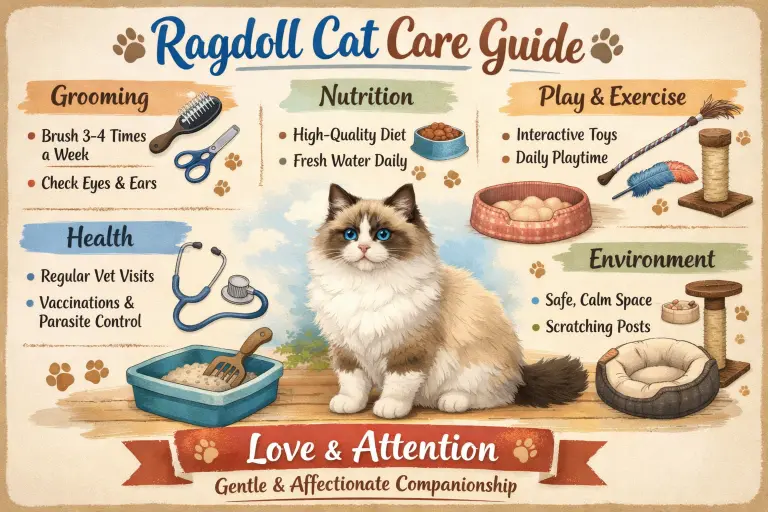
Ragdoll cats are known for their soft fur, calm nature, and big beautiful blue eyes. They are one of the most popular cat breeds in the world because they are gentle, friendly, and love to be around people. Many families choose Ragdolls as pets because they are good with kids and other pets. But even though they seem easy‑going, Ragdolls still need proper care to stay healthy and happy.
This guide will teach you everything you need to know about taking care of a Ragdoll cat. You will learn about daily routines, health checks, what tools you need, and how to handle special situations like raising a kitten or looking after a senior cat. The language used here is simple, so it is easy for anyone to follow — even younger readers.
People often search for “how to take care of a Ragdoll cat,” “Ragdoll grooming tips,” or “Ragdoll health issues to watch.” This article answers all of these topics in a clear and easy way. We want you to feel confident that you can give your Ragdoll the best life possible.
By the end of this guide, you will know how to feed your Ragdoll properly, how often to groom and brush them, what signs of sickness to watch for, and how to set up a safe home environment. You will also understand how to care for Ragdolls at different life stages: kitten, adult, and senior.
Daily & Weekly Care Routine for Ragdolls
Taking care of your Ragdoll every day helps keep them healthy and happy. Good care starts with the basics: feeding, grooming, playing, and checking for any changes in behavior or health.
Most Ragdolls enjoy eating at regular times every day, usually twice a day. Feeding them at the same time helps keep their digestion normal and makes their day predictable. Make sure fresh water is always available, as many cats don’t drink enough unless water is easy to find and clean.
Grooming is also part of daily care, but not every day for every task. Ragdolls have medium‑long fur that does not mat easily, but they do shed a lot. Daily brushing helps prevent loose hair from tangling and reduces shedding around the house. Use a soft brush and be gentle so the experience feels good for your cat.
Play and interaction are important too. Ragdolls are social cats and enjoy spending time with their owners. Gentle play with toys like feather wands or soft balls keeps them active and helps prevent boredom or weight gain. A few short play sessions every day can make a big difference in their mood and energy.
Sometimes Ragdolls will show small changes in behavior that you might miss if you don’t watch them closely. Every day, take a moment to look at how they are moving, eating, and resting. This simple habit can help you catch health problems early.
Here is a table showing the tasks you should do daily compared to weekly:
Daily vs Weekly Care Tasks
| Task | Daily | Weekly |
|---|---|---|
| Feeding at set times | ✓ | |
| Fresh water check | ✓ | |
| Brush fur | ✓ | |
| Play & interaction | ✓ | |
| Litter cleaning | ✓ | |
| Nail check/trimming | ✓ | |
| Ear cleaning | ✓ | |
| Teeth brushing | ✓ | |
| Full body check | ✓ |
Daily care focuses on the basics that keep your Ragdoll comfortable and secure. Weekly tasks are deeper check‑ins that help keep them clean and catch issues before they become serious.
Feeding your Ragdoll the right amount is very important. Too much food can lead to weight gain, which is common in Ragdolls if they don’t get enough exercise. Follow the food brand’s instructions and ask your vet if you are unsure about portion size.
Grooming once a week should include cleaning the ears, trimming nails, and checking teeth. These tasks keep your Ragdoll tidy and help avoid infections or dental issues. Some cats may need extra help with teeth brushing if they do not do it on their own.
Finally, mental and emotional care is part of daily life too. Ragdolls thrive in calm environments. Talking to your cat, gentle petting, and giving quiet attention every day strengthens your bond. If your cat hides or seems less interested in play, it may be a sign they need more attention or could be feeling unwell.
Health, Warning Signs & Vet Guidance
Keeping your Ragdoll healthy means more than feeding and grooming. It means knowing what is normal and what is not. Ragdolls can face certain health issues that are more common in their breed. Being aware of these issues helps you act early if something goes wrong.
One condition Ragdolls can develop is called hypertrophic cardiomyopathy (HCM). HCM is a heart condition that can make it hard for the heart to pump blood. It does not always show clear symptoms at first, so routine vet check‑ups are key. Your vet can use an ultrasound to check the heart before any problem becomes serious.
Another common issue is dental disease. Cats do not brush their own teeth, so plaque can build up and lead to gum problems or tooth loss. Weekly teeth brushing or dental chews made for cats can help. If you notice bad smell from the mouth, drooling, or trouble eating, see a vet.
Urinary tract problems can also affect Ragdolls. Signs of this include straining to urinate, blood in the urine, or using the litter box more often. These signs are serious and need immediate vet care because they can become painful and dangerous.
Here is a table of common health problems seen in Ragdolls and what you might notice:
Common Ragdoll Health Issues & Signs
| Health Issue | Common Signs | What to Do |
|---|---|---|
| Hypertrophic Cardiomyopathy (HCM) | Lethargy, rapid breathing, fainting | Schedule vet heart check with ultrasound |
| Dental Disease | Bad breath, drooling, trouble eating | Regular teeth brushing & vet dental check |
| Urinary Tract Issues | Straining, blood in urine, frequent trips to litter box | Immediate vet visit |
| Obesity | Weight gain, less movement, large belly | Adjust diet, add play sessions |
| Ear Infections | Itching, smell, discharge | Clean ears weekly, vet if severe |
Knowing these signs helps you act fast when something is wrong. Never wait too long if you notice unusual symptoms. Early care improves the chances of quick recovery.
Regular vet visits are part of good care. When you first get your Ragdoll, your vet should check for any birth problems and set up a vaccination schedule. After that, most cats benefit from a yearly wellness check. During these visits, your vet can weigh your cat, check their teeth and ears, and make sure their body systems are working well.
Your vet can also recommend when to give vaccines and preventive medicines for fleas, ticks, and worms. These protect your cat even if they are mostly indoors. It is better to prevent health problems than treat them after they start.
Home Setup & Environment for Ragdolls
A Ragdoll’s home should be safe, comfortable, and full of opportunities for play and rest. Ragdolls are indoor cats by nature. They do not like rough outdoor life or dangers like cars and predators. A good indoor home helps them live a long, safe life.
Start by choosing the right litter box. Ragdolls often prefer open boxes rather than covered ones because they like space. Place the litter box in a quiet spot where your cat feels secure. Make sure to have one more litter box than the number of cats you have — for example, two boxes for one cat.
Ragdolls are smart and can get bored if they do not have enough attention or toys. Provide toys that move or make gentle sounds. A scratching post helps them keep nails healthy and saves your furniture. A tall cat tree gives them a place to climb and rest. Some Ragdolls enjoy sitting by windows to watch outside activity.
Here is a table of recommended tools and what they are used for:
Recommended Tools & Supplies
| Tool | Purpose | Notes |
|---|---|---|
| Quality dry food & wet food | Balanced diet | Follow vet guidelines |
| Water fountain | Encourages drinking | Fresh water is key |
| Litter box (extra) | Hygiene | Clean daily |
| Soft brush | Grooming | Reduces shedding |
| Scratching post | Nail care | Saves furniture |
| Cat tree or shelves | Exercise & resting | Helps keep muscles strong |
| Variety of toys | Mental stimulation | Rotate toys weekly |
Try to set up calm spots for your cat to rest. Ragdolls often choose soft areas like blankets or padded beds. Place these in quiet parts of your home where they can nap undisturbed. Ragdolls enjoy human company, so having a soft bed near your favorite chair can make them feel included.
If you want to let your cat experience the outdoors safely, a harness and leash or a “catio” (an enclosed outdoor space) can help. Never let your cat roam free outside without supervision, as Ragdolls are not well‑adapted to outdoor danger.
Multi‑cat homes need extra care too. Ragdolls are usually friendly but still need personal space. Give each cat their own food bowl, water bowl, and litter box to reduce stress and competition. If cats fight or hide for long periods, it may take time and gradual introductions to help them live well together.
Ragdoll Life Stages: Kitten, Adult & Senior Care
Ragdolls have changing care needs as they grow. Kittens are lively, curious, and growing fast, so they need more frequent feeding and play. Adult cats are calmer but need regular exercise to stay fit. Senior cats move less and may need special food and more gentle care.
Kitten care starts with building trust and teaching good habits. Kittens should have small meals more often because they burn lots of energy. Litter training is usually quick, but you should show them the box and clean it often. Social play helps them learn how to interact with people and other pets.
As your Ragdoll becomes an adult (about 1–6 years old), their feeding can go to twice a day with consistent portions. Continue brushing their fur regularly, and give them toys that make them think, like puzzle feeders. Adults can enjoy longer playtimes and may learn simple tricks or games.
Senior Ragdolls (7 years and older) slow down and can get stiff muscles. Their diet may need more protein for muscle health but fewer calories to avoid weight gain. Soft bedding and easy‑to‑reach water and food help older cats stay comfortable. Daily short play sessions keep joints moving without tiring them out.
All life stages benefit from regular vet visits. Kittens need vaccines and growth checks, adults need wellness exams, and seniors may need checks for teeth, kidneys, or arthritis. By paying attention to your cat’s body and behavior changes, you can adjust their care as they age.
Conclusion and Next Steps
You now have a complete guide to taking care of your Ragdoll cat. From setting up their home to daily routines and health checks, every part of their life is covered in simple, easy‑to‑understand language. By following these tips, you can help your Ragdoll live a healthy, happy life.If you want more detailed help with specific issues like feeding schedules or toy recommendations, feel free to ask or visit reputable cat care sites for more tips.For more trusted advice from feline health experts, you can also visit the Cornell University College of Veterinary Medicine cat care guide at https://www.vet.cornell.edu/departments-centers-and-institutes/cornell-feline-health-center.

Ata Ur Rehman is the founder of Pet Age in Human Years Calculator, an educational platform that provides age conversion charts and lifespan guides for dogs, cats, birds, and other companion animals. His work focuses on helping pet owners understand how animal ages translate into human years using commonly accepted age conversion formulas and published lifespan averages.
The website compiles breed and species lifespan data from kennel clubs, breed organizations, and general animal lifespan studies to present simple and easy-to-understand guides for pet owners worldwide.
This website was created to centralize animal age conversion charts into one easy reference platform for pet owners.