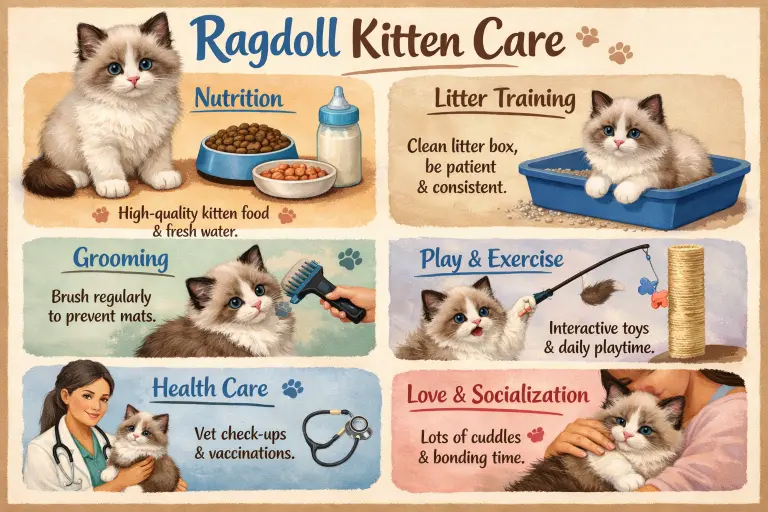
Bringing home a Ragdoll kitten is exciting, emotional, and sometimes a little overwhelming. These kittens are known for their gentle nature, soft coats, and strong bond with people. Many new owners worry about doing everything “right” from day one. The good news is that Ragdoll kittens do not need perfection. They need safety, routine, patience, and calm care. This guide is written to help you feel confident, even if this is your very first kitten.
Ragdoll kittens are different from some other breeds in important ways. They are usually more relaxed, more people-focused, and slower to mature. They enjoy being close to their humans and may follow you from room to room. Because of their trusting nature, they depend on you to keep them safe indoors and to notice small changes in behavior. This does not mean they are fragile. It simply means they thrive best with gentle handling and steady routines.
The first few weeks at home are a big adjustment for your kitten. They have left their mother, littermates, and familiar smells. It is normal if your kitten hides at first, sleeps a lot, or seems unsure. It is also normal if they become very playful and curious after a short time. There is no single “right” personality. Some Ragdoll kittens are confident right away, while others need a few days or weeks to settle in.
This article focuses on everyday care, not medical treatment. You will learn what your Ragdoll kitten needs each day, how those needs change as they grow, and how to avoid common beginner mistakes. The goal is simple: help you raise a healthy, happy kitten while keeping things easy to understand and calm to follow.
Ragdoll Kitten Feeding & Nutrition Basics
Feeding your Ragdoll kitten properly is one of the most important parts of early care. Kittens grow very fast, and Ragdolls often grow larger and slower than other cats. Because of this, they need regular meals with food made specifically for kittens. Kitten food has more calories, protein, and nutrients to support growth.
Young kittens should not be free-fed without limits, but they do need frequent meals. Most Ragdoll kittens eat with enthusiasm, but some may eat slowly or become distracted. This is usually normal. What matters most is steady weight gain, good energy, and normal bathroom habits. Sudden loss of appetite, especially in a young kitten, is something to take seriously and discuss with a vet.
Wet food is often easier for kittens to eat and helps with hydration. Dry food can also be used, especially as your kitten grows. Many owners choose a mix of both. Any food changes should be made slowly over several days to avoid stomach upset. Treats should be limited and should never replace regular meals.
Below is a simple feeding guide to help you understand how feeding changes with age. This is a general guide, not a strict rule. Always adjust based on your kitten’s size, activity level, and advice from your veterinarian.
| Kitten Age | Meals Per Day | Food Type | Notes |
|---|---|---|---|
| 8–12 weeks | 4 meals | Mostly wet, some dry | Small, frequent meals |
| 3–6 months | 3–4 meals | Wet and dry | High energy stage |
| 6–12 months | 2–3 meals | Kitten formula food | Slower growth but still developing |
Fresh water should always be available. Use a clean bowl placed away from the litter box. Some kittens prefer wide, shallow bowls that do not touch their whiskers. If your kitten plays with water or tips the bowl, a heavier dish can help.
Daily Care: Litter, Sleep, Play & Routine
Daily care is where most new kitten owners feel unsure. The good news is that kittens are creatures of habit, and once a routine is set, daily care becomes very simple. Ragdoll kittens, in particular, do well with predictable schedules and calm environments.
Most kittens learn to use a litter box very quickly. Start with a low-sided box that is easy to step into. Place it in a quiet area, away from food and water. Show your kitten where the box is when they first arrive and after meals or naps. Avoid moving the box too often. If accidents happen, do not punish your kitten. Clean the area well and gently guide them back to the box next time.
Sleep is a huge part of kitten life. Ragdoll kittens can sleep 16 to 20 hours a day. This is normal and healthy. Sleep supports growth and brain development. Your kitten may have short bursts of high energy followed by long naps. Try not to wake a sleeping kitten unless necessary. A tired kitten can become overstimulated and nippy.
Playtime is how kittens learn coordination, confidence, and social skills. Short play sessions several times a day are better than one long session. Use toys that allow distance between your hands and the kitten, such as wand toys. This helps prevent play biting. If your kitten bites or scratches during play, stop the game calmly and redirect to a toy.
A simple daily routine can help new owners feel organized and help kittens feel secure. Here is an example of a basic daily rhythm.
| Time of Day | Activity |
|---|---|
| Morning | Feed, short play, litter box check |
| Midday | Nap time, quiet exploration |
| Evening | Feed, longer play session |
| Night | Calm bonding, sleep |
Do not worry if your routine looks different. The goal is consistency, not perfection. As your kitten grows, their energy and sleep patterns will slowly change.
Grooming & Basic Health Signals Every Owner Should Know
Ragdoll kittens have soft, semi-long coats that feel wonderful to touch. While they are not as high-maintenance as some long-haired breeds, regular grooming is still important. Grooming helps prevent tangles, reduces shedding, and gives you a chance to check your kitten’s overall condition.
Brushing should start early, even if your kitten’s coat is still short. A few gentle brush strokes a couple of times a week is enough at first. This helps your kitten learn that brushing is safe and pleasant. As the coat grows thicker, brushing may be needed more often, especially around the chest and behind the legs where tangles can form.
Nail trimming is another important habit to introduce early. Kitten nails grow quickly and can be sharp. Trim only the tips, and stop if your kitten becomes stressed. Short, calm sessions work best. Scratching posts should always be available to help keep nails healthy.
Basic health observation does not mean diagnosing illness. It simply means noticing what is normal for your kitten. A healthy kitten is curious, alert when awake, eating regularly, and using the litter box consistently. Mild eye discharge, small changes in appetite, or temporary loose stool can sometimes happen during growth or food changes, but anything that lasts or worsens should be checked by a professional.
A first vet visit is usually scheduled soon after adoption. This visit helps create a baseline for your kitten’s health and gives you a chance to ask questions. Write down concerns ahead of time so you do not forget them during the appointment.
Here is a simple grooming and care checklist to keep things easy.
| Task | How Often |
|---|---|
| Brushing | 2–3 times per week |
| Nail trimming | Every 2–3 weeks |
| Ear check | Weekly |
| Eye check | Weekly |
Grooming time is also bonding time. Speak softly, move slowly, and stop before your kitten becomes overwhelmed.
Safety, Bonding & Common Beginner Questions
Ragdoll kittens are known for being trusting and gentle. This makes safety especially important. Indoor living is strongly recommended, as Ragdolls may not sense danger as quickly as other cats. Keep windows secured, remove access to small objects that can be swallowed, and store cleaning products out of reach.
Kitten-proofing does not need to be extreme. Focus on obvious hazards such as loose cords, open balconies, toxic plants, and small items on the floor. Get down to kitten level and look around your home. If something looks tempting to chew or climb, it probably is.
Bonding with your Ragdoll kitten happens naturally through daily interaction. Sit on the floor, let your kitten approach you, and allow them to choose contact. Some kittens love being held, while others prefer to sit nearby. Respecting these preferences builds trust. Over time, most Ragdolls become very affectionate.
Introducing your kitten to other pets should be slow and calm. Keep them separated at first and allow scent swapping before face-to-face meetings. Never force interaction. Progress at the pace of the most nervous animal.
Below are answers to some common beginner questions that many new Ragdoll owners worry about.
Is it normal if my kitten follows me everywhere?
Yes. Ragdolls are very people-oriented and often enjoy being close to their humans.
How long can my kitten be left alone?
Young kittens should not be left alone for long periods. Short absences are fine, but long days alone should be avoided if possible.
Do Ragdoll kittens get lonely?
They can. They enjoy companionship, routine, and interaction. Daily play and attention are important.
When will my kitten calm down?
Ragdolls mature slowly. Energy levels usually begin to balance out after the first year.
Final Reassurance & Moving Forward
Raising a Ragdoll kitten is a learning experience. You will not do everything perfectly, and that is okay. What matters most is showing up each day with patience, kindness, and attention. Your kitten does not need constant entertainment or expensive products. They need consistency, safety, and love.
As your kitten grows, you will start to recognize their patterns, preferences, and personality. Trust yourself. If something feels off, it is okay to ask for help. If things feel easy, enjoy that too. Ragdolls have a special way of becoming part of the family, often forming deep and lasting bonds.
With time, your small kitten will grow into a calm, affectionate companion. The care you provide now builds the foundation for a healthy and happy life together.For additional general cat care information, you can visit:
https://www.aspca.org/pet-care/cat-care

Ata Ur Rehman is the founder of Pet Age in Human Years Calculator, an educational platform that provides age conversion charts and lifespan guides for dogs, cats, birds, and other companion animals. His work focuses on helping pet owners understand how animal ages translate into human years using commonly accepted age conversion formulas and published lifespan averages.
The website compiles breed and species lifespan data from kennel clubs, breed organizations, and general animal lifespan studies to present simple and easy-to-understand guides for pet owners worldwide.
This website was created to centralize animal age conversion charts into one easy reference platform for pet owners.