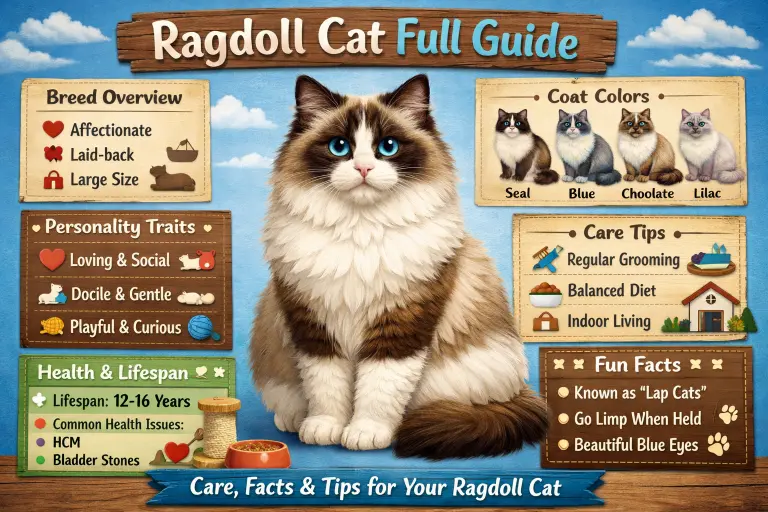
The Ragdoll is one of the most beloved cat breeds in the world, known for its calm nature and striking appearance. These cats are often described as gentle giants. They are larger than most domestic cats, with soft semi‑longhair fur and bright blue eyes. Ragdolls are popular as family pets because they are friendly and easy to live with. Many people choose them for their sweet personalities and relaxed behavior.
Ragdolls were first bred in the 1960s in California, USA. A breeder named Ann Baker started working with cats that had unusually soft fur and very calm temperaments. Over time, these cats were developed into the modern Ragdoll breed that we know today. The name “Ragdoll” comes from the way these cats often go floppy like a ragdoll when they are picked up. This unique trait makes them stand out from other breeds.
The Cat Fanciers’ Association (CFA) and other cat registries now recognize Ragdolls as a distinct breed with specific standards. These standards describe the ideal body shape, coat, and eye color that Ragdolls should have. Breeders around the world follow these guidelines to produce high‑quality Ragdoll kittens.
Although they look and act a bit like Persian cats because of their size and coat, Ragdolls have a very different temperament. They are more outgoing, playful, and people‑oriented. If you want a cat that enjoys being around humans, Ragdolls are one of the best breeds to consider.
Ragdoll Appearance & Size
Ragdolls are large, sturdy cats with soft, silky fur. They are often called “gentle giants” because of their size and sweet nature. When fully grown, Ragdolls can weigh much more than the average house cat. Males typically weigh between 12 and 20 pounds (5.5 to 9 kg), and females usually weigh between 8 and 15 pounds (3.5 to 7 kg). Despite their size, they move with grace and are not heavy or clumsy.
The body of a Ragdoll is muscular and long, with a broad chest and strong legs. Their heads are rounded with medium‑sized ears and large, expressive eyes that are always blue. The eye color is one of the breed’s most striking features. Ragdolls have soft, bushy tails that balance their large bodies.
Ragdolls have semi‑longhair coats that feel very soft to the touch, almost like rabbit fur. Their fur does not mat easily, but it still needs regular brushing to keep it clean and smooth. The Ragdoll’s coat comes in several beautiful patterns:
- Colorpoint – Light body with darker face, ears, paws, and tail
- Mitted – Like colorpoint, but with white paws and sometimes a white chin
- Bicolor – Even balance of white and colored fur, often with an inverted “V” on the face
Ragdoll colors include seal, blue, chocolate, lilac, flame, and cream, among others. The combination of patterns and colors makes each Ragdoll kitten unique and often very beautiful.
Here is a quick look at the average size and features of Ragdoll cats:
Ragdoll Appearance Snapshot
| Trait | Details |
|---|---|
| Adult Weight | Males: 12–20 lbs, Females: 8–15 lbs |
| Body Type | Large, muscular, long |
| Coat Type | Semi‑longhair, silky |
| Eye Color | Always blue |
| Common Patterns | Colorpoint, Mitted, Bicolor |
| Common Colors | Seal, Blue, Chocolate, Lilac, Flame, Cream |
Ragdoll Temperament & Behavior
Ragdoll cats are famous for their gentle and loving personalities. Most Ragdolls are calm and enjoy being near their people. They are often described as “dog‑like” because they like to follow their owners from room to room and may even greet them at the door. These cats enjoy attention, but they are not overly demanding. They seek affection and will often sit with you or rest near you while you work or watch TV.
One of the most well‑known traits of Ragdolls is their relaxed nature. Many Ragdolls enjoy being picked up and will go limp in your arms. This is not true of all cats, and it is part of what makes the breed special. However, each cat is an individual, and some Ragdolls may prefer gentle pets over being carried for long periods.
Ragdolls get along well with children. Their soft temper and patience make them good family pets. They are usually tolerant of kids’ handling, as long as it is gentle and respectful. Teaching young children how to properly interact with cats will help both the child and the pet feel safe and happy.
These cats are also known to be friendly with other pets, including other cats and well‑behaved dogs. Introducing a Ragdoll to other animals slowly and with positive reinforcement helps them build good relationships. Ragdolls typically do not show aggression, and they are unlikely to start fights.
Ragdolls are social animals and enjoy interactive play. They are not as energetic or “zoomie‑like” as some breeds, but they appreciate toys, feather wands, and puzzle feeders. Playtime keeps their minds sharp and body healthy. They may also enjoy gentle fetch or chasing soft toys around the house.
Temperament Traits Breakdown
| Trait | Typical Ragdoll Behavior |
|---|---|
| Affection Level | High |
| Energy Level | Moderate |
| Vocalization | Soft and quiet |
| People Oriented | Very high |
| Tolerance for Children | High |
| Tolerance for Pets | High |
| Lap Cat | Often yes |
Daily Care, Grooming & Health
Ragdolls are relatively easy to care for, but like all breeds, they have specific needs. Understanding these needs will help your Ragdoll live a long, healthy, and happy life.
Grooming Needs
Ragdolls have soft, semi‑longhair coats that do not mat easily, but they do shed. Regular brushing, about 2–3 times per week, helps remove loose fur and reduces hairballs. Use a soft bristle brush or comb designed for longhair cats. Pay attention to areas like the chest and belly where tangles can form. Bathing is rarely needed unless your cat gets particularly dirty.
Exercise and Activity
Although Ragdolls are not high‑energy cats, they still need daily activity to stay healthy. Gentle play sessions, short games with toys, and climbing opportunities (like cat trees) help keep them fit. Ragdolls enjoy mental stimulation, so toys that challenge their problem‑solving skills are a great choice.
Health and Lifespan
Ragdolls are generally healthy cats, but like all breeds, they can be prone to certain health issues. The most common concerns include:
- Hypertrophic Cardiomyopathy (HCM) – a heart condition seen in many cat breeds
- Bladder stones – can cause discomfort or urinary issues
- Kidney disease – common in older cats
Regular veterinary checkups help catch problems early. Heart screening and regular urine and blood tests are recommended for Ragdolls as they age. With proper care, a Ragdoll can live between 12 and 17 years, and some live even longer with good nutrition and healthcare.
Health & Care Overview
| Care Area | Recommendation |
|---|---|
| Brushing | 2–3 times per week |
| Bathing | Occasionally, if needed |
| Exercise | Daily interactive play |
| Vet Visits | Yearly exams, senior checks |
| Common Health Issues | HCM, bladder stones, kidney disease |
| Lifespan | 12–17+ years |
Cost of Ownership, Pros & Cons
Owning a Ragdoll can be very rewarding, but it also comes with responsibilities and costs. Understanding what to expect helps you plan and prepare for your new companion.
Cost to Own
Ragdoll kittens from reputable breeders usually cost more than average house cats. Prices vary by region, breeder reputation, and kitten quality (pet vs show). On average, expect to pay between $800 and $2,500 USD for a Ragdoll kitten. Health tests, vaccinations, spaying/neutering, and microchipping are often included or added.
In addition to the initial purchase price, consider ongoing costs:
- Food (quality diet designed for cats)
- Litter and litter box supplies
- Regular vet checkups and vaccinations
- Hair grooming tools
- Toys and enrichment
- Insurance or emergency funds
Cost Breakdown
| Expense Type | Estimated Cost |
|---|---|
| Ragdoll Kitten | $800–$2,500+ |
| Annual Vet Visits | $100–$300+ |
| Food & Supplies | $300–$600 yearly |
| Grooming Tools | $50–$150 |
Pros of Owning a Ragdoll
- Very affectionate and friendly
- Great with families and children
- Calm and social personality
- Easy to groom compared to longhair breeds
- Good with other pets
Cons of Owning a Ragdoll
- Can be costly upfront
- Some health issues possible
- May dislike being left alone for long periods
- Not as active as some owners might want
Pros & Cons Table
| Pros | Cons |
|---|---|
| Easygoing, loving nature | Higher cost |
| Good with kids and pets | Potential health issues |
| Gentle and calm | May want lots of attention |
| Relatively low grooming needs | Not very independent |
Ragdolls fit well in homes that offer love, attention, and gentle interaction. They thrive in calm environments and enjoy being part of a family. If you want a quiet, affectionate companion who will greet you every day and relax by your side, a Ragdoll could be the perfect pet.This article now covers the key topics most people search for about Ragdoll cats. If you want to learn more about cat breeds in general or compare Ragdolls to other breeds, check out the Cat Fanciers’ Association breed list here: https://cfa.org/breeds/.

Ata Ur Rehman is the founder of Pet Age in Human Years Calculator, an educational platform that provides age conversion charts and lifespan guides for dogs, cats, birds, and other companion animals. His work focuses on helping pet owners understand how animal ages translate into human years using commonly accepted age conversion formulas and published lifespan averages.
The website compiles breed and species lifespan data from kennel clubs, breed organizations, and general animal lifespan studies to present simple and easy-to-understand guides for pet owners worldwide.
This website was created to centralize animal age conversion charts into one easy reference platform for pet owners.