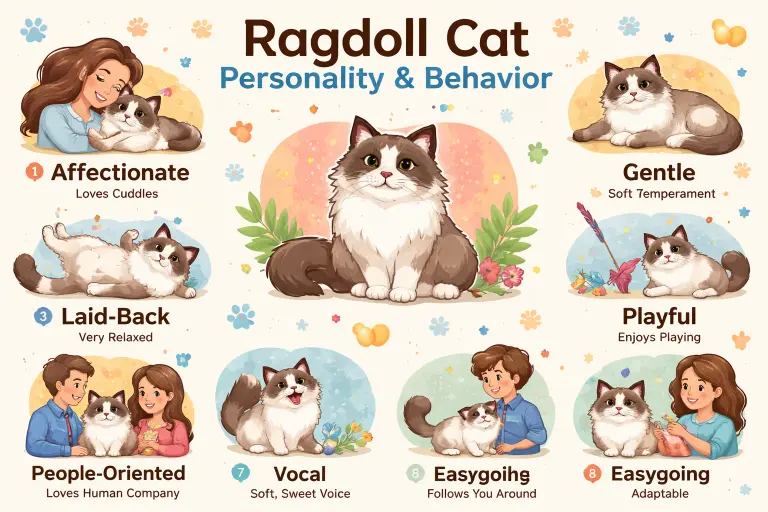
Ragdoll cats are known for being gentle, calm, and cuddly companions. They often seem very friendly and easygoing compared to other breeds. But every Ragdoll is different, and their personality comes from many factors including their early life experiences, environment, and individual traits. Understanding how Ragdolls think and behave helps owners connect with them more deeply.
Ragdolls often enjoy being around people. Many will follow you from room to room, sit next to you on the couch, and even sleep at your feet. Their social style is usually relaxed rather than energetic. They don’t rush around like some playful breeds. Instead, they explore slowly, greet you with soft eyes, and often enjoy gentle petting or lap time.
Even though Ragdolls are friendly, they are not the same as dogs. They communicate in cat ways—through body language, subtle sounds, and patterns of play. They don’t always show excitement loudly, but they show trust deeply. For example, a Ragdoll that rolls onto its back with its belly up isn’t begging for belly rubs—it’s showing that it feels safe and relaxed in your presence.
Some new owners might be unsure what these behaviors mean. Do they want attention? Are they bored? Are they shy? This guide will help you read your Ragdoll’s signals with ease. You’ll learn how Ragdolls show feelings, how their personalities develop over time, and how to understand behaviors that people often misread.
Core Ragdoll Traits Explained
Ragdolls are famous for warm and friendly personalities, but that doesn’t mean every cat is the same. Some are more affectionate than others. Some prefer short petting sessions, while others love long cuddles. This section covers the main personality traits seen in Ragdolls so you can recognize and appreciate the range of behaviors they show.
Most Ragdolls are social and enjoy human company. They often seek out interaction but in a calm way. They don’t usually jump on your shoulders or run around wildly. Instead, they might hop onto your lap quietly or sit beside you while you work or watch TV. Many Ragdolls also like to greet you at the door or follow your voice around the home.
Ragdolls are generally patient and easygoing with children and other pets. Many owners report that their Ragdoll will accept gentle petting from kids without fuss. However, each cat still has boundaries. A Ragdoll might happily sit near a playful child but retreat to a quiet spot if it feels overstimulated. Respecting those cues makes your relationship stronger.
Some Ragdolls show attachment in different ways. A “lap seeker” might love curling up on your legs, while a “proximity cat” prefers to be near you without direct contact. Others might be more independent, enjoying short play sessions and then resting alone. All of these styles are normal and healthy.
Here’s a quick comparison to help you understand these trait styles:
Ragdoll Personality Trait Comparisons
| Trait Style | What It Looks Like | What It Means |
|---|---|---|
| Lap Seeker | Sits or sleeps on your lap often | Loves close physical contact |
| Proximity Cat | Stays close but not on you | Enjoys presence without heavy touch |
| Independent Thinker | Plays alone and rests in own space | Friendly but self-directed |
| Social Butterfly | Greets people and pets alike | Very open and curious about others |
In addition to these styles, Ragdolls tend to be calm around household routines. They might come out to say hello during mealtimes, enjoy gentle play in the evening, and then settle down quietly for the night. They are not usually high-energy athletes, but they do enjoy play that encourages stalking, pouncing, or gentle chasing. Puzzle toys, feather wands, and soft balls can keep them engaged.
Just like people, Ragdolls have moods. Some days your cat may want long lap time; other days it may want to explore quietly or nap in a favorite window spot. Learning your Ragdoll’s rhythm helps you respond in ways that make them feel secure and content.
How Ragdolls Communicate
Understanding a Ragdoll’s communication helps you know what your cat is trying to tell you. Cats do not speak words, but they use many signals through their body and sounds. Ragdolls often communicate in subtle ways. They may not meow loudly all the time, but their body language can say a lot.
Ragdolls use their tails, ears, eyes, and posture to show how they feel. A tall, relaxed tail often means confidence and friendliness. Soft eye blinks are a sign of trust. Slow blinks shared between you and your cat are like saying “I feel safe with you.” On the other hand, flattened ears or a tucked tail can show discomfort or fear, and it’s important to give your cat space in those moments.
They also use vocal sounds to communicate. Some Ragdolls are quiet and rarely meow, while others chirp or trill softly when they want attention or are happy to see you. These sounds are not loud yowls but gentle and expressive noises that reflect mood.
To make things clear and easy to read, here is a simple table showing common Ragdoll communication signals and what they often mean:
Ragdoll Communication Signals
| Signal | What You See | What It Often Means |
|---|---|---|
| Tail Up, Tip Curved | Tail held high with slight curve | Friendly, comfortable |
| Slow Blinking | Eyes half-closed, slow blink | Trust, affection |
| Ears Forward | Ears pointing forward | Curious, at ease |
| Ears Flat Back | Ears pressed close to head | Fear, stress, irritation |
| Soft Meow or Chirp | Gentle vocalization | Greeting, request for attention |
| Purring | Deep, continuous vibration | Contentment (sometimes self-soothing) |
Ragdolls don’t tend to hiss or growl unless they are very scared or uncomfortable. If you hear those sounds, it’s a sign to gently remove stressors (like loud noises or unwanted petting) and let your cat calm down in a safe place.
Pay attention to context too. If your Ragdoll swishes its tail while playing, it might be excited. But if the tail is thrashing while you are petting it, your cat might be saying “that’s enough.” Knowing these cues helps you interact in ways your cat appreciates.
Ragdoll Behavior Across Life Stages
Ragdolls grow and change throughout their lives. Their behavior in each stage gives clues about their needs and personality. Understanding these stages can make life with your Ragdoll more enjoyable and predictable.
Kittens (0–6 Months)
Ragdoll kittens are playful, curious, and fast learners. They explore their world with bright eyes and soft paws. At this age, they learn social skills from their littermates and human caregivers. Play is not just fun—it teaches them control, coordination, and confidence.
Kittens may dart around chasing toys, pounce on shadows, or wrestle with siblings. These behaviors are normal and healthy. Gentle play with feather wands or soft balls helps them practice natural hunting instincts.
Kittens also sleep a lot—up to 18 hours a day. Sleep supports growth and brain development. Short bursts of play followed by naps are typical at this stage.
Adolescents (6–18 Months)
Around six months, many Ragdolls enter an adolescent phase. They may test boundaries, explore new spaces, and show bursts of energy. You might notice more climbing, jumping, or running playfully across rooms.
This stage can feel like a mix of playful kitten energy and growing independence. Ragdolls may also start to show clearer social preferences. Some will become more attached to certain family members or routines.
Positive interactions, consistent routines, and gentle play help adolescents feel secure. They benefit from enrichment like window perches, interactive toys, and safe hiding spots.
Adult Ragdolls (1–8 Years)
By one year old, most Ragdolls settle into adult behavior patterns. They remain friendly and social, but their energy becomes more measured. They often enjoy predictable routines and familiar environments.
Adults may have favorite activities like watching birds from a window, greeting you at mealtimes, or enjoying soft brushing sessions. They tend to choose when they want attention rather than demanding it.
While adults still enjoy play, it’s usually in shorter sessions compared to kitten explosions of energy. Gentle, interactive play helps keep adult Ragdolls mentally and physically healthy.
Senior Years (8+ Years)
As Ragdolls age, they may slow down. They still enjoy comfort, companionship, and predictable routines. Older Ragdolls might sleep more and play less, but they still appreciate gentle affection and mental enrichment.
Senior cats often enjoy soft music, sunny windows, and easy-to-reach beds. They may become more selective with play and prefer quiet interaction over active games.
Behavior Changes Across Life Stages
| Life Stage | Typical Behaviors | What Owners Might See |
|---|---|---|
| Kitten | High play, rapid learning | Quick bursts of energy, lots of naps |
| Adolescent | Testing boundaries | More climbing, exploration |
| Adult | Stable patterns | Routine greetings, gentle play |
| Senior | Slower pace | More rest, selective play |
Understanding these stages helps you support your Ragdoll with activities and attention that match their needs.
Commonly Misunderstood Behaviors and Owner Guidance
Many Ragdoll owners see behaviors they don’t fully understand at first. Some behaviors may look odd, but they are normal and safe when you know what they mean.
Ragdolls Going “Floppy”
Ragdolls are famous for going limp when picked up. This is not weakness—it’s trust. When your cat lets its body relax completely, it feels safe in your arms. But not all Ragdolls love long pick-ups. Some may prefer to lie next to you instead of being held.
Quiet Vocalization
Some cats are very talkative, but many Ragdolls have soft voices. A quiet meow or gentle chirp is how they often communicate. Lack of loud vocalizing doesn’t mean they are unhappy—it just means they speak softly.
Kneading
Ragdolls may knead soft surfaces with their paws. This comes from kittenhood and feels comforting. It’s not a sign of aggression or stress. A kneading cat is usually relaxed and content.
Playful Mouth and Paw
Kittens and young cats may playfully bite or paw at hands. This is play, not aggression—especially when no hissing or ears-back signals are present. Redirect play gently to toys so your cat learns what is for biting and what is not.
Need for Quiet Time
Even social Ragdolls need calm moments. If your cat retreats to a quiet corner after petting or play, it’s not being unfriendly—it’s resting. Respect these breaks.
These behaviors are normal and healthy when seen in context. If you notice sudden changes—like loss of appetite, hiding more than usual, or aggressive behavior where there was none before—those could be signs of stress or medical issues. Pay attention and, if needed, talk to a veterinarian.
At times, behavior changes may be linked to environment changes like moving to a new home, new pets, loud noises, or unfamiliar people. Patience, observation, and gentle reassurance help your Ragdoll feel confident again.
Conclusion
Ragdoll cats bring calm, affectionate energy to a home. They communicate in subtle ways, enjoy predictable routines, and form deep bonds with their humans. By understanding their personality traits, communication signals, and behavior across life stages, you can build a strong, trusting relationship with your Ragdoll. These cats may not be the loudest or most active companions, but their gentle presence makes them beloved members of many families.
For more insights on feline behavior and how to support your cat’s emotional well‑being, visit the Cornell University College of Veterinary Medicine guide on cat behavior at https://www.vet.cornell.edu/departments-centers-and-institutes/cornell-feline-health-center/health-information/cat-behavior-content.

Ata Ur Rehman is the founder of Pet Age in Human Years Calculator, an educational platform that provides age conversion charts and lifespan guides for dogs, cats, birds, and other companion animals. His work focuses on helping pet owners understand how animal ages translate into human years using commonly accepted age conversion formulas and published lifespan averages.
The website compiles breed and species lifespan data from kennel clubs, breed organizations, and general animal lifespan studies to present simple and easy-to-understand guides for pet owners worldwide.
This website was created to centralize animal age conversion charts into one easy reference platform for pet owners.